Episode 8
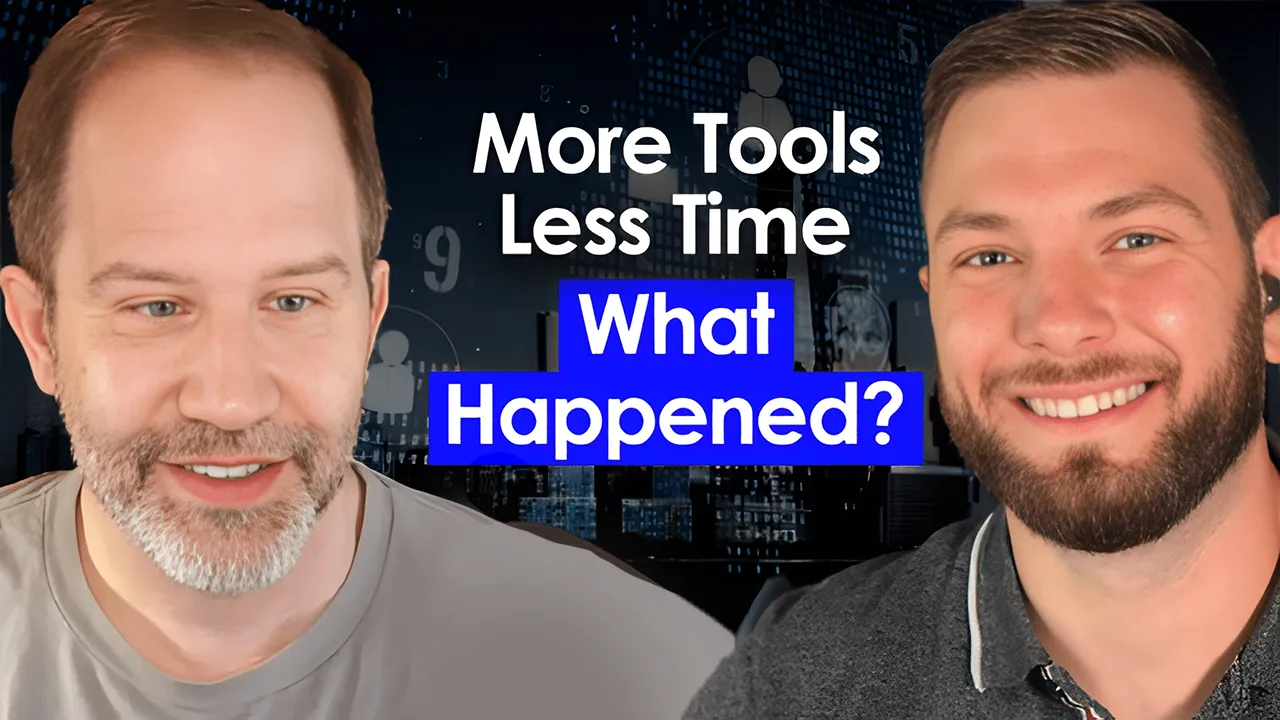
We Were Promised Productivity. We Got More Work
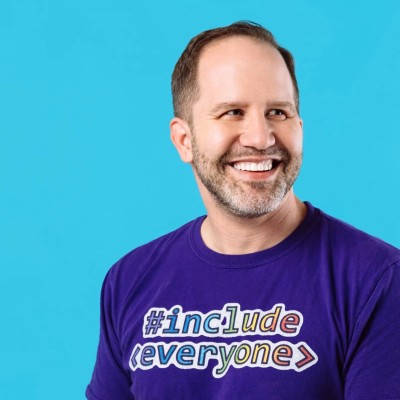
Scott Hanselman · VP of Developer Community, Microsoft
Share:
Show Notes
What if AI isn’t here to replace us, but to remove the boring parts of our work? In this episode, Scott Hanselman shares a deeply human perspective on AI, productivity, and the promises technology made but didn’t keep. If you’re a business leader wondering how to use AI without losing your team’s creativity, this conversation is a must-listen.
Key Takeaways
- Why AI should remove toil, not creativity
- The broken promises of technology and what AI can actually deliver
- Can AI help us reconnect as humans?
- The myth of time-saving tools and the reality of modern work
- Why leaders need technical literacy to understand the full AI stack
- AI’s environmental impact and the future of small models
- Using AI as a tutor for deeper learning
Resources
MicrosoftProductivityDeveloper CommunityCreativityFuture of Work
Samuel Boulanger
Hello, Scott. Thank you for joining us today for the podcast. I know you're super busy, so I really appreciate your time.
Scott Hanselman
My pleasure.
Samuel Boulanger
You recently delivered a TEDx talk. Honestly, I encourage everybody listening to this podcast to go listen to the talk. It was very enlightening. We're talking about the promises that technology made to us. So first, congrats for the TEDx. It's a big achievement.
Scott Hanselman
Thank you. It's funny, somebody in the comments was like, they let anyone do these. So I'm like, I don't know. I don't know if it's an achievement or not. Some are big, some are small. This was in Portland, Oregon. It's quite a large event. There were about 4,500 people there. So it felt scary. It felt big to me.
Samuel Boulanger
During this talk, you talked about the promises of technology. I started playing with computers. I was feeling like the world was opening to me. And then nowadays, I've been working in tech for some time, I'm not sure how it evolves. It feels more overwhelming nowadays versus how it felt when I was younger and, yeah, was discovering it. I was discovering those promises of technology.
Scott Hanselman
I think that when technology was first introduced, there wasn't as much a sense of, and I will use this to make money. It was, I will use this to make things. I will use this to make people's lives better. But then, the more pieces of technology that came out, it became less about convenience and more about commerce, to keep using our C words, words that start with C. So the iPad and the iPod and the iPhone came out, and everyone was like, this is amazing. It's going to make my life better. But now it's just a way for people to sell us crap. VR felt exciting and special for a while. I think there's still something there. Like the Meta Quest is an extraordinary and inexpensive device. Like, it's VR for $300. But I'm sure that will turn into another way. It's just another way for Facebook to sell you crap.
Samuel Boulanger
That's the feeling I have as well, yeah.
Scott Hanselman
Every time a new thing comes out, AI being the latest one, it's like, okay, is this a thing that's going to make my life better? That's what I hope to believe. Or is this another thing that's going to sell me a bunch of crap I don't need? That's where I think things become a problem.
Samuel Boulanger
One of the things it was promising us was connection, right? Facebook being one of them, but social media as a whole, I don't feel like we're more connected with social media. Actually, I feel we're more isolated. How do you see that AI will, do you think actually AI will help us rebuild those genuine human connections?
Scott Hanselman
You think that?
Samuel Boulanger
Well, I'll...
Scott Hanselman
I don't see how that's the case. If we use a simple example of this podcast or your blog, asking an AI a question about something that you've written about in your blog is not going to get you any clicks. It's not going to get anyone to look at your blog. They won't see your face. They probably won't even see your name. All right. My blog, at its height, was doing a million page views a month, and now it's doing three, four hundred thousand. Now, it's valid. I don't blog as much as I used to. But I assume it is a reasonable assumption that people are asking questions to AIs that are answered by my blog, but my blog doesn't get the click. And of those 300,000, 400,000 page views a month, a large number of them are probably spiders and robots that are feeding AIs. How does that make us more connected?
Samuel Boulanger
It's true, but do you think AI, by giving us more time generally, will give us more time to connect together?
Scott Hanselman
That would only work if we assume that they don't want us to be 10 times more productive. If everyone was saying AI will let you take Friday off work, then you're right. We will have more connection. Your argument is, will AI make it so we have more time? But it doesn't appear that commerce in the Western hemisphere works that way. They want you to work 40 hours a week or 50 hours a week.
Samuel Boulanger
Yeah.
Scott Hanselman
So AI is not going to give anyone any more time. Has it given you more time? Are you, like, freed up and you're just hanging out with your family?
Samuel Boulanger
Honestly, I can say it gives me more time on some aspects, which I spend on more productive endeavor. So you're totally right. But when I'm listening to other podcasts, where people like Elon Musk or Jeff Bezos, and they're thinking about a future, and they're mentioning guaranteed income, because basically the vision is that in a couple of decades, we might have so much free time that they will have to think about guaranteed income. I know it's a utopia, right? But let's say it happens. What it means is that AI will have given us back time to connect together as human beings.
Scott Hanselman
I mentioned this in the TED Talk. There's a book called Trekonomics that talks about if the economics of Star Trek are something that is actually feasible. And the only reason that the economics work in Star Trek and that you can be both a sculptor, which doesn't make any money, or a captain of a starship, is that neither of those people need to worry about the rent or eating food or healthcare. None of this works without universal basic income. Because if your healthcare is tied to your job and your not becoming a homeless person is tied to your job and AI threatens to take away your job, then it's another piece of tech that has failed to deliver promise. But if we told people, your work with AI: do the same amount of work as you did before, and if you can do it in three days instead of five, we'll pay you the same. Take those days off and be a sculptor. Then I would be like, that'd be, like, awesome.
Samuel Boulanger
Will it happen?
Scott Hanselman
But the AIs in Star Trek don't do the work for you, they collaborate with you. So I choose to work with AIs or with LLMs specifically as a collaborative partner. I'm not ready to let go of the wheel and let them drive the car for me.
Samuel Boulanger
Interesting. And in the same...
Scott Hanselman
Do you disagree?
Samuel Boulanger
I don't disagree. Actually, I'm seeing the long-term vision, what we've been promised. We're talking about promises of technology. And it seems that right now the promise of AI is that we'll have more free time. Do I agree that right now it's not the case? I totally agree it's not the case right now. The free time it gives me is to, again, spend more time working on something else. So I don't have more free time with AI.
Scott Hanselman
But why would billionaires allow you to have that kind of free time?
Samuel Boulanger
Maybe they need to have more control.
Scott Hanselman
No, because people aren't doing the things that they want to do because they're trying to just stay alive and pay the rent and eat. And people have more free time. They have time to go back to school and educate themselves and do better and get another degree or look for another job. So I think that the 40-hour work week is the maximal amount of work you can do. And then you relax for a couple of days and you get back into the grind. It's meant to keep you busy. It doesn't appear that the folks in charge want us to just chill out and relax.
Samuel Boulanger
Do we really want to chill out and relax? That's another question. I love my job.
Scott Hanselman
Well, I would like to. I would like to go and learn Spanish and take some classes. I'd like to take an art class. I'd like to take a Spanish class. If I had time, I would go back to school. But in order to do that, I would lose my healthcare and I'd need to retire. So then people instead, they don't say, I'll use AI to work hard for me on Thursday and Friday. I'll take those days off and then go do the thing that I want to do. Like, chilling doesn't literally mean just watching Netflix. I'm talking about, like, doing what I want to do. But the system is not set up that way.
Samuel Boulanger
Yeah, but I think as well that my work is giving me a sense of purpose, even if you give me a lot of free time. So first, free time without money is not the same as a lot of free time with a lot of money. And even if I had money and free time, I need a purpose. So what will we make out of all this free time, right?
Scott Hanselman
Well, so I would like to teach school, but that's not a job that pays, right? If I wanted to go and teach high school, I would take a significant pay cut, a significant healthcare cut. So we tend to say, I'll do that when I retire. And there's nothing about technology or AI that's going to set me up where I would be able to go teach school sooner. So then the system becomes.
Samuel Boulanger
Correct. Yeah.
Scott Hanselman
If I want to be an artist or a comedian or go on TV or do a passion project, you have to work hard for 30 years, retire, and then do the passion project. How is AI going to let my 20-year-old work and then do his passion project and make his animations and stuff that he wants to do in his spare time?
Samuel Boulanger
And are you not, actually I have young kids, nine and 10, and I'm sometimes worried about what kind of jobs they'll be able to do anyway.
Scott Hanselman
We don't know, right? So, like, my son wants to make animations, but then AI is making it easier to do that. So then some people will argue, well, that just makes it so everyone's more creative. It's like, well, no, then doesn't that cheapen the creativity of the person who is trying to become an actual artist? So I think that we're going to see an appreciation for human-led art more as people get tired of AI slop. But that doesn't mean that a lot of AI slop won't get generated between now and then. Like, I'm not anti-AI, I'm anti-lazy. This is why I really like the word toil. Boss Amanda Silver uses. She's like, AI shouldn't be taking away creativity. It should be taking away toil. Like, toil is like writing a regular expression or a PowerShell script to go through an 8,000-line log file. I want to get through the log file. I want to figure out the problem. Have the AI do that. It's boring. It sucks. That's not fun work. But when AI takes away fun stuff like drawing and making cartoons. Like generating a new episode of a TV show, right? Like one of my favorite, you're Canadian, right? One of my favorite shows is Kim's Convenience, and they never did a final season of Kim's Convenience. And I'm like, do we go and make an AI generate a new missing season of Kim's Convenience? Right? All these great Canadian shows that got cut off, Little Mosque on the Prairie, great show. I want a new season. I'm going to go generate an, like, we don't want that.
Samuel Boulanger
Yes.
Scott Hanselman
That cheapens the writers, everyone who worked on the show, the actors and all that kind of stuff, a new episode of Seinfeld. It might sound attractive, but I don't think that's what we want. What I'd like is to not work in an office so I can go work on one of those shows. Right? So you use the AI to do the boring stuff, but the whole point of AI isn't to make money, it's to feed people, make them more healthy, make them more happy so that they can do creative endeavors.
Samuel Boulanger
I don't think I want that. I was at a rock show actually last week and I was thinking an AI can't replicate that. I know that AI can generate music, right? But I'm not interested in listening to AI-generated music. I prefer to see the artist knowing that there's the human touch behind this. So I totally agree on that.
Scott Hanselman
Yeah, someone asked me literally today if they could use an AI to make me a better opening for my podcast. No, I paid an actual guy with ability and a guitar to do that. I would not want to take away that joy of that person, nor would I want to take away the money that I paid him to do it.
Samuel Boulanger
In your talk, you talk about the third place. So there was home, there was work, and the third place, which is kind of...
Scott Hanselman
Yeah, the third place. The theory of the third place is that to be a fully formed human, you need three places: home, work, and somewhere else. And in simpler times, that would usually be church, the town square. When I was growing up, it was the mall, right? It's some, or the, you know, if you've ever watched Cheers, it's like the bar that people go to, the pub that they go to after work, where people know your name. For a lot of people, the third place is the internet itself. It might be Reddit, it might be your blog. For me, for many years, starting in 2007, it was Twitter. Twitter was, in the early days, believe it or not, for those of you, the young people who are listening, a fun and joyful, upbeat place where we shared memes and had good times. Before it became a Nazi bar, it was a really cool place to hang out. The internet was a great place from, like, 1985 up. We had a blast on the internet sharing and collaborating. But then COVID happened and remote work happened. And now there is only one place. There is the internet. You work on the internet, you watch Netflix on the internet, you're home on the internet, and then you go and find community on the internet. And I was giving a presentation for a bunch of young people who were looking for work in New York, and they were all on LinkedIn because they literally don't know how to find a job if not for LinkedIn. Walking around with a resume, talking to humans, networking doesn't exist. It's just shotgun, apply to 5,000 jobs on LinkedIn. That is sad because you need at least three places. That's a good theory.
Samuel Boulanger
And what will happen? What's your vision on what will happen with this third place in the next 10 years?
Scott Hanselman
I don't know, phones without screens, smaller phones. I want a foldable phone. I would really like an iPhone. This is a 16 Max. I like a big phone. I would like a phone that is this thin that opens up into an iPad mini. Give me that. Right? I don't need any more AI, but I want a phone that unfolds like the tri-fold phones that they have in China. That'd be cool. Less interesting to me than AI. I guess what I'm saying is that there's still interesting physical work. Back when phones were interesting, I think I've got a flip phone around here somewhere. There were interesting phones with interesting buttons on them and things like that, and PalmPilots, and now it's just a black slate. It's become less creative.
Samuel Boulanger
Yes. I do agree. I mean, the pace of innovation versus what we experience with software, for instance, hasn't increased in the latest years. I feel that they're just releasing the same kind of product again and again and again, but just more powerful.
Scott Hanselman
Yep. It's pretty much the same thing. It's incremental, not revolutionary. But they're always looking for some revolution, and now we're in the middle of the AI revolution. Again, not a hater, but I think that with all things, you have to be measured in your, is this good, is this bad? My goal has always been to use tech to help people, so I will use this to help people to the best of my ability.
Samuel Boulanger
Yeah. AI is changing the way we work, totally. Literally every cognitive worker right now has to adapt and start working with AI. How can business leaders, do you think, make sure that it will deliver convenience and not just add more to the cognitive load, which is very, very high already with all the tools we have to work with, our phones ringing all the time. It won't become just another layer of digital overwhelm.
Scott Hanselman
I don't know. I think the big problem is that the nontechnical business leaders don't seem to really understand how AI works. So I talk about this when I talk about driving stick shift, like there's value in understanding how a computer works and why it works. A lot of the regular suits have an idea of how they think it works. But I just keep coming back to the power that one has when one understands how something works. Like, I don't know, this is again a bias that I have. I don't blindly use products without thinking about what's underneath them. And I, I was going to say pity, I don't pity, but I am a little bit sad for people who just use a thing without any context of all the things behind it. Like when you order an Uber. This is a pocket supercomputer that's talking over radio frequency, over whatever, 5G, up into the cloud, like the stack is deep for you to ask for a stranger to pick you up. And appreciating that in its truest form is like how deep that stack is and the complexity, but also the fragility of that stack. And soon it'll be asking an AI to ask an Uber to come and get you, so it'll be yet another layer in the stack. And everybody on the stack is going to get paid before your Uber person shows up. But the person who's really doing the work is the guy in the Uber. But everybody gets 3%, from Visa to the host or to the AI provider. Like how many trees burn just to get that guy to pick you up?
Samuel Boulanger
That's an interesting thought. There's a lot of, I know we're building humongous data centers to be able to run those LLM models. What do you think the impact is on the environment? Do you feel we're using it purposefully or?
Scott Hanselman
I think that people in the tech world tend to be inefficient when they make their algorithms initially and then they say, I'll make it efficient later. I think we are in the I'll make it efficient later phase. And we are. There's been 10x and 100x improvements in transformer technology. They're always moving things around, coming up with new ways to make the tokenizer smarter, to do this, to do that. I personally... And again, every time you make a declarative statement, you'll be wrong later. But I think that small language models are the future. A 20-billion-parameter model like one in Ollama has got a really great, they just updated their UI. The new Ollama is great. And if you download the OSS version of ChatGPT, GPT-OSS, it runs great on a laptop, works fine. On my iPhone, I've actually got, let me go and open this up. I've got Llama 3.2, I've got Gemma, I've got Phi 3.5, Qwen 2.5, like they're small models, but they run on my phone.
Samuel Boulanger
So a smaller model running on the edge might be the solution too.
Scott Hanselman
Yeah. I think there's value in that. I think we need to think about those things and being able to do that, and like I can do tool calling with Ollama locally. I think there's value in that and I think that there's no reason to send something off to the cloud if I can do it locally.
Samuel Boulanger
What would you recommend to start learning this stack? I mean, from product to product basis, it might be hard, as a whole, for business leaders to start understanding how AI works, what do you think is important to understand and to see what's the impact on the organization and people?
Scott Hanselman
Well, I was talking to a journalist today, and he was writing a whole article about vibe coding. And he was a very nice guy. But I was just getting a sense that he was missing some parts that I thought would be useful. So I took a moment and I said, would you mind if I walk you through how Word2Vec works and how word vectors work and how, like, these words live in multidimensional space. I'm not a PhD, but I got a pretty good understanding about how these things work. But the distance between the average Joe or Jane person, like this tech journalist and a scientist, and I'm somewhere in the middle, is so dramatic. I think that sitting down and taking a class, there should be some standard, like, this is how the AI works classes. So I've been teaching them at my local high school for the kids and the teachers, trying to work with the local school board. Even 15, 20 minutes of like, here's a general way to think about how these words, how the next word gets picked has a lot of value in my opinion.
Samuel Boulanger
Yeah, I've seen one of your talks where you were showing. I don't know if it was internal, so I don't know if it's available on YouTube, but you were showing.
Scott Hanselman
Yeah, there's a couple of talks of me. One of the kind of canonical examples that I use is the, it's a beautiful day, let's go to the, and then it's beach or it's park or whatever. Like, that's just a nice clean example. There's lots of different examples like that that one could potentially use, but that one works for regular people to understand.
Samuel Boulanger
Yes. Park, beach. Talking about learning, how do you think AI will change the way people learn and share their knowledge? I've seen a lot of people not sharing as much as they do because they're just having this interaction with Copilot or ChatGPT or Gemini, whatever, and don't feel the need to share with a broader community because people assume that they all have access to an AI. So how do you think it will affect learning?
Scott Hanselman
Well, I think it's sad. Blogging is dying. People are pouring their words into Facebook and Twitter rather than putting them on their own domain where they own the words. That's all very sad. If people are not curious and exploring new ideas, they're just going to ask the AI. It is going to make the amount of new information that's getting created less, which is sad.
Samuel Boulanger
Or there'll be more new information but created by AI.
Scott Hanselman
Then the synthetic information, which isn't necessarily real.
Samuel Boulanger
You've often stressed going one level deeper when you're working with technology.
Scott Hanselman
Mm-hmm. Yeah, yeah, yeah.
Samuel Boulanger
How do you balance using AI with doing your own code? Like building with GitHub Copilot, but still, one of my friends is a developer and I am not, but he's a developer and I was asking him, like, how often are you using GitHub Copilot? He's like, not that much because I need to learn still. So I'm asking questions, but then I do the code myself. So I make sure that I learned something. So how do you see it? How do you balance the use of AI and keeping your skills?
Scott Hanselman
I keep going back to, is it boring? Is it toil? I had a lady on my podcast recently named Jasmine Campbell, who's a roboticist and an expert in robots. And she said that robots should do work that is dull, dirty or dangerous. I'm like, that's a great, that's a great line. A hundred percent agree. The same thing applies in my opinion to an AI, right? If it does dull, dirty or dangerous work.
Samuel Boulanger
Hmm.
Scott Hanselman
Then that's perfect. That's exactly what it needs to be doing. I don't think it should be doing creative work or fun work or work that I would do better. It should just be doing the tedium that I don't want to do.
Samuel Boulanger
But do you think it can help with creative work?
Scott Hanselman
It can only help with coding, but like I'll give you an example. I recently needed a website for my podcast. I needed a backend and I've been talking about writing this backend forever, but it's one of those things where the backend admin for my podcast is more complicated than the podcast site itself. This is what I'm saying. Like, to manage the advertisers, the headshots, the editing, like the website's just a for loop.
Samuel Boulanger
Yeah.
Scott Hanselman
Over a JSON file. But then making a comprehensive editor for that JSON file, rather than just editing it myself, required a lot of toil. But I was able to vibe code it, and now I'm maintaining a vibe-coded version of my administrative website. And that has been great, because it was boring work that I wasn't going to do anyway. See what I'm saying? So as a dev, I just did that and it got out of the way. I got it done. But if it were fun, I wouldn't have done it that way. I didn't feel bad. Text boxes over data is not creative work. It's just text boxes over data.
Samuel Boulanger
Yeah, basically you're giving to the AI. That's the same for me, I think, when I'm building a demonstration. And I just need to do some research that will take me some amount of time. I'll ask the AI, but I'll still build the scenario by myself. Or when I was an architect prior to joining Microsoft and I had to write those super long architecture documents that nobody reads. I would have liked to have Copilot at that time, honestly, because I was good at building the architecture, thinking of it, making the connection, running a workshop, but I wasn't good at writing long, boring documents. I would have loved to have the help of the AI at that time. Unfortunately, it wasn't there yet.
Scott Hanselman
Well, I think the issue with the long boring document is that no one's reading it. So like, does the document need to exist? Which is a different question. Like, there's value in architecture. There's value in enterprise architecture. It might just be that the business is not enabling you to create the kind of document that you want to create that they would actually read and use and think about.
Samuel Boulanger
Yeah, but I was in the consultant business. You know, we like to, yeah, exactly. More billing time.
Scott Hanselman
Yeah, then more pages. Make more pages.
Samuel Boulanger
I discovered during your TEDx talk that you have an artificial pancreas. Actually, can you explain the concept?
Scott Hanselman
So I'm a Type 1 diabetic and I have sensors. Like I've got a sensor in my arm and I've got an insulin pump over here that delivers insulin. And there's a large community that's been around since, I want to say 2005 or so, when Dana Lewis created the first prototype open source artificial pancreas. She did it originally with a Raspberry Pi. She carried it around in a fanny pack with a big battery, a bunch of USB cables and Python, and it was kind of all cobbled together and it would communicate with the pump, communicate with the sensor, and it would create a control loop where it would read your blood sugar, think about where your blood sugar has been, guess where your blood sugar is going, and then make a decision and loop. It's called looping. So it's like read it, think about it, and then decide, and then deliver insulin, and it does that every five minutes. I'm looking at mine right here. If you see me looking at my phone, it's looking at my blood sugar and there's a chart there because I just had lunch. So I'm looking at my blood sugar and I've kind of got my hand on the wheel a little bit because I want it to go down because it's not going down fast enough. But as a general rule, it manages my blood sugar in the background. So that's a community that I'm very active in. It doesn't use AI.
Samuel Boulanger
What issues in health do you think AI will help solve if it's not this one? I mean, maybe finding a cure. Yeah, in healthcare.
Scott Hanselman
In healthcare? The problem is people are treating AI as some kind of a magic black box that we can throw everything into and then miracle cures for cancer are going to pop out. Maybe that might come from machine learning and deep learning, but generative pre-trained transformers that create text, less so. So when we say AI, as a general rule, people mean generating text, talking to a chatbot. I think it is minimizing work and knowledge to throw a bunch of PDFs at ChatGPT and have it pop out an answer that is going to be at the level of quality that a PhD would expect. These things tend to gaslight people and convince them that they're smarter than they are. So you'll see people going down rabbit holes asking dumb questions. And the AI is really trying not to say, that's a dumb question. You are misinformed. You are asking weird dumb questions. It'll say, no, you're an open thinker, you're such a creative, you may have discovered a new kind of math. No, you didn't. You're not that clever.
Samuel Boulanger
Yeah, there's this concept of the echo chamber, like that's basically everything you ask or say to an AI will resonate to you and it will go in the same direction.
Scott Hanselman
Yeah. Yeah, well, an AI is kind of a parrot. It's a kind of parrot, right? It sits on your shoulder and it listens to you and it listens to the world around it. I assume in your part of Canada, they speak French and English. And if I went there and I saw a French-speaking parrot, I'd be like, my God, the parrots in Quebec are so smart. They speak French. Wow. This parrot speaks Quebec. Right? Like, it's just doing what it's listening to, right? But then now that the parrot's on your shoulder, whispering in your ear, is it in charge of the body now? Is it taking over? Like, at what point did you put the parrot in the loop? And now it's part of your decision-making process. Like, do you talk to your parrot and ask it for advice in the morning about how you live your life? That's starting to change the parrot-human relationship a little bit. And remembering it's cool that parrots speak English and French. But they're not clever.
Samuel Boulanger
They're getting more and more clever though.
Scott Hanselman
Parrots are not getting smarter. They're not getting smarter. No, no, but LLMs are not getting smarter. They're just getting, they're just getting more, they're sucking in more information, but are they getting smarter? They still wake up and they're like, they've never seen you before. They have no context.
Samuel Boulanger
No, not parrots, I'm talking about LLMs.
Scott Hanselman
Like, I just don't think we're going to get artificial general intelligence from an LLM. Like, the transformer architecture, I don't think, is a true representation of how human beings think. It is a simulacrum of how we think. It's a way that we think we think. But I am more than a statistical model of the next most likely word that Hanselman's going to say.
Samuel Boulanger
Scott, we're almost at the end of our time. There's two questions I'm always asking, I guess. First one being, what is your number one productivity tip when we talk about using AI in your own work?
Scott Hanselman
Well, hang on. You said, what is my number one productivity tip? And then you paused. And you said, when using AI. So do you want to know an AI-specific productivity tip or my number one productivity tip?
Samuel Boulanger
Yes. Both. Let's do both.
Scott Hanselman
I would say my first productivity tip is that you can say no to stuff. Just say no. Don't do a thing. You want to free up time? Say no. So I don't have enough time. Say no to more things and you will have more time. That's number one productivity tip. On the AI side, I tend to go for walks and ask it questions and talk to it as a tutor, and I say I'm going to explain to you what I think about a topic and you can parrot back to me whether you think I'm understanding it correctly. So if I'm learning a new concept, you tend to learn well if you're teaching it. So I will say I'm going to learn biology, I'm going to learn physics, I'll tell you what I think and you tell me if I'm getting it right or not. Making sure to pay attention that it's not trying to gas me up and tell me that I'm smarter than I am.
Samuel Boulanger
Are you using a specific prompt to make sure it doesn't gas you up?
Scott Hanselman
Yeah, I start out every single time and I explain who I am, what I'm doing, what my goal is, what my expectations are for it. And I say, okay, you're going to be a tutor. Walking through this topic, biology, physics, whatever I'm working on. Right now I'm helping my son prepare for the SATs, which are our big senior-year testing here in high school in the U.S. Try to catch up and get up to speed on math.
Samuel Boulanger
And is he using the same technique?
Scott Hanselman
He is doing it the old-fashioned way, but I need to be able to help him as his tutor, so I'm paging in material that I have forgotten years ago.
Samuel Boulanger
That's a great tip that I will use myself. I mean, we explored this concept a bit earlier, but looking 10 years ahead, I know it's changing so fast. It's hard to predict.
Scott Hanselman
Dude, I have no idea. I have no.
Samuel Boulanger
Do you think we'll have robots with AI in 10 years? Doing...
Scott Hanselman
The robot thing is kind of ridiculous. I think we'll have robots like Roombas, but ones that stand up and walk around, I'm just not seeing it, not for less than $100,000. I think that the $10,000 robot that walks around your house, the Tesla robot, there's too much complexity that has nothing to do with AI and has everything to do with having it understand context and understand the world around it. I got to work with a $25,000 robot and it's not anything that's close to putting in my house and folding my laundry.
Samuel Boulanger
It's more marketing than reality.
Scott Hanselman
I do like my robot vacuum though. It is delightful.
Samuel Boulanger
Love it. Thank you so much for your time. I'm happy you didn't say no to me to gain back some time. So really appreciate it.
Scott Hanselman
Of course. Thanks for having me.
Samuel Boulanger
Thank you, Scott.
Hello, Scott. Thank you for joining us today for the podcast. I know you're super busy, so I really appreciate your time.
Scott Hanselman
My pleasure.
Samuel Boulanger
You recently delivered a TEDx talk. Honestly, I encourage everybody listening to this podcast to go listen to the talk. It was very enlightening. We're talking about the promises that technology made to us. So first, congrats for the TEDx. It's a big achievement.
Scott Hanselman
Thank you. It's funny, somebody in the comments was like, they let anyone do these. So I'm like, I don't know. I don't know if it's an achievement or not. Some are big, some are small. This was in Portland, Oregon. It's quite a large event. There were about 4,500 people there. So it felt scary. It felt big to me.
Samuel Boulanger
During this talk, you talked about the promises of technology. I started playing with computers. I was feeling like the world was opening to me. And then nowadays, I've been working in tech for some time, I'm not sure how it evolves. It feels more overwhelming nowadays versus how it felt when I was younger and, yeah, was discovering it. I was discovering those promises of technology.
Scott Hanselman
I think that when technology was first introduced, there wasn't as much a sense of, and I will use this to make money. It was, I will use this to make things. I will use this to make people's lives better. But then, the more pieces of technology that came out, it became less about convenience and more about commerce, to keep using our C words, words that start with C. So the iPad and the iPod and the iPhone came out, and everyone was like, this is amazing. It's going to make my life better. But now it's just a way for people to sell us crap. VR felt exciting and special for a while. I think there's still something there. Like the Meta Quest is an extraordinary and inexpensive device. Like, it's VR for $300. But I'm sure that will turn into another way. It's just another way for Facebook to sell you crap.
Samuel Boulanger
That's the feeling I have as well, yeah.
Scott Hanselman
Every time a new thing comes out, AI being the latest one, it's like, okay, is this a thing that's going to make my life better? That's what I hope to believe. Or is this another thing that's going to sell me a bunch of crap I don't need? That's where I think things become a problem.
Samuel Boulanger
One of the things it was promising us was connection, right? Facebook being one of them, but social media as a whole, I don't feel like we're more connected with social media. Actually, I feel we're more isolated. How do you see that AI will, do you think actually AI will help us rebuild those genuine human connections?
Scott Hanselman
You think that?
Samuel Boulanger
Well, I'll...
Scott Hanselman
I don't see how that's the case. If we use a simple example of this podcast or your blog, asking an AI a question about something that you've written about in your blog is not going to get you any clicks. It's not going to get anyone to look at your blog. They won't see your face. They probably won't even see your name. All right. My blog, at its height, was doing a million page views a month, and now it's doing three, four hundred thousand. Now, it's valid. I don't blog as much as I used to. But I assume it is a reasonable assumption that people are asking questions to AIs that are answered by my blog, but my blog doesn't get the click. And of those 300,000, 400,000 page views a month, a large number of them are probably spiders and robots that are feeding AIs. How does that make us more connected?
Samuel Boulanger
It's true, but do you think AI, by giving us more time generally, will give us more time to connect together?
Scott Hanselman
That would only work if we assume that they don't want us to be 10 times more productive. If everyone was saying AI will let you take Friday off work, then you're right. We will have more connection. Your argument is, will AI make it so we have more time? But it doesn't appear that commerce in the Western hemisphere works that way. They want you to work 40 hours a week or 50 hours a week.
Samuel Boulanger
Yeah.
Scott Hanselman
So AI is not going to give anyone any more time. Has it given you more time? Are you, like, freed up and you're just hanging out with your family?
Samuel Boulanger
Honestly, I can say it gives me more time on some aspects, which I spend on more productive endeavor. So you're totally right. But when I'm listening to other podcasts, where people like Elon Musk or Jeff Bezos, and they're thinking about a future, and they're mentioning guaranteed income, because basically the vision is that in a couple of decades, we might have so much free time that they will have to think about guaranteed income. I know it's a utopia, right? But let's say it happens. What it means is that AI will have given us back time to connect together as human beings.
Scott Hanselman
I mentioned this in the TED Talk. There's a book called Trekonomics that talks about if the economics of Star Trek are something that is actually feasible. And the only reason that the economics work in Star Trek and that you can be both a sculptor, which doesn't make any money, or a captain of a starship, is that neither of those people need to worry about the rent or eating food or healthcare. None of this works without universal basic income. Because if your healthcare is tied to your job and your not becoming a homeless person is tied to your job and AI threatens to take away your job, then it's another piece of tech that has failed to deliver promise. But if we told people, your work with AI: do the same amount of work as you did before, and if you can do it in three days instead of five, we'll pay you the same. Take those days off and be a sculptor. Then I would be like, that'd be, like, awesome.
Samuel Boulanger
Will it happen?
Scott Hanselman
But the AIs in Star Trek don't do the work for you, they collaborate with you. So I choose to work with AIs or with LLMs specifically as a collaborative partner. I'm not ready to let go of the wheel and let them drive the car for me.
Samuel Boulanger
Interesting. And in the same...
Scott Hanselman
Do you disagree?
Samuel Boulanger
I don't disagree. Actually, I'm seeing the long-term vision, what we've been promised. We're talking about promises of technology. And it seems that right now the promise of AI is that we'll have more free time. Do I agree that right now it's not the case? I totally agree it's not the case right now. The free time it gives me is to, again, spend more time working on something else. So I don't have more free time with AI.
Scott Hanselman
But why would billionaires allow you to have that kind of free time?
Samuel Boulanger
Maybe they need to have more control.
Scott Hanselman
No, because people aren't doing the things that they want to do because they're trying to just stay alive and pay the rent and eat. And people have more free time. They have time to go back to school and educate themselves and do better and get another degree or look for another job. So I think that the 40-hour work week is the maximal amount of work you can do. And then you relax for a couple of days and you get back into the grind. It's meant to keep you busy. It doesn't appear that the folks in charge want us to just chill out and relax.
Samuel Boulanger
Do we really want to chill out and relax? That's another question. I love my job.
Scott Hanselman
Well, I would like to. I would like to go and learn Spanish and take some classes. I'd like to take an art class. I'd like to take a Spanish class. If I had time, I would go back to school. But in order to do that, I would lose my healthcare and I'd need to retire. So then people instead, they don't say, I'll use AI to work hard for me on Thursday and Friday. I'll take those days off and then go do the thing that I want to do. Like, chilling doesn't literally mean just watching Netflix. I'm talking about, like, doing what I want to do. But the system is not set up that way.
Samuel Boulanger
Yeah, but I think as well that my work is giving me a sense of purpose, even if you give me a lot of free time. So first, free time without money is not the same as a lot of free time with a lot of money. And even if I had money and free time, I need a purpose. So what will we make out of all this free time, right?
Scott Hanselman
Well, so I would like to teach school, but that's not a job that pays, right? If I wanted to go and teach high school, I would take a significant pay cut, a significant healthcare cut. So we tend to say, I'll do that when I retire. And there's nothing about technology or AI that's going to set me up where I would be able to go teach school sooner. So then the system becomes.
Samuel Boulanger
Correct. Yeah.
Scott Hanselman
If I want to be an artist or a comedian or go on TV or do a passion project, you have to work hard for 30 years, retire, and then do the passion project. How is AI going to let my 20-year-old work and then do his passion project and make his animations and stuff that he wants to do in his spare time?
Samuel Boulanger
And are you not, actually I have young kids, nine and 10, and I'm sometimes worried about what kind of jobs they'll be able to do anyway.
Scott Hanselman
We don't know, right? So, like, my son wants to make animations, but then AI is making it easier to do that. So then some people will argue, well, that just makes it so everyone's more creative. It's like, well, no, then doesn't that cheapen the creativity of the person who is trying to become an actual artist? So I think that we're going to see an appreciation for human-led art more as people get tired of AI slop. But that doesn't mean that a lot of AI slop won't get generated between now and then. Like, I'm not anti-AI, I'm anti-lazy. This is why I really like the word toil. Boss Amanda Silver uses. She's like, AI shouldn't be taking away creativity. It should be taking away toil. Like, toil is like writing a regular expression or a PowerShell script to go through an 8,000-line log file. I want to get through the log file. I want to figure out the problem. Have the AI do that. It's boring. It sucks. That's not fun work. But when AI takes away fun stuff like drawing and making cartoons. Like generating a new episode of a TV show, right? Like one of my favorite, you're Canadian, right? One of my favorite shows is Kim's Convenience, and they never did a final season of Kim's Convenience. And I'm like, do we go and make an AI generate a new missing season of Kim's Convenience? Right? All these great Canadian shows that got cut off, Little Mosque on the Prairie, great show. I want a new season. I'm going to go generate an, like, we don't want that.
Samuel Boulanger
Yes.
Scott Hanselman
That cheapens the writers, everyone who worked on the show, the actors and all that kind of stuff, a new episode of Seinfeld. It might sound attractive, but I don't think that's what we want. What I'd like is to not work in an office so I can go work on one of those shows. Right? So you use the AI to do the boring stuff, but the whole point of AI isn't to make money, it's to feed people, make them more healthy, make them more happy so that they can do creative endeavors.
Samuel Boulanger
I don't think I want that. I was at a rock show actually last week and I was thinking an AI can't replicate that. I know that AI can generate music, right? But I'm not interested in listening to AI-generated music. I prefer to see the artist knowing that there's the human touch behind this. So I totally agree on that.
Scott Hanselman
Yeah, someone asked me literally today if they could use an AI to make me a better opening for my podcast. No, I paid an actual guy with ability and a guitar to do that. I would not want to take away that joy of that person, nor would I want to take away the money that I paid him to do it.
Samuel Boulanger
In your talk, you talk about the third place. So there was home, there was work, and the third place, which is kind of...
Scott Hanselman
Yeah, the third place. The theory of the third place is that to be a fully formed human, you need three places: home, work, and somewhere else. And in simpler times, that would usually be church, the town square. When I was growing up, it was the mall, right? It's some, or the, you know, if you've ever watched Cheers, it's like the bar that people go to, the pub that they go to after work, where people know your name. For a lot of people, the third place is the internet itself. It might be Reddit, it might be your blog. For me, for many years, starting in 2007, it was Twitter. Twitter was, in the early days, believe it or not, for those of you, the young people who are listening, a fun and joyful, upbeat place where we shared memes and had good times. Before it became a Nazi bar, it was a really cool place to hang out. The internet was a great place from, like, 1985 up. We had a blast on the internet sharing and collaborating. But then COVID happened and remote work happened. And now there is only one place. There is the internet. You work on the internet, you watch Netflix on the internet, you're home on the internet, and then you go and find community on the internet. And I was giving a presentation for a bunch of young people who were looking for work in New York, and they were all on LinkedIn because they literally don't know how to find a job if not for LinkedIn. Walking around with a resume, talking to humans, networking doesn't exist. It's just shotgun, apply to 5,000 jobs on LinkedIn. That is sad because you need at least three places. That's a good theory.
Samuel Boulanger
And what will happen? What's your vision on what will happen with this third place in the next 10 years?
Scott Hanselman
I don't know, phones without screens, smaller phones. I want a foldable phone. I would really like an iPhone. This is a 16 Max. I like a big phone. I would like a phone that is this thin that opens up into an iPad mini. Give me that. Right? I don't need any more AI, but I want a phone that unfolds like the tri-fold phones that they have in China. That'd be cool. Less interesting to me than AI. I guess what I'm saying is that there's still interesting physical work. Back when phones were interesting, I think I've got a flip phone around here somewhere. There were interesting phones with interesting buttons on them and things like that, and PalmPilots, and now it's just a black slate. It's become less creative.
Samuel Boulanger
Yes. I do agree. I mean, the pace of innovation versus what we experience with software, for instance, hasn't increased in the latest years. I feel that they're just releasing the same kind of product again and again and again, but just more powerful.
Scott Hanselman
Yep. It's pretty much the same thing. It's incremental, not revolutionary. But they're always looking for some revolution, and now we're in the middle of the AI revolution. Again, not a hater, but I think that with all things, you have to be measured in your, is this good, is this bad? My goal has always been to use tech to help people, so I will use this to help people to the best of my ability.
Samuel Boulanger
Yeah. AI is changing the way we work, totally. Literally every cognitive worker right now has to adapt and start working with AI. How can business leaders, do you think, make sure that it will deliver convenience and not just add more to the cognitive load, which is very, very high already with all the tools we have to work with, our phones ringing all the time. It won't become just another layer of digital overwhelm.
Scott Hanselman
I don't know. I think the big problem is that the nontechnical business leaders don't seem to really understand how AI works. So I talk about this when I talk about driving stick shift, like there's value in understanding how a computer works and why it works. A lot of the regular suits have an idea of how they think it works. But I just keep coming back to the power that one has when one understands how something works. Like, I don't know, this is again a bias that I have. I don't blindly use products without thinking about what's underneath them. And I, I was going to say pity, I don't pity, but I am a little bit sad for people who just use a thing without any context of all the things behind it. Like when you order an Uber. This is a pocket supercomputer that's talking over radio frequency, over whatever, 5G, up into the cloud, like the stack is deep for you to ask for a stranger to pick you up. And appreciating that in its truest form is like how deep that stack is and the complexity, but also the fragility of that stack. And soon it'll be asking an AI to ask an Uber to come and get you, so it'll be yet another layer in the stack. And everybody on the stack is going to get paid before your Uber person shows up. But the person who's really doing the work is the guy in the Uber. But everybody gets 3%, from Visa to the host or to the AI provider. Like how many trees burn just to get that guy to pick you up?
Samuel Boulanger
That's an interesting thought. There's a lot of, I know we're building humongous data centers to be able to run those LLM models. What do you think the impact is on the environment? Do you feel we're using it purposefully or?
Scott Hanselman
I think that people in the tech world tend to be inefficient when they make their algorithms initially and then they say, I'll make it efficient later. I think we are in the I'll make it efficient later phase. And we are. There's been 10x and 100x improvements in transformer technology. They're always moving things around, coming up with new ways to make the tokenizer smarter, to do this, to do that. I personally... And again, every time you make a declarative statement, you'll be wrong later. But I think that small language models are the future. A 20-billion-parameter model like one in Ollama has got a really great, they just updated their UI. The new Ollama is great. And if you download the OSS version of ChatGPT, GPT-OSS, it runs great on a laptop, works fine. On my iPhone, I've actually got, let me go and open this up. I've got Llama 3.2, I've got Gemma, I've got Phi 3.5, Qwen 2.5, like they're small models, but they run on my phone.
Samuel Boulanger
So a smaller model running on the edge might be the solution too.
Scott Hanselman
Yeah. I think there's value in that. I think we need to think about those things and being able to do that, and like I can do tool calling with Ollama locally. I think there's value in that and I think that there's no reason to send something off to the cloud if I can do it locally.
Samuel Boulanger
What would you recommend to start learning this stack? I mean, from product to product basis, it might be hard, as a whole, for business leaders to start understanding how AI works, what do you think is important to understand and to see what's the impact on the organization and people?
Scott Hanselman
Well, I was talking to a journalist today, and he was writing a whole article about vibe coding. And he was a very nice guy. But I was just getting a sense that he was missing some parts that I thought would be useful. So I took a moment and I said, would you mind if I walk you through how Word2Vec works and how word vectors work and how, like, these words live in multidimensional space. I'm not a PhD, but I got a pretty good understanding about how these things work. But the distance between the average Joe or Jane person, like this tech journalist and a scientist, and I'm somewhere in the middle, is so dramatic. I think that sitting down and taking a class, there should be some standard, like, this is how the AI works classes. So I've been teaching them at my local high school for the kids and the teachers, trying to work with the local school board. Even 15, 20 minutes of like, here's a general way to think about how these words, how the next word gets picked has a lot of value in my opinion.
Samuel Boulanger
Yeah, I've seen one of your talks where you were showing. I don't know if it was internal, so I don't know if it's available on YouTube, but you were showing.
Scott Hanselman
Yeah, there's a couple of talks of me. One of the kind of canonical examples that I use is the, it's a beautiful day, let's go to the, and then it's beach or it's park or whatever. Like, that's just a nice clean example. There's lots of different examples like that that one could potentially use, but that one works for regular people to understand.
Samuel Boulanger
Yes. Park, beach. Talking about learning, how do you think AI will change the way people learn and share their knowledge? I've seen a lot of people not sharing as much as they do because they're just having this interaction with Copilot or ChatGPT or Gemini, whatever, and don't feel the need to share with a broader community because people assume that they all have access to an AI. So how do you think it will affect learning?
Scott Hanselman
Well, I think it's sad. Blogging is dying. People are pouring their words into Facebook and Twitter rather than putting them on their own domain where they own the words. That's all very sad. If people are not curious and exploring new ideas, they're just going to ask the AI. It is going to make the amount of new information that's getting created less, which is sad.
Samuel Boulanger
Or there'll be more new information but created by AI.
Scott Hanselman
Then the synthetic information, which isn't necessarily real.
Samuel Boulanger
You've often stressed going one level deeper when you're working with technology.
Scott Hanselman
Mm-hmm. Yeah, yeah, yeah.
Samuel Boulanger
How do you balance using AI with doing your own code? Like building with GitHub Copilot, but still, one of my friends is a developer and I am not, but he's a developer and I was asking him, like, how often are you using GitHub Copilot? He's like, not that much because I need to learn still. So I'm asking questions, but then I do the code myself. So I make sure that I learned something. So how do you see it? How do you balance the use of AI and keeping your skills?
Scott Hanselman
I keep going back to, is it boring? Is it toil? I had a lady on my podcast recently named Jasmine Campbell, who's a roboticist and an expert in robots. And she said that robots should do work that is dull, dirty or dangerous. I'm like, that's a great, that's a great line. A hundred percent agree. The same thing applies in my opinion to an AI, right? If it does dull, dirty or dangerous work.
Samuel Boulanger
Hmm.
Scott Hanselman
Then that's perfect. That's exactly what it needs to be doing. I don't think it should be doing creative work or fun work or work that I would do better. It should just be doing the tedium that I don't want to do.
Samuel Boulanger
But do you think it can help with creative work?
Scott Hanselman
It can only help with coding, but like I'll give you an example. I recently needed a website for my podcast. I needed a backend and I've been talking about writing this backend forever, but it's one of those things where the backend admin for my podcast is more complicated than the podcast site itself. This is what I'm saying. Like, to manage the advertisers, the headshots, the editing, like the website's just a for loop.
Samuel Boulanger
Yeah.
Scott Hanselman
Over a JSON file. But then making a comprehensive editor for that JSON file, rather than just editing it myself, required a lot of toil. But I was able to vibe code it, and now I'm maintaining a vibe-coded version of my administrative website. And that has been great, because it was boring work that I wasn't going to do anyway. See what I'm saying? So as a dev, I just did that and it got out of the way. I got it done. But if it were fun, I wouldn't have done it that way. I didn't feel bad. Text boxes over data is not creative work. It's just text boxes over data.
Samuel Boulanger
Yeah, basically you're giving to the AI. That's the same for me, I think, when I'm building a demonstration. And I just need to do some research that will take me some amount of time. I'll ask the AI, but I'll still build the scenario by myself. Or when I was an architect prior to joining Microsoft and I had to write those super long architecture documents that nobody reads. I would have liked to have Copilot at that time, honestly, because I was good at building the architecture, thinking of it, making the connection, running a workshop, but I wasn't good at writing long, boring documents. I would have loved to have the help of the AI at that time. Unfortunately, it wasn't there yet.
Scott Hanselman
Well, I think the issue with the long boring document is that no one's reading it. So like, does the document need to exist? Which is a different question. Like, there's value in architecture. There's value in enterprise architecture. It might just be that the business is not enabling you to create the kind of document that you want to create that they would actually read and use and think about.
Samuel Boulanger
Yeah, but I was in the consultant business. You know, we like to, yeah, exactly. More billing time.
Scott Hanselman
Yeah, then more pages. Make more pages.
Samuel Boulanger
I discovered during your TEDx talk that you have an artificial pancreas. Actually, can you explain the concept?
Scott Hanselman
So I'm a Type 1 diabetic and I have sensors. Like I've got a sensor in my arm and I've got an insulin pump over here that delivers insulin. And there's a large community that's been around since, I want to say 2005 or so, when Dana Lewis created the first prototype open source artificial pancreas. She did it originally with a Raspberry Pi. She carried it around in a fanny pack with a big battery, a bunch of USB cables and Python, and it was kind of all cobbled together and it would communicate with the pump, communicate with the sensor, and it would create a control loop where it would read your blood sugar, think about where your blood sugar has been, guess where your blood sugar is going, and then make a decision and loop. It's called looping. So it's like read it, think about it, and then decide, and then deliver insulin, and it does that every five minutes. I'm looking at mine right here. If you see me looking at my phone, it's looking at my blood sugar and there's a chart there because I just had lunch. So I'm looking at my blood sugar and I've kind of got my hand on the wheel a little bit because I want it to go down because it's not going down fast enough. But as a general rule, it manages my blood sugar in the background. So that's a community that I'm very active in. It doesn't use AI.
Samuel Boulanger
What issues in health do you think AI will help solve if it's not this one? I mean, maybe finding a cure. Yeah, in healthcare.
Scott Hanselman
In healthcare? The problem is people are treating AI as some kind of a magic black box that we can throw everything into and then miracle cures for cancer are going to pop out. Maybe that might come from machine learning and deep learning, but generative pre-trained transformers that create text, less so. So when we say AI, as a general rule, people mean generating text, talking to a chatbot. I think it is minimizing work and knowledge to throw a bunch of PDFs at ChatGPT and have it pop out an answer that is going to be at the level of quality that a PhD would expect. These things tend to gaslight people and convince them that they're smarter than they are. So you'll see people going down rabbit holes asking dumb questions. And the AI is really trying not to say, that's a dumb question. You are misinformed. You are asking weird dumb questions. It'll say, no, you're an open thinker, you're such a creative, you may have discovered a new kind of math. No, you didn't. You're not that clever.
Samuel Boulanger
Yeah, there's this concept of the echo chamber, like that's basically everything you ask or say to an AI will resonate to you and it will go in the same direction.
Scott Hanselman
Yeah. Yeah, well, an AI is kind of a parrot. It's a kind of parrot, right? It sits on your shoulder and it listens to you and it listens to the world around it. I assume in your part of Canada, they speak French and English. And if I went there and I saw a French-speaking parrot, I'd be like, my God, the parrots in Quebec are so smart. They speak French. Wow. This parrot speaks Quebec. Right? Like, it's just doing what it's listening to, right? But then now that the parrot's on your shoulder, whispering in your ear, is it in charge of the body now? Is it taking over? Like, at what point did you put the parrot in the loop? And now it's part of your decision-making process. Like, do you talk to your parrot and ask it for advice in the morning about how you live your life? That's starting to change the parrot-human relationship a little bit. And remembering it's cool that parrots speak English and French. But they're not clever.
Samuel Boulanger
They're getting more and more clever though.
Scott Hanselman
Parrots are not getting smarter. They're not getting smarter. No, no, but LLMs are not getting smarter. They're just getting, they're just getting more, they're sucking in more information, but are they getting smarter? They still wake up and they're like, they've never seen you before. They have no context.
Samuel Boulanger
No, not parrots, I'm talking about LLMs.
Scott Hanselman
Like, I just don't think we're going to get artificial general intelligence from an LLM. Like, the transformer architecture, I don't think, is a true representation of how human beings think. It is a simulacrum of how we think. It's a way that we think we think. But I am more than a statistical model of the next most likely word that Hanselman's going to say.
Samuel Boulanger
Scott, we're almost at the end of our time. There's two questions I'm always asking, I guess. First one being, what is your number one productivity tip when we talk about using AI in your own work?
Scott Hanselman
Well, hang on. You said, what is my number one productivity tip? And then you paused. And you said, when using AI. So do you want to know an AI-specific productivity tip or my number one productivity tip?
Samuel Boulanger
Yes. Both. Let's do both.
Scott Hanselman
I would say my first productivity tip is that you can say no to stuff. Just say no. Don't do a thing. You want to free up time? Say no. So I don't have enough time. Say no to more things and you will have more time. That's number one productivity tip. On the AI side, I tend to go for walks and ask it questions and talk to it as a tutor, and I say I'm going to explain to you what I think about a topic and you can parrot back to me whether you think I'm understanding it correctly. So if I'm learning a new concept, you tend to learn well if you're teaching it. So I will say I'm going to learn biology, I'm going to learn physics, I'll tell you what I think and you tell me if I'm getting it right or not. Making sure to pay attention that it's not trying to gas me up and tell me that I'm smarter than I am.
Samuel Boulanger
Are you using a specific prompt to make sure it doesn't gas you up?
Scott Hanselman
Yeah, I start out every single time and I explain who I am, what I'm doing, what my goal is, what my expectations are for it. And I say, okay, you're going to be a tutor. Walking through this topic, biology, physics, whatever I'm working on. Right now I'm helping my son prepare for the SATs, which are our big senior-year testing here in high school in the U.S. Try to catch up and get up to speed on math.
Samuel Boulanger
And is he using the same technique?
Scott Hanselman
He is doing it the old-fashioned way, but I need to be able to help him as his tutor, so I'm paging in material that I have forgotten years ago.
Samuel Boulanger
That's a great tip that I will use myself. I mean, we explored this concept a bit earlier, but looking 10 years ahead, I know it's changing so fast. It's hard to predict.
Scott Hanselman
Dude, I have no idea. I have no.
Samuel Boulanger
Do you think we'll have robots with AI in 10 years? Doing...
Scott Hanselman
The robot thing is kind of ridiculous. I think we'll have robots like Roombas, but ones that stand up and walk around, I'm just not seeing it, not for less than $100,000. I think that the $10,000 robot that walks around your house, the Tesla robot, there's too much complexity that has nothing to do with AI and has everything to do with having it understand context and understand the world around it. I got to work with a $25,000 robot and it's not anything that's close to putting in my house and folding my laundry.
Samuel Boulanger
It's more marketing than reality.
Scott Hanselman
I do like my robot vacuum though. It is delightful.
Samuel Boulanger
Love it. Thank you so much for your time. I'm happy you didn't say no to me to gain back some time. So really appreciate it.
Scott Hanselman
Of course. Thanks for having me.
Samuel Boulanger
Thank you, Scott.
Related Episodes
You might also enjoy
Stay in the Loop
Never miss an episode.
Get new episodes and AI insights delivered to your inbox.