Episode 18
Why AI Agents Will End the Attention Economy
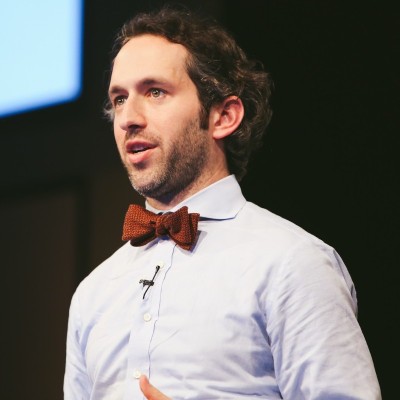
David Rothschild · Principal Researcher, Microsoft Research
Share:
Show Notes
In this episode, Samuel sits down with David Rothschild from Microsoft Research to explore why AI agents are poised to end the attention economy as we know it.
David shares his research perspective on how autonomous AI agents will change the way businesses compete for attention, how decision makers should think about this shift, and what it means for enterprise strategy.
Key Takeaways
- Why AI agents represent a fundamental shift in how information is consumed
- How the attention economy changes when agents act on behalf of users
- What enterprises should be preparing for as AI agents become mainstream
- The research behind Microsoft’s approach to AI agent development
Resources
Microsoft ResearchAI AgentsAttention EconomyEnterprise Strategy
Samuel
David, welcome to the show. David, you're the lead author of the agentic economy paper. In it, you explored the shift from AI as a productivity tool to AI agents as market participants and what that does to competition and discovery when agents become the interface, basically. So I'm really happy to have this discussion with you because I personally think that agents are going to have a lot of impact on our lives as consumers. But before we jump in, can you please just start by quickly introducing yourself? Like what's your career path and what's been your journey as a Microsoft researcher?
David Rothschild
First of all, thank you for having me. Excited to talk to you today. So basically, I have my PhD in applied economics at the University of Pennsylvania in market design about, I guess, 14, 15 years ago. And from there, I went to Yahoo Research for just one year before moving on to Microsoft Research. And it's been an amazing and diverse career insofar as I started out doing a lot of work directly in market design thinking about auctions and futures markets and all sorts of ways in which we aggregate people's information, how we understand that. And from that, I moved into work into survey research and just a broader scope of how we create forecasts and market intelligence. With that, I worked a lot with the ads teams across Microsoft and understanding the impact of ads and how you connect various ways of understanding not just kind of the correlation between various things, but the causal impact of ads and what that means for how we were selling ads and how people were utilizing them. I've worked in a lot of questions regarding kind of the other side of paid media, earned media, thinking about the market for news and information in general, how that mixes with paid media, how that shifted over time. That's included a lot of really awesome work with MSN, Bing, and others. All this work, by the way, is generally public or there's a mix between internal and external work, which has been a really great benefit of being at Microsoft and understanding how this is all changing as the markets have moved from a world in which newspapers and TV were selling large bundles that people were consuming in long swaths of time or altogether moving into search news results into questions about how social media and now of course questions about how LLMs are distributing news and information. And ultimately, so I have this research agenda around kind of behavioral economics and models and markets. I have a research agenda around markets for ads and market intelligence, news and information. And of course, as with many other researchers, I've been so interested in LLMs and how that's affecting productivity and really all of society. So initially, right after ChatGPT came out, I spent a lot of time thinking about the very discrete impacts of LLMs on various productivity things we care about. And that has graduated into larger questions around the effect on the full economy, the effect on full society, especially as we look from kind of the short-term impact to longer-term impacts, what happens when there's more general adoption? And so it's been quite a ride. And for those of you who are not familiar, Microsoft Research sits outside of the product groups, allows us to do much longer-term research, wider scope, working with academics, publishing papers. So keeping one foot inside of what Microsoft's doing, engaging in platforms and data here, but also bringing in and engaging with a wider academic community.
Samuel
Sounds like a really interesting field to be in. And yeah, you mentioned it that it will affect all of society. I think Google has changed the way we're transacting like 20-something years ago and then Amazon. And now we're again at another shift where we have another kind of technology that will change the way we're interacting and we're buying things as consumers. And it will have tremendous impact on every one of us. When you talk about an agentic economy, what do you exactly mean by that? And how is this fundamentally different from how most people are thinking about AI today, which is mostly in terms of LLMs. I don't even think that agent at that point is widely spread. Not everybody, everyone is aware of agents. So how does that change from the current narrative around AI?
David Rothschild
Well, you actually set me up very nicely there, which is that one of the ways in which we've been approaching this as we kind of move forward in this research is to think about that last disruption, to think a lot about what happened when we moved into a computer- and web-based world and the economy shifted with it. And there's so much to learn by studying how that happened and all of the assumptions we had and what we wish we had known and wish we had done as we look back on that. And so if you move, let's keep it really simple and think about the digital economy. The move from kind of brick-and-mortar economy to digital economy. And you can think about this in terms of your portals coming to being in the mid-'90s. So AOL, CompuServe, et cetera. These are very tight economies. Right? So you logged onto your portal, all of the businesses had to operate through that. It was a really tight walled garden in which basically the owner of these portals extracted all of the rents. Right? They got these subscription fees, transaction fees, everything flowed through them. Then all of a sudden, broadband Internet opened everything up and the World Wide Web came and we moved from these really tight walled gardens into a billion flowers blooming. And if you were alive and optimistic at that time, you were thinking about this incredible way in which everyone will get their own personalized newspaper with all the information they need, their own personalized product with whatever they needed to consume. And then we turn around and just a few years later, we have the cell phones and we have another kind of technological shift that comes with it. And somehow we end up in these really tight walled gardens again, right? Where almost all B2C commerce is flowing through so few companies. Amazon controls 41% of revenue in online sales. Walmart, another 10%, so over 50% of online sales in the U.S. go through two companies. And almost one half of all ad revenue, not digital ad revenue, all ad revenue flows through three companies, Amazon, Facebook, and Google, as they control almost or over two-thirds of digital ads, which are now over two-thirds of total ad sales. So attention and money flowing in through these few companies, we've moved from walled gardens to really open to more walled gardens. And when I'm talking about the agentic economy, I'm asking about what comes next as the current digital economy rolls into a new future as technological challenges are overcome. We know they're going to be overcome so that eventually, a couple years from now, maybe sooner, maybe later, the vast majority of us are operating with a personal assistant agent that is somehow engaging with businesses, whether or not that's with their agents or with a proxy for their agents. And as we move from operating inside of these platforms, inside of the World Wide Web, to less human-website interaction or human-app interaction and more agent-agent interaction, what comes next in these larger questions about where the information is stored, where the money is flowing, and ultimately, what does that mean for welfare for consumers, for businesses, for platforms, for all of the key stakeholders that we care about? That was the first part of your question. Sorry, hopefully I remember. The second part was more about how is this fundamentally different than what people are thinking today. So as I said, just like a lot of other people, we really started thinking about how AI was going to affect the tasks that we do. That's kind of the first thing that we cared a lot about and did a lot of research on. So, you know, I can sit there and tell you that some in a B2C stuff, you know, what happens when you search for a product and you have an AI assistant versus an old-school web situation, you do search and you click on links. And we did a bunch of tests here. And the key thing is that, you can think about all the other work stuff we do, whatever you want to look at, that is all what I'll call kind of stage one, kind of, kind of disruption, which is to say, you're looking at how the new technology is augmenting or even replacing some of the tasks inside of the current workflow. And then you can start thinking, okay, well, now that it has made this part of the task, this task faster or more efficient and better, whatever, however, it impacts it. Now I'm going to start reallocating my resources, my time as a human in a B2C setting or maybe as an employee in a work setting. And so I kind of think of these stage two disruptions as I start shifting the resources that I expend in various tasks. So I do, I spend more time editing, less time writing. I spend more time thinking about new products I want to buy or thinking about, you know, other ways and kind of shifting my time in my conversion journeys for personal goods. But the real disruption happens when you reach that next stage. When you move from augmenting tasks into reallocating resources all in the same sort of workflow to let's create new workflows that are AI-first workflows. And this is where the big disruptions come in. And it's also where there just isn't as much thought in many ways because everything is moving so incredibly fast. I don't blame a single person for getting caught up in the short-term. How is LLM affecting this and how LLM is affecting this because it's so hard to absorb. But we try to take a step back and say, let's assume away some of the changes that we know are going to happen over the next few years and start asking the big questions about where does this get us. And this is so critical because there are many different paths as you start looking in the future. And some of them are good. And some of them are not as good. And there are things we can be doing now in order to get us back on the right path. And that's when I say I lean back into these earlier disruptions and say, what I wish I was asking and knew in order to get us to good places. And so it's all about thinking about those questions now so that we can help guide whether or not it's you think about this in terms of my employer, but more generally society to get to the good places. And that's why we're asking these questions.
Samuel
So for a consumer that's not tech savvy and will live in this new world, it's basically how will I use ChatGPT, Gemini, Grok, whatever LLM you're using and being able to reach out to the market, right? How will I be able to find goods and services and the LLM will surface it to me. So we're moving from the discussion of AI or LLM only as a productivity tool, but more as making markets. Now it will completely shift the way we're buying, which means that the different actors in the market will have to compete differently. So how do you see that?
David Rothschild
Yeah, it's a great question. And obviously, as I set up in the response to the last question, this isn't as much a discrete answer as saying there's a couple of different options where we could end up. And I like to kind of, you know, if we want to get the cleanest way to describe it is to think about us ending up with walled gardens or a web of agents. And as I was describing, right now we start out in a world of pretty strong walled gardens, right? We have a few major platforms, especially in the B2C space, which really dominate people's time and money. And those walled gardens are going to want to continue to try to gain on their hegemony and especially. They're also the same companies that have invested heavily in a lot of the LLM technology. And so they have a lot of advantages there. And so you can imagine a world in which actually the things that are probably not as good for consumers right now could continue and actually become even worse in some sense. And so if you think about your experience on some major commerce sites, there are a lot of ads and a lot of promoted self-preferenced products owned by the platform that dominate the search results that you get. And so you have an attention economy that as you search and whether or not this is also true on Google and Bing and others as well, there is a lot of value placed on the things that end up on top. And these are about businesses spending money to get there, about getting your attention. And these things can still exist even in an agentically mediated world if there isn't a push towards a more open environment. A web of agents that kind of reflects the kind of the ethos of the World Wide Web. If you get there, you're going to see a shift from an attention economy to more of a preference economy because in a more open environment where you're an agentic companion, your personal assistant, your however we call your agent is going to go out there and be able to search pretty widely because they aren't as constrained by time as you are. Their attention, they don't get bored. They can go out and they can look at thousands of products and come back with the best fit and quality and price to match the things you're interested in. And in that world for businesses to compete, they are not going to be spending tons of money to get your attention because the marginal attention of your agent isn't worth that much. They need to work on that fit. They need to make products that work for you and your needs. They need to work on their quality. They need to work on feedback and working well with consumers and their agents in order to get good reviews, because that's the only way they're going to get more business. And so you can really look at kind of two different plausible spaces, one kind of bad place in which actually we kind of double down on some of the problems that we currently have with the attention economy: more money continues to be spent in order to just get in front of you and get on top of that line, even if that's your agent or you. And then you can also imagine a much better place and where a more open environment really leads to companies transitioning that marketing money away from your attention to actually create better products with better fit and to create more detailed reviews and validations to ensure that you're actually getting what you hope for. And so this is one of the kind of the key questions that we are dealing with is this kind of potential for really good or really bad outcomes.
Samuel
The paper, I remember you mentioning that the real economic impact of generative AI will come from reducing the communication frictions between the consumers and the businesses. So what's the biggest market dynamic that will change when that friction drops to near zero in your opinion?
David Rothschild
I really want to make sure I get the wording right here because I find this is a very exciting way to think about LLMs and their impact, especially as we move into an agentic space, which is to say that everyone on first blush thinks a lot about the processing power that LLMs bring to all of the stakeholders. This idea that I now have an agent at my disposal who can take data, whether or not that is the songs that I've been listening to or all of my interests and thoughts and engagement and think about what product is a great fit for me. The same thing and how it works for productivity is super exciting for that kind of processing power. And what we write in this paper and kind of lean into is to say this great leveling of processing power is obviously extremely important. The fact that the advantages that big companies had over smaller companies and the ability to harness cloud resources versus what maybe an individual or small company had is narrowed in some sense. That's super exciting. But the other thing that comes with the reduction of the disparities in processing power comes with this question about communication frictions. This idea that LLMs and agents would ultimately allow instantaneous communication at extremely low cost in natural language. And that shifts the way in which all businesses can be transacted, allows for you to break up tasks and goals into much smaller bites because you could put them all together really easily. It allows again, your agent in a B2C world to just talk to anyone and get tons of information brought in at a very low cost. Going back to the last point between walled gardens web of agents, the reduction of the technological barriers to friction doesn't mean that there aren't going to be artificial barriers that block this communication. It doesn't mean that companies are not going to try their best in order to continue to restrict the ability of your agent and the business's agent to easily intermingle. Because of course, lock-in is the key protection that these larger walled gardens have. This idea that it is quite costly for you right now to switch providers, to switch platforms, because as a human, it is extremely costly to kind of start up again with a new provider, whether or not that's my tax accountant or my buyer of toilet paper. There's a lot of costs to, you know, switching, switching over. And the communication frictions could just really eliminate those because it would make it possible for my agent to simply move me to whoever is the most efficient on both a business and a personal perspective. But of course, this is going to be a great struggle. Should this happen, should we be able to harness this ability to drop frictions to near zero? What you'll see is a lot of decentralization away from digital gatekeepers. You're going to see a lot more division of labor and specialization, a lot more innovation in doing micro-tasks and then being able to coordinate, orchestrate, as it were, a lot of different small providers. And so it could really shift everything we do in B2B, B2C, and as employees, assuming that artificial walls don't pop up to really make this more difficult than it could be technically.
Samuel
Yeah, I imagine a world where like Gemini or ChatGPT or, you know, all the popular platforms out there close their ecosystem to others. Just recently, OpenAI announced that they will start supporting ads on their platform. I mean, how do you ensure that ChatGPT is not pushing or we're not starting to have the same concept as we're seeing with sponsored ads on Amazon or elsewhere start happening on ChatGPT and will small businesses be able to get out of the pack with this new reality.
David Rothschild
I'm loath to talk about the future business plans of any given company, but I will tell you this. You can hop back on the Wayback Machine and see images of what search ads used to look like in the beginning of search. These big, clunky boxes with dark coloring, very different, very offset, very clear. A few years ago, we ran a study where we just asked people to count the number of sponsored results on search pages. And we did so with older images and newer images. And as you can imagine, it got harder and harder over the years to tell the difference between a sponsored and a non-sponsored, an organic response. So obviously once you open up to ads inside that space, ads which are powered by a tremendous amount of information that you supply and as someone who's worked heavily in search data, can tell you. You supply a lot of information to search. You supply magnitudes more information to your AI assistant agent. And so it is a brave new world on what ads could do. And it is extremely important that we think about the norms and regulations, the demand coming from consumers and businesses. To make this something that works for the core stakeholders, consumers and smaller businesses and doesn't in a way kind of block out those small businesses and overwhelm the consumers. And so it is a really tricky time to be thinking about where ads go. As I said, I have a dream of a preference economy, one that moves us away from grabbing your attention and all this money and effort being spent on attention and one spent more to build better products which have better fit and ultimately are conveyed in a more conducive way for the core stakeholders. That is the hope, but you need protocols, you need a push from people to make that the reality. You need people worried and fearing what a walled garden powered by ads looks like to understand the need to push for the type of regulations and protocols and shared responsibility that allows this to be a more open web experience, a web of agents, which would ultimately lead to more innovation, higher welfare gains for society, and more equitable distribution of welfare between the consumers and the smaller businesses rather than the platforms that control the ad-based units and create vertically integrated walled gardens that ultimately will have a lot of barriers to entry.
Samuel
There will be an ideal world where we stop spending, actually companies stop spending that much money on grabbing our attention and putting it into services and products. But at the end, I think we'll, they'll still need to persuade someone or something. Right? And I think one of the questions is, who are they persuading? The human, the assistant agent, the ranking system, maybe a kind of an SEO system for agents. What's your, what's your take on this?
David Rothschild
That's the question. Kind of two, I think you nailed the two main things, which are number one is that, you know, right now we already have ranking systems. We have algorithms everywhere. Obviously there's more content than we can ever consume and whether or not it's a ranking system in social media or search, et cetera, there's always organizing of content. Obviously in a world in which we're not visualizing, that becomes more important. And what I mean by that is to say that a world in which the intermediate step goes through an assistant agent. Does become more critical because ultimately you still see the first X number of responses in a search. But if an assistant agent is providing maybe less than X number of responses back to you as options on something, then the choices of what the ranking has provided that and that has provided to you becomes more critical. So that step is very critical. This question about what businesses are going to do to optimize on ranking algorithms. And so we really think it's quite important that discovery layers are transparent in their methodology and are created in a way that allows us to better understand ultimately how businesses are optimizing through that and that it is open in ways that will induce quality rather than pay in getting into those positions. And so I think that that is a very critical question when it comes to that flywheel. And then the second kind of part about that is, so you have the ranking elements and then you also do have some, there'll always be some concept of businesses paying into the system, whether or not it's ads, but there's other ways in which businesses can pay into the system to get in front of the agents or the consumers. And our hope is that we find ways and innovate on ways that, as we were saying, are less about just grabbing people's attention, but more about deserving to be there. Right? So if you improve your product fit, if you improve the quality of your product, if you improve the engagement and how you purchase and work through the product, then you make sure and hope that that's reflected. Now, you have also new businesses and brands that don't have a steady flow of validation. There has to be ways in which you can get in. Advertising does that. And so we are also working and innovating ways: how do you do that in a way that's incentive-compatible to the interests of consumers? And these are certainly questions that we'll be talking about more publicly in the near future, but that's very important. So you can't totally close off advertising. Otherwise, you would have no way of new entrants. But advertising is really a very different beast if it's done in the service of getting high-quality feedback rather than just getting attention.
Samuel
Do you see kind of a barrier to entry for small businesses? How do you maintain differentiation without simply competing on price? I'll give you an example. I'm looking for a new dining table at home, like a wood table, and I'm looking for a local artisan to have something more custom. But when I'm searching on any search engine, obviously all the behemoths from this world are surfacing in the first search results. In this agentic world where I'm asking an LLM to, can you help me find this dining table? Will I be able to surface this small business that lives two cities away from me. Do you think it will change or we'll still be faced with the same kind of issue we're having right now? And their only option will be to have a better price so it's surfaced higher in the ranking.
David Rothschild
Yeah, so there are a couple of different ways to look at this and a couple of different possibilities. And again, this is one of those things where I don't have a discrete answer for you. I have a couple of different possible ways this goes. So number one is that it's extremely likely and we're hopeful for the idea that service agents that represent businesses really do replace websites in the not-too-distant future as a primary point of contact. And insofar as, let's be clear. Having agents engage with websites is a kind of silly thing in the sense that the websites are optimized for humans and the type of information that's provided in the way that is structured. So ultimately, agents engaging websites are a very inefficient practice. And so as humans, it's great, but for agents, you want them integrating with versions of the businesses that best represent the businesses. And these can be a much lower cost to create and to maintain in an effective way. And so my hope is that smaller businesses will be able to actually even the playing field on how they're able to represent themselves. Now, of course, that doesn't mean anything if nothing is there to validate that business and ultimately a small business that operates in a small niche where they're making tables that fit your unique taste and maybe they just sell a couple hundred a year, how are they going to get into the system in a way that they're found? So hopefully, again, things that we're working on and I think I'm very excited as a possibility is more decentralized, more bespoke recommendation systems that really allow smaller businesses to compete for very niche fit in an effective way. And so there are a lot of different ways in which this can go about it. But I'll take a step back to say this is that we are not bound by the human recommendation loops that were created for humans in an agentic world. And so we could be more creative in thinking about with the unique reach and scale of agents, how they can explore more businesses more effectively, because again, there is the ability for it to create tons more feedback in the system than what currently happens when humans are asked to provide feedback into a system. And so the hope is that decentralized, more open search protocols, recommendation engines, ranking algorithms, depending how you describe it, will be implemented in a way that allows that small business to reach consumers that are looking for it and not too dissimilar to the way that social media on its plus side has allowed niche communities to come together. Obviously, many times they go sometimes for ill, but you can see how borrowing from that and thinking about more decentralized systems, that this is a possibility. Again, this is where the push to hope that we end up with a more open system rather than what would happen in a closed system where the barriers to entry could be very high. And ultimately, you won't have the kind of innovation and growth that leads to niche product development for niche demand that can happen in a more open system.
Samuel
I love the fact that you're mentioning that we have different ways of providing recommendations because we have different systems. Right now, I think most of us are looking at reviews, for instance, when you're trying to make a decision, but it could be totally biased. Now it can be automated, could be false reviews, could be like most people if I'm looking on, for instance, a restaurant in my region, people will mostly leave a review when they're unhappy more than when they're happy. So all of this is inducing biases in the process while in the agentic world, it can grab other pieces of information to try to create a good recommendation, right? That's what you mean?
David Rothschild
Exactly. Right? So, you know, your agent helped you figure out which restaurants to go to. You figured out with that agent, the restaurants you're not going to go to, you supply information back in a natural way to your system. And so the question is how to properly incentivize just a ton more information, less-biased information back into the recommendation systems in a way that preserves privacy, but also allows us to just better understand potential businesses out there to provide the right recommendation for the right interests. And again, this is non-trivial, but it's a time to take a step back. And this is again, kind of talking about the initial premise of this type of work. A lot of stuff is going to happen here incrementally because all of the major companies involved have invested so heavily and they need to make things that work inside the framework of their current businesses. Microsoft has given us, as a smaller group, the opportunity to take a step back and say, let's jump a couple of years ahead and think, tabula rasa, about how you would build the right systems given the time to make an AI-first, an LLM-first, an agent-first workflow. And you can reimagine these things. And so I don't want us to end up where we'd end up if we just kind of incrementally move forward from the current digital marketplace, but to take a step back and say, how do we completely reimagine it? When AI, when agents, when various versions of yourselves are engaging at scale, you can reimagine how feedback works and reimagine it for the better.
Samuel
You mentioned a couple of times during the discussion, those agentic walled gardens, or actually those walled gardens that exist right now on the different marketplace, moving from that to more open web of agents. So what are the forces you see pushing us toward one model versus the other? So one being we're staying in this world of walled gardens and the other one being we're using more an open model with, you know, open protocols and we're all collaborating together to get to this ideal state of the marketplace.
David Rothschild
Yeah, so great question. And unfortunately, I have to say that with continuity, where we start from and shorter-term risk, walled gardens are a very likely scenario in the sense that, especially in the short-term, they just sort of work in a safe way. They provide a way to really ensure quality, filter, to provide insurance, right? So when you purchase stuff on the major commerce platforms right now, they're 100% guaranteed, right? And they can continue to do so even if they move into a more agentic state, which is not that easy in a more open setting. And so this incumbent advantage is going to make a huge difference in where we start out from. That being said, you know, there's going to be a lot of push for innovation that is blocked out of these gatekeepers, blocked out of these walled gardens, especially when it comes to utilizing the lowered communication friction to rethink how, say, information flow can be broken up into small bits. And you can create all new companies and all new ways of creating information content, all new ways of creating digital productivity that is in small bytes that would be kind of blocked out of a traditional system. And so there'll be a lot of pressure there. There'll be a lot of pressure because of the welfare implications. Currently, major platforms take a real huge share. Think about app stores and others right off the top. And so it's not that surprising to see and people understand what that potentially means for the distribution of welfare. The innovations about the growth of total welfare and the distribution of welfare, put those together, but there's a lot of technological hurdles that need to be overcome and a lot of governance hurdles that need to be overcome in order to create the shared protocols and regulations and ultimately to create something that is trustworthy and high enough security to create demand to hand over agency is going to be a lot easier for consumers and businesses to hand over agency to agents in a tightly controlled environment than it will be in a more open environment because the risks are higher, but the rewards are higher too. And so that's going to be the great struggle. Short term, I think it's pretty clear where we're headed. Long term, can we break it open? Are we going to end up inevitably in a cycle like the digital markets where we started really tight and opened up and then it collapsed again? These are the things we want to prevent as well.
Samuel
You've mentioned like app stores and you also mentioned earlier that, you know, the web was built for humans, not, you know, websites, actually not the web, but the websites were built for humans and not for agents. Now, are we looking at a world where a business, if I want to be seen instead of building a website, I will build an agent and I will put it in a marketplace, like an app store. But in a world where it's still a walled garden. I'll have to build one for every provider out there, versus we have this open ecosystem where I'm building this agent once, a bit like the web right now. And I put it there, and then it's just discoverable by.
David Rothschild
Exactly correct. Yeah. Yeah, I don't know how wonky your audience is or not, but I will mention, you know, API, which is a protocol that came out from OpenAI. What it essentially asked businesses to do was provide a menu of their goods and services and prices. And then essentially speaking, OpenAI creates a pseudo-agent on their behalf. But that is totally captured in a vertically integrated system in which the business has no agency over what their sales process looks like. They get limited data back for the conversion journey. They can't easily negotiate or price discriminate or do any of the things that a business would normally do in order to control their brand and make sales. And so that is not a portable agent. That is essentially a pseudo-agent that is within one environment. If that type of protocol becomes the norm, then what you're going to have to do as a business is create versions of yourself everywhere rather than have one centralized, as you said, agent that's out there selling. And this is what currently happens as websites have given way in many ways to have different apps in different places. Different instantiations of your company is very costly in many ways for the small businesses, not to mention the transaction costs being taken off the top to exist inside of these various platforms. And so this is a huge struggle, especially for smaller and medium-sized businesses in how they can innovate and grow unless they have a more open environment.
Samuel
That's fascinating. Seeing that this disruption is coming for leaders that want to be proactive about it, but they don't want to fall into these short-term hype cycles. I know there's a lot of hype about everything AI right now. What practical advice will you give them if they want to be ready for this new future?
David Rothschild
So what I basically tell everyone is unless you are really caught up in these short-term cycles to try to think longer term, right? Not to confuse these stage one disruptions, this augmentation that is kind of in the same workflow and even kind of stage two, more redistribution of workflows, but to try to think how does your company work in the next larger disruptions in AI-first workflows. And so I think it's very difficult, obviously, because everyone wants to take advantage of things now and understand how things are affecting them now. But there's just so many things that we know this technology will be able to do, that it will overcome in the next few years. And the biggest opportunities are to figure out where that is. And as the saying goes, since you're Canadian, to skate to the puck, be out where that is going to be. That is where the huge gains are going to be and where many companies are distracted by the short-term disruptions are missing out on those potentials. And then the second thing, of course, is to try to avoid being locked in. So think about ways in which you are taking your AI disruption that allows you to be flexible, allows you to continue to control your own agency because similar to moving into cloud and whatnot, that kind of created some crazy effects for businesses as they kind of grew into it. You want to from the models to the technology they're using to gain access to the models, to the harnessing and orchestration. You want to ensure that you continue to be flexible because these things are evolving so fast. You really want to ensure that you can continue to reach the thing that's most efficient for you at any given time.
Samuel
That's really a fascinating discussion. I can have so many questions, but unfortunately, we're almost at the end of our time together. I'd like to finish with my two signature questions. The first one being, your number one productivity tip personally when it comes to using AI, or productivity or not, how are you using AI to make your life easier in your own work?
David Rothschild
So I'm continuously focused on where quality and human judgment matter. And so continuously thinking about what AI can do for me and for people like me that I either am not that good at or it is not as important for me to have that skill. And so to continue to hone those skills, which are unique on top of AI. So understanding that that moves away from some first drafting, some summarization into editing, into iterating, into thinking about the high-level question and kind of continuously thinking about where the AI mistakes are really costly, so that I am putting the human at the right places in the loop. But also, just like the answer to the previous question, trying to stay a few steps ahead of that, also understanding where AI is going to make sure that I'm continuously thinking about those skill sets that will continue to be of value in the future. And though I think in research, for me, it's always about high-level questions, framing, and ensuring quality along the way.
Samuel
It's not easy to stay ahead of the curve nowadays because it's going so fast. It's like, yeah, that one is not an easy one, but looking ahead 10 years, how do you think AI will change the way we live and work, but obviously consume as consumers, how will this affect us in the next 10 years? And I know it's a long timespan.
David Rothschild
That's right. Yeah. Yes, I think that's your easiest question. I look at a lot of what's happened in the digital economy over the last couple of decades, and I think we're going to look at that as a weird anomaly. Insofar as we have this timeframe where we search for things, we've got a bunch of blue links, click on things. It's a very unnatural way of doing B2C. And similarly, there's a lot of other things that applications provided us that are kind of unnatural towards how we would have generally have drafted and engaged in our productivity work as well. And so I see almost AI is bringing us back to a more natural environment, but in a supercharged way, right? And so, whereas a few decades ago when you needed to buy a durable good, you went and you talked to one or two people and you got advice, you went back and forth, you engaged. It's similar to that, except now that individual you talked to just has all of human knowledge wrapped up in them and has the ability to communicate out to all places and all times. And so I think kind of moving from this, the way the digital economy is structured now to focus on assistant agents as a main intermediary of the stuff that we do will actually in many ways feel more natural and provide an exciting future. Lots of, obviously, landmines along the way and we'll be continuously thinking about how we get to good places rather than bad places. But ultimately, I'm quite optimistic.
Samuel
I love your answer. I personally have ADHD and the old ways of doing it weren't very effective for me. Like search for products, reading too-long descriptions, reading reviews was very painful for me. And nowadays, I'm just asking a question, follow-up question, having a natural conversation like I'll have if I go to a brick-and-mortar store, it feels more natural for me. Yeah, just love how you're seeing the future. It looks exciting. So thank you so much, David, for your time. I'd love to have another discussion maybe in a year or two and see how it has evolved because it's going so fast that I think a lot of what you've described today will have happened in the next two years. But again, thank you so much for joining us and taking the time.
David Rothschild
Thank you for having me. Have a good day.
Samuel
Have a good day as well.
David, welcome to the show. David, you're the lead author of the agentic economy paper. In it, you explored the shift from AI as a productivity tool to AI agents as market participants and what that does to competition and discovery when agents become the interface, basically. So I'm really happy to have this discussion with you because I personally think that agents are going to have a lot of impact on our lives as consumers. But before we jump in, can you please just start by quickly introducing yourself? Like what's your career path and what's been your journey as a Microsoft researcher?
David Rothschild
First of all, thank you for having me. Excited to talk to you today. So basically, I have my PhD in applied economics at the University of Pennsylvania in market design about, I guess, 14, 15 years ago. And from there, I went to Yahoo Research for just one year before moving on to Microsoft Research. And it's been an amazing and diverse career insofar as I started out doing a lot of work directly in market design thinking about auctions and futures markets and all sorts of ways in which we aggregate people's information, how we understand that. And from that, I moved into work into survey research and just a broader scope of how we create forecasts and market intelligence. With that, I worked a lot with the ads teams across Microsoft and understanding the impact of ads and how you connect various ways of understanding not just kind of the correlation between various things, but the causal impact of ads and what that means for how we were selling ads and how people were utilizing them. I've worked in a lot of questions regarding kind of the other side of paid media, earned media, thinking about the market for news and information in general, how that mixes with paid media, how that shifted over time. That's included a lot of really awesome work with MSN, Bing, and others. All this work, by the way, is generally public or there's a mix between internal and external work, which has been a really great benefit of being at Microsoft and understanding how this is all changing as the markets have moved from a world in which newspapers and TV were selling large bundles that people were consuming in long swaths of time or altogether moving into search news results into questions about how social media and now of course questions about how LLMs are distributing news and information. And ultimately, so I have this research agenda around kind of behavioral economics and models and markets. I have a research agenda around markets for ads and market intelligence, news and information. And of course, as with many other researchers, I've been so interested in LLMs and how that's affecting productivity and really all of society. So initially, right after ChatGPT came out, I spent a lot of time thinking about the very discrete impacts of LLMs on various productivity things we care about. And that has graduated into larger questions around the effect on the full economy, the effect on full society, especially as we look from kind of the short-term impact to longer-term impacts, what happens when there's more general adoption? And so it's been quite a ride. And for those of you who are not familiar, Microsoft Research sits outside of the product groups, allows us to do much longer-term research, wider scope, working with academics, publishing papers. So keeping one foot inside of what Microsoft's doing, engaging in platforms and data here, but also bringing in and engaging with a wider academic community.
Samuel
Sounds like a really interesting field to be in. And yeah, you mentioned it that it will affect all of society. I think Google has changed the way we're transacting like 20-something years ago and then Amazon. And now we're again at another shift where we have another kind of technology that will change the way we're interacting and we're buying things as consumers. And it will have tremendous impact on every one of us. When you talk about an agentic economy, what do you exactly mean by that? And how is this fundamentally different from how most people are thinking about AI today, which is mostly in terms of LLMs. I don't even think that agent at that point is widely spread. Not everybody, everyone is aware of agents. So how does that change from the current narrative around AI?
David Rothschild
Well, you actually set me up very nicely there, which is that one of the ways in which we've been approaching this as we kind of move forward in this research is to think about that last disruption, to think a lot about what happened when we moved into a computer- and web-based world and the economy shifted with it. And there's so much to learn by studying how that happened and all of the assumptions we had and what we wish we had known and wish we had done as we look back on that. And so if you move, let's keep it really simple and think about the digital economy. The move from kind of brick-and-mortar economy to digital economy. And you can think about this in terms of your portals coming to being in the mid-'90s. So AOL, CompuServe, et cetera. These are very tight economies. Right? So you logged onto your portal, all of the businesses had to operate through that. It was a really tight walled garden in which basically the owner of these portals extracted all of the rents. Right? They got these subscription fees, transaction fees, everything flowed through them. Then all of a sudden, broadband Internet opened everything up and the World Wide Web came and we moved from these really tight walled gardens into a billion flowers blooming. And if you were alive and optimistic at that time, you were thinking about this incredible way in which everyone will get their own personalized newspaper with all the information they need, their own personalized product with whatever they needed to consume. And then we turn around and just a few years later, we have the cell phones and we have another kind of technological shift that comes with it. And somehow we end up in these really tight walled gardens again, right? Where almost all B2C commerce is flowing through so few companies. Amazon controls 41% of revenue in online sales. Walmart, another 10%, so over 50% of online sales in the U.S. go through two companies. And almost one half of all ad revenue, not digital ad revenue, all ad revenue flows through three companies, Amazon, Facebook, and Google, as they control almost or over two-thirds of digital ads, which are now over two-thirds of total ad sales. So attention and money flowing in through these few companies, we've moved from walled gardens to really open to more walled gardens. And when I'm talking about the agentic economy, I'm asking about what comes next as the current digital economy rolls into a new future as technological challenges are overcome. We know they're going to be overcome so that eventually, a couple years from now, maybe sooner, maybe later, the vast majority of us are operating with a personal assistant agent that is somehow engaging with businesses, whether or not that's with their agents or with a proxy for their agents. And as we move from operating inside of these platforms, inside of the World Wide Web, to less human-website interaction or human-app interaction and more agent-agent interaction, what comes next in these larger questions about where the information is stored, where the money is flowing, and ultimately, what does that mean for welfare for consumers, for businesses, for platforms, for all of the key stakeholders that we care about? That was the first part of your question. Sorry, hopefully I remember. The second part was more about how is this fundamentally different than what people are thinking today. So as I said, just like a lot of other people, we really started thinking about how AI was going to affect the tasks that we do. That's kind of the first thing that we cared a lot about and did a lot of research on. So, you know, I can sit there and tell you that some in a B2C stuff, you know, what happens when you search for a product and you have an AI assistant versus an old-school web situation, you do search and you click on links. And we did a bunch of tests here. And the key thing is that, you can think about all the other work stuff we do, whatever you want to look at, that is all what I'll call kind of stage one, kind of, kind of disruption, which is to say, you're looking at how the new technology is augmenting or even replacing some of the tasks inside of the current workflow. And then you can start thinking, okay, well, now that it has made this part of the task, this task faster or more efficient and better, whatever, however, it impacts it. Now I'm going to start reallocating my resources, my time as a human in a B2C setting or maybe as an employee in a work setting. And so I kind of think of these stage two disruptions as I start shifting the resources that I expend in various tasks. So I do, I spend more time editing, less time writing. I spend more time thinking about new products I want to buy or thinking about, you know, other ways and kind of shifting my time in my conversion journeys for personal goods. But the real disruption happens when you reach that next stage. When you move from augmenting tasks into reallocating resources all in the same sort of workflow to let's create new workflows that are AI-first workflows. And this is where the big disruptions come in. And it's also where there just isn't as much thought in many ways because everything is moving so incredibly fast. I don't blame a single person for getting caught up in the short-term. How is LLM affecting this and how LLM is affecting this because it's so hard to absorb. But we try to take a step back and say, let's assume away some of the changes that we know are going to happen over the next few years and start asking the big questions about where does this get us. And this is so critical because there are many different paths as you start looking in the future. And some of them are good. And some of them are not as good. And there are things we can be doing now in order to get us back on the right path. And that's when I say I lean back into these earlier disruptions and say, what I wish I was asking and knew in order to get us to good places. And so it's all about thinking about those questions now so that we can help guide whether or not it's you think about this in terms of my employer, but more generally society to get to the good places. And that's why we're asking these questions.
Samuel
So for a consumer that's not tech savvy and will live in this new world, it's basically how will I use ChatGPT, Gemini, Grok, whatever LLM you're using and being able to reach out to the market, right? How will I be able to find goods and services and the LLM will surface it to me. So we're moving from the discussion of AI or LLM only as a productivity tool, but more as making markets. Now it will completely shift the way we're buying, which means that the different actors in the market will have to compete differently. So how do you see that?
David Rothschild
Yeah, it's a great question. And obviously, as I set up in the response to the last question, this isn't as much a discrete answer as saying there's a couple of different options where we could end up. And I like to kind of, you know, if we want to get the cleanest way to describe it is to think about us ending up with walled gardens or a web of agents. And as I was describing, right now we start out in a world of pretty strong walled gardens, right? We have a few major platforms, especially in the B2C space, which really dominate people's time and money. And those walled gardens are going to want to continue to try to gain on their hegemony and especially. They're also the same companies that have invested heavily in a lot of the LLM technology. And so they have a lot of advantages there. And so you can imagine a world in which actually the things that are probably not as good for consumers right now could continue and actually become even worse in some sense. And so if you think about your experience on some major commerce sites, there are a lot of ads and a lot of promoted self-preferenced products owned by the platform that dominate the search results that you get. And so you have an attention economy that as you search and whether or not this is also true on Google and Bing and others as well, there is a lot of value placed on the things that end up on top. And these are about businesses spending money to get there, about getting your attention. And these things can still exist even in an agentically mediated world if there isn't a push towards a more open environment. A web of agents that kind of reflects the kind of the ethos of the World Wide Web. If you get there, you're going to see a shift from an attention economy to more of a preference economy because in a more open environment where you're an agentic companion, your personal assistant, your however we call your agent is going to go out there and be able to search pretty widely because they aren't as constrained by time as you are. Their attention, they don't get bored. They can go out and they can look at thousands of products and come back with the best fit and quality and price to match the things you're interested in. And in that world for businesses to compete, they are not going to be spending tons of money to get your attention because the marginal attention of your agent isn't worth that much. They need to work on that fit. They need to make products that work for you and your needs. They need to work on their quality. They need to work on feedback and working well with consumers and their agents in order to get good reviews, because that's the only way they're going to get more business. And so you can really look at kind of two different plausible spaces, one kind of bad place in which actually we kind of double down on some of the problems that we currently have with the attention economy: more money continues to be spent in order to just get in front of you and get on top of that line, even if that's your agent or you. And then you can also imagine a much better place and where a more open environment really leads to companies transitioning that marketing money away from your attention to actually create better products with better fit and to create more detailed reviews and validations to ensure that you're actually getting what you hope for. And so this is one of the kind of the key questions that we are dealing with is this kind of potential for really good or really bad outcomes.
Samuel
The paper, I remember you mentioning that the real economic impact of generative AI will come from reducing the communication frictions between the consumers and the businesses. So what's the biggest market dynamic that will change when that friction drops to near zero in your opinion?
David Rothschild
I really want to make sure I get the wording right here because I find this is a very exciting way to think about LLMs and their impact, especially as we move into an agentic space, which is to say that everyone on first blush thinks a lot about the processing power that LLMs bring to all of the stakeholders. This idea that I now have an agent at my disposal who can take data, whether or not that is the songs that I've been listening to or all of my interests and thoughts and engagement and think about what product is a great fit for me. The same thing and how it works for productivity is super exciting for that kind of processing power. And what we write in this paper and kind of lean into is to say this great leveling of processing power is obviously extremely important. The fact that the advantages that big companies had over smaller companies and the ability to harness cloud resources versus what maybe an individual or small company had is narrowed in some sense. That's super exciting. But the other thing that comes with the reduction of the disparities in processing power comes with this question about communication frictions. This idea that LLMs and agents would ultimately allow instantaneous communication at extremely low cost in natural language. And that shifts the way in which all businesses can be transacted, allows for you to break up tasks and goals into much smaller bites because you could put them all together really easily. It allows again, your agent in a B2C world to just talk to anyone and get tons of information brought in at a very low cost. Going back to the last point between walled gardens web of agents, the reduction of the technological barriers to friction doesn't mean that there aren't going to be artificial barriers that block this communication. It doesn't mean that companies are not going to try their best in order to continue to restrict the ability of your agent and the business's agent to easily intermingle. Because of course, lock-in is the key protection that these larger walled gardens have. This idea that it is quite costly for you right now to switch providers, to switch platforms, because as a human, it is extremely costly to kind of start up again with a new provider, whether or not that's my tax accountant or my buyer of toilet paper. There's a lot of costs to, you know, switching, switching over. And the communication frictions could just really eliminate those because it would make it possible for my agent to simply move me to whoever is the most efficient on both a business and a personal perspective. But of course, this is going to be a great struggle. Should this happen, should we be able to harness this ability to drop frictions to near zero? What you'll see is a lot of decentralization away from digital gatekeepers. You're going to see a lot more division of labor and specialization, a lot more innovation in doing micro-tasks and then being able to coordinate, orchestrate, as it were, a lot of different small providers. And so it could really shift everything we do in B2B, B2C, and as employees, assuming that artificial walls don't pop up to really make this more difficult than it could be technically.
Samuel
Yeah, I imagine a world where like Gemini or ChatGPT or, you know, all the popular platforms out there close their ecosystem to others. Just recently, OpenAI announced that they will start supporting ads on their platform. I mean, how do you ensure that ChatGPT is not pushing or we're not starting to have the same concept as we're seeing with sponsored ads on Amazon or elsewhere start happening on ChatGPT and will small businesses be able to get out of the pack with this new reality.
David Rothschild
I'm loath to talk about the future business plans of any given company, but I will tell you this. You can hop back on the Wayback Machine and see images of what search ads used to look like in the beginning of search. These big, clunky boxes with dark coloring, very different, very offset, very clear. A few years ago, we ran a study where we just asked people to count the number of sponsored results on search pages. And we did so with older images and newer images. And as you can imagine, it got harder and harder over the years to tell the difference between a sponsored and a non-sponsored, an organic response. So obviously once you open up to ads inside that space, ads which are powered by a tremendous amount of information that you supply and as someone who's worked heavily in search data, can tell you. You supply a lot of information to search. You supply magnitudes more information to your AI assistant agent. And so it is a brave new world on what ads could do. And it is extremely important that we think about the norms and regulations, the demand coming from consumers and businesses. To make this something that works for the core stakeholders, consumers and smaller businesses and doesn't in a way kind of block out those small businesses and overwhelm the consumers. And so it is a really tricky time to be thinking about where ads go. As I said, I have a dream of a preference economy, one that moves us away from grabbing your attention and all this money and effort being spent on attention and one spent more to build better products which have better fit and ultimately are conveyed in a more conducive way for the core stakeholders. That is the hope, but you need protocols, you need a push from people to make that the reality. You need people worried and fearing what a walled garden powered by ads looks like to understand the need to push for the type of regulations and protocols and shared responsibility that allows this to be a more open web experience, a web of agents, which would ultimately lead to more innovation, higher welfare gains for society, and more equitable distribution of welfare between the consumers and the smaller businesses rather than the platforms that control the ad-based units and create vertically integrated walled gardens that ultimately will have a lot of barriers to entry.
Samuel
There will be an ideal world where we stop spending, actually companies stop spending that much money on grabbing our attention and putting it into services and products. But at the end, I think we'll, they'll still need to persuade someone or something. Right? And I think one of the questions is, who are they persuading? The human, the assistant agent, the ranking system, maybe a kind of an SEO system for agents. What's your, what's your take on this?
David Rothschild
That's the question. Kind of two, I think you nailed the two main things, which are number one is that, you know, right now we already have ranking systems. We have algorithms everywhere. Obviously there's more content than we can ever consume and whether or not it's a ranking system in social media or search, et cetera, there's always organizing of content. Obviously in a world in which we're not visualizing, that becomes more important. And what I mean by that is to say that a world in which the intermediate step goes through an assistant agent. Does become more critical because ultimately you still see the first X number of responses in a search. But if an assistant agent is providing maybe less than X number of responses back to you as options on something, then the choices of what the ranking has provided that and that has provided to you becomes more critical. So that step is very critical. This question about what businesses are going to do to optimize on ranking algorithms. And so we really think it's quite important that discovery layers are transparent in their methodology and are created in a way that allows us to better understand ultimately how businesses are optimizing through that and that it is open in ways that will induce quality rather than pay in getting into those positions. And so I think that that is a very critical question when it comes to that flywheel. And then the second kind of part about that is, so you have the ranking elements and then you also do have some, there'll always be some concept of businesses paying into the system, whether or not it's ads, but there's other ways in which businesses can pay into the system to get in front of the agents or the consumers. And our hope is that we find ways and innovate on ways that, as we were saying, are less about just grabbing people's attention, but more about deserving to be there. Right? So if you improve your product fit, if you improve the quality of your product, if you improve the engagement and how you purchase and work through the product, then you make sure and hope that that's reflected. Now, you have also new businesses and brands that don't have a steady flow of validation. There has to be ways in which you can get in. Advertising does that. And so we are also working and innovating ways: how do you do that in a way that's incentive-compatible to the interests of consumers? And these are certainly questions that we'll be talking about more publicly in the near future, but that's very important. So you can't totally close off advertising. Otherwise, you would have no way of new entrants. But advertising is really a very different beast if it's done in the service of getting high-quality feedback rather than just getting attention.
Samuel
Do you see kind of a barrier to entry for small businesses? How do you maintain differentiation without simply competing on price? I'll give you an example. I'm looking for a new dining table at home, like a wood table, and I'm looking for a local artisan to have something more custom. But when I'm searching on any search engine, obviously all the behemoths from this world are surfacing in the first search results. In this agentic world where I'm asking an LLM to, can you help me find this dining table? Will I be able to surface this small business that lives two cities away from me. Do you think it will change or we'll still be faced with the same kind of issue we're having right now? And their only option will be to have a better price so it's surfaced higher in the ranking.
David Rothschild
Yeah, so there are a couple of different ways to look at this and a couple of different possibilities. And again, this is one of those things where I don't have a discrete answer for you. I have a couple of different possible ways this goes. So number one is that it's extremely likely and we're hopeful for the idea that service agents that represent businesses really do replace websites in the not-too-distant future as a primary point of contact. And insofar as, let's be clear. Having agents engage with websites is a kind of silly thing in the sense that the websites are optimized for humans and the type of information that's provided in the way that is structured. So ultimately, agents engaging websites are a very inefficient practice. And so as humans, it's great, but for agents, you want them integrating with versions of the businesses that best represent the businesses. And these can be a much lower cost to create and to maintain in an effective way. And so my hope is that smaller businesses will be able to actually even the playing field on how they're able to represent themselves. Now, of course, that doesn't mean anything if nothing is there to validate that business and ultimately a small business that operates in a small niche where they're making tables that fit your unique taste and maybe they just sell a couple hundred a year, how are they going to get into the system in a way that they're found? So hopefully, again, things that we're working on and I think I'm very excited as a possibility is more decentralized, more bespoke recommendation systems that really allow smaller businesses to compete for very niche fit in an effective way. And so there are a lot of different ways in which this can go about it. But I'll take a step back to say this is that we are not bound by the human recommendation loops that were created for humans in an agentic world. And so we could be more creative in thinking about with the unique reach and scale of agents, how they can explore more businesses more effectively, because again, there is the ability for it to create tons more feedback in the system than what currently happens when humans are asked to provide feedback into a system. And so the hope is that decentralized, more open search protocols, recommendation engines, ranking algorithms, depending how you describe it, will be implemented in a way that allows that small business to reach consumers that are looking for it and not too dissimilar to the way that social media on its plus side has allowed niche communities to come together. Obviously, many times they go sometimes for ill, but you can see how borrowing from that and thinking about more decentralized systems, that this is a possibility. Again, this is where the push to hope that we end up with a more open system rather than what would happen in a closed system where the barriers to entry could be very high. And ultimately, you won't have the kind of innovation and growth that leads to niche product development for niche demand that can happen in a more open system.
Samuel
I love the fact that you're mentioning that we have different ways of providing recommendations because we have different systems. Right now, I think most of us are looking at reviews, for instance, when you're trying to make a decision, but it could be totally biased. Now it can be automated, could be false reviews, could be like most people if I'm looking on, for instance, a restaurant in my region, people will mostly leave a review when they're unhappy more than when they're happy. So all of this is inducing biases in the process while in the agentic world, it can grab other pieces of information to try to create a good recommendation, right? That's what you mean?
David Rothschild
Exactly. Right? So, you know, your agent helped you figure out which restaurants to go to. You figured out with that agent, the restaurants you're not going to go to, you supply information back in a natural way to your system. And so the question is how to properly incentivize just a ton more information, less-biased information back into the recommendation systems in a way that preserves privacy, but also allows us to just better understand potential businesses out there to provide the right recommendation for the right interests. And again, this is non-trivial, but it's a time to take a step back. And this is again, kind of talking about the initial premise of this type of work. A lot of stuff is going to happen here incrementally because all of the major companies involved have invested so heavily and they need to make things that work inside the framework of their current businesses. Microsoft has given us, as a smaller group, the opportunity to take a step back and say, let's jump a couple of years ahead and think, tabula rasa, about how you would build the right systems given the time to make an AI-first, an LLM-first, an agent-first workflow. And you can reimagine these things. And so I don't want us to end up where we'd end up if we just kind of incrementally move forward from the current digital marketplace, but to take a step back and say, how do we completely reimagine it? When AI, when agents, when various versions of yourselves are engaging at scale, you can reimagine how feedback works and reimagine it for the better.
Samuel
You mentioned a couple of times during the discussion, those agentic walled gardens, or actually those walled gardens that exist right now on the different marketplace, moving from that to more open web of agents. So what are the forces you see pushing us toward one model versus the other? So one being we're staying in this world of walled gardens and the other one being we're using more an open model with, you know, open protocols and we're all collaborating together to get to this ideal state of the marketplace.
David Rothschild
Yeah, so great question. And unfortunately, I have to say that with continuity, where we start from and shorter-term risk, walled gardens are a very likely scenario in the sense that, especially in the short-term, they just sort of work in a safe way. They provide a way to really ensure quality, filter, to provide insurance, right? So when you purchase stuff on the major commerce platforms right now, they're 100% guaranteed, right? And they can continue to do so even if they move into a more agentic state, which is not that easy in a more open setting. And so this incumbent advantage is going to make a huge difference in where we start out from. That being said, you know, there's going to be a lot of push for innovation that is blocked out of these gatekeepers, blocked out of these walled gardens, especially when it comes to utilizing the lowered communication friction to rethink how, say, information flow can be broken up into small bits. And you can create all new companies and all new ways of creating information content, all new ways of creating digital productivity that is in small bytes that would be kind of blocked out of a traditional system. And so there'll be a lot of pressure there. There'll be a lot of pressure because of the welfare implications. Currently, major platforms take a real huge share. Think about app stores and others right off the top. And so it's not that surprising to see and people understand what that potentially means for the distribution of welfare. The innovations about the growth of total welfare and the distribution of welfare, put those together, but there's a lot of technological hurdles that need to be overcome and a lot of governance hurdles that need to be overcome in order to create the shared protocols and regulations and ultimately to create something that is trustworthy and high enough security to create demand to hand over agency is going to be a lot easier for consumers and businesses to hand over agency to agents in a tightly controlled environment than it will be in a more open environment because the risks are higher, but the rewards are higher too. And so that's going to be the great struggle. Short term, I think it's pretty clear where we're headed. Long term, can we break it open? Are we going to end up inevitably in a cycle like the digital markets where we started really tight and opened up and then it collapsed again? These are the things we want to prevent as well.
Samuel
You've mentioned like app stores and you also mentioned earlier that, you know, the web was built for humans, not, you know, websites, actually not the web, but the websites were built for humans and not for agents. Now, are we looking at a world where a business, if I want to be seen instead of building a website, I will build an agent and I will put it in a marketplace, like an app store. But in a world where it's still a walled garden. I'll have to build one for every provider out there, versus we have this open ecosystem where I'm building this agent once, a bit like the web right now. And I put it there, and then it's just discoverable by.
David Rothschild
Exactly correct. Yeah. Yeah, I don't know how wonky your audience is or not, but I will mention, you know, API, which is a protocol that came out from OpenAI. What it essentially asked businesses to do was provide a menu of their goods and services and prices. And then essentially speaking, OpenAI creates a pseudo-agent on their behalf. But that is totally captured in a vertically integrated system in which the business has no agency over what their sales process looks like. They get limited data back for the conversion journey. They can't easily negotiate or price discriminate or do any of the things that a business would normally do in order to control their brand and make sales. And so that is not a portable agent. That is essentially a pseudo-agent that is within one environment. If that type of protocol becomes the norm, then what you're going to have to do as a business is create versions of yourself everywhere rather than have one centralized, as you said, agent that's out there selling. And this is what currently happens as websites have given way in many ways to have different apps in different places. Different instantiations of your company is very costly in many ways for the small businesses, not to mention the transaction costs being taken off the top to exist inside of these various platforms. And so this is a huge struggle, especially for smaller and medium-sized businesses in how they can innovate and grow unless they have a more open environment.
Samuel
That's fascinating. Seeing that this disruption is coming for leaders that want to be proactive about it, but they don't want to fall into these short-term hype cycles. I know there's a lot of hype about everything AI right now. What practical advice will you give them if they want to be ready for this new future?
David Rothschild
So what I basically tell everyone is unless you are really caught up in these short-term cycles to try to think longer term, right? Not to confuse these stage one disruptions, this augmentation that is kind of in the same workflow and even kind of stage two, more redistribution of workflows, but to try to think how does your company work in the next larger disruptions in AI-first workflows. And so I think it's very difficult, obviously, because everyone wants to take advantage of things now and understand how things are affecting them now. But there's just so many things that we know this technology will be able to do, that it will overcome in the next few years. And the biggest opportunities are to figure out where that is. And as the saying goes, since you're Canadian, to skate to the puck, be out where that is going to be. That is where the huge gains are going to be and where many companies are distracted by the short-term disruptions are missing out on those potentials. And then the second thing, of course, is to try to avoid being locked in. So think about ways in which you are taking your AI disruption that allows you to be flexible, allows you to continue to control your own agency because similar to moving into cloud and whatnot, that kind of created some crazy effects for businesses as they kind of grew into it. You want to from the models to the technology they're using to gain access to the models, to the harnessing and orchestration. You want to ensure that you continue to be flexible because these things are evolving so fast. You really want to ensure that you can continue to reach the thing that's most efficient for you at any given time.
Samuel
That's really a fascinating discussion. I can have so many questions, but unfortunately, we're almost at the end of our time together. I'd like to finish with my two signature questions. The first one being, your number one productivity tip personally when it comes to using AI, or productivity or not, how are you using AI to make your life easier in your own work?
David Rothschild
So I'm continuously focused on where quality and human judgment matter. And so continuously thinking about what AI can do for me and for people like me that I either am not that good at or it is not as important for me to have that skill. And so to continue to hone those skills, which are unique on top of AI. So understanding that that moves away from some first drafting, some summarization into editing, into iterating, into thinking about the high-level question and kind of continuously thinking about where the AI mistakes are really costly, so that I am putting the human at the right places in the loop. But also, just like the answer to the previous question, trying to stay a few steps ahead of that, also understanding where AI is going to make sure that I'm continuously thinking about those skill sets that will continue to be of value in the future. And though I think in research, for me, it's always about high-level questions, framing, and ensuring quality along the way.
Samuel
It's not easy to stay ahead of the curve nowadays because it's going so fast. It's like, yeah, that one is not an easy one, but looking ahead 10 years, how do you think AI will change the way we live and work, but obviously consume as consumers, how will this affect us in the next 10 years? And I know it's a long timespan.
David Rothschild
That's right. Yeah. Yes, I think that's your easiest question. I look at a lot of what's happened in the digital economy over the last couple of decades, and I think we're going to look at that as a weird anomaly. Insofar as we have this timeframe where we search for things, we've got a bunch of blue links, click on things. It's a very unnatural way of doing B2C. And similarly, there's a lot of other things that applications provided us that are kind of unnatural towards how we would have generally have drafted and engaged in our productivity work as well. And so I see almost AI is bringing us back to a more natural environment, but in a supercharged way, right? And so, whereas a few decades ago when you needed to buy a durable good, you went and you talked to one or two people and you got advice, you went back and forth, you engaged. It's similar to that, except now that individual you talked to just has all of human knowledge wrapped up in them and has the ability to communicate out to all places and all times. And so I think kind of moving from this, the way the digital economy is structured now to focus on assistant agents as a main intermediary of the stuff that we do will actually in many ways feel more natural and provide an exciting future. Lots of, obviously, landmines along the way and we'll be continuously thinking about how we get to good places rather than bad places. But ultimately, I'm quite optimistic.
Samuel
I love your answer. I personally have ADHD and the old ways of doing it weren't very effective for me. Like search for products, reading too-long descriptions, reading reviews was very painful for me. And nowadays, I'm just asking a question, follow-up question, having a natural conversation like I'll have if I go to a brick-and-mortar store, it feels more natural for me. Yeah, just love how you're seeing the future. It looks exciting. So thank you so much, David, for your time. I'd love to have another discussion maybe in a year or two and see how it has evolved because it's going so fast that I think a lot of what you've described today will have happened in the next two years. But again, thank you so much for joining us and taking the time.
David Rothschild
Thank you for having me. Have a good day.
Samuel
Have a good day as well.
Related Episodes
You might also enjoy

Stay in the Loop
Never miss an episode.
Get new episodes and AI insights delivered to your inbox.