Episode 24
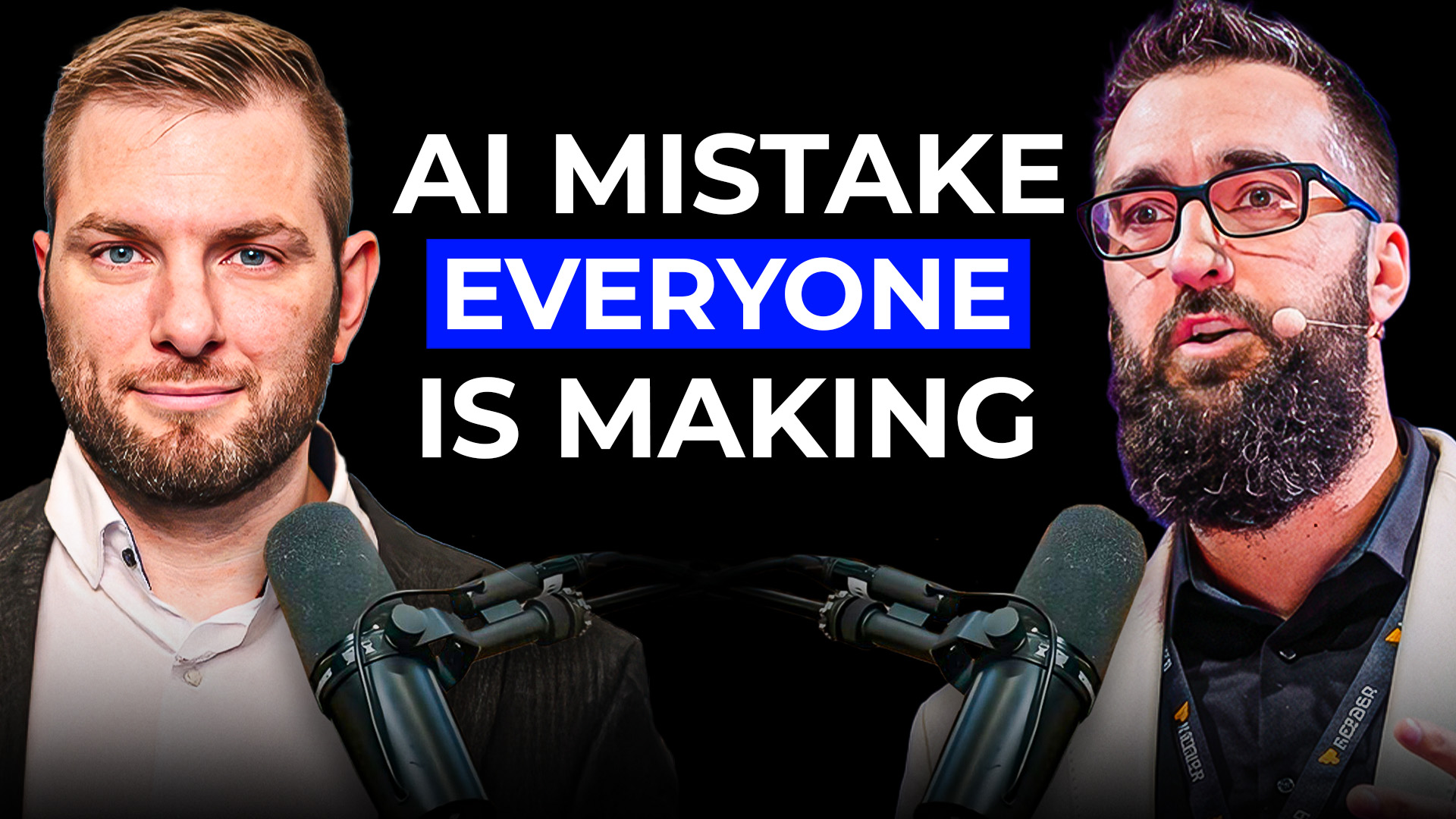
Stop Automating Your Entire Department

Eric Murray · Director of Innovation, Kezber
Share:
Show Notes
In this episode of AI Frontier Playbook, Samuel sits down with Eric Murray, Director of Innovation at Kezber, a Microsoft partner based in Quebec, Canada. Eric works with businesses to take AI past the license stage into how work actually gets done.
Key Takeaways
- Why deploying Copilot licenses is just the starting line, not the finish line
- How to identify the right processes to automate first
- The difference between straight automation and AI-powered solutions
- Why most AI projects stall before delivering anything meaningful
- What it takes to move from a working prototype to production
- How to split work between traditional automation and AI agents
Resources
AI StrategyAutomationEnterprise AIMicrosoft Partner
Samuel
Today on the AI Frontier Playbook, my guest is Eric Murray, director of innovation at Kezber, a Microsoft partner based in Quebec. He works with businesses to take AI past the license stage into how work actually gets done. In this conversation, we get into what separates companies that are actually getting value from AI to those that just have the licenses turned on. Eric breaks down how to identify the right processes to automate first, why most projects stall before they deliver anything, how to split the work between straight automation and AI, and what it actually takes to move from a working prototype to something running securely inside a real system. Before we jump in, I have a small favor to ask. If you're getting value from this show, hitting subscribe, dropping a comment, or leaving a like is one of the best ways you can support me. It helps more people find these conversations, and honestly, it means the world. Thank you. Now, let's jump in. Eric, welcome to the AI Frontier Playbook. It's great to have you on. Eric, you're the director of innovation at Kezber, Microsoft partner here in Quebec, Canada, for those who don't know where Quebec is, and you spend your days helping companies build AI and automation into how they actually work. And this is exactly what I want to dig into today because most companies have adopted the tools by now, but the real question is what you do with them once they're in. So let's get into it. You and I actually shared a stage on this at a conference recently. Your whole talk was about identifying automation opportunities beyond the hype. So let me start there. Most companies right now have Copilot turned on and people summarizing their meetings and emails. So why is that the starting line and not the finish line, and what does the real work begin to look like once the licenses are deployed?
Eric Murray
Using it as simple as it is can be helpful on a daily basis. So just using it normally on a daily basis, it's going to initiate a learning curve to the tools and what it can do. So it will enhance people on what we can do in the future, and people will start using more and more of the tools. At some point, they will use it the majority of their time, and using those tools will make them able to do more value-added tasks to the business and, or, do more complex things. So it's like you want a financial analyst to do analysis instead of crunching data. So using tools like AI to do the crunching or doing basic work then will enable your people to do the work for what you're paying them for.
Samuel
So this is really the starting point, right? You're starting by using it. It's not just deploying the license, obviously. It's starting using it and adding it to your daily workflow, right?
Eric Murray
Yeah, exactly. You need to start somewhere, and it's easier to start with a license, but telling people that they need to try it. Just don't activate the license and say it's there. You need to try to push them to use it at some point. Just showing them small stuff, some work, like you said, just composing emails, doing summaries of their meetings, just starting that light that, oh, this is getting simpler, this is getting easier for me to work. Then it's going to start the whole project after a while to say, okay, what can I do more now?
Samuel
And when people hear AI today, I think everyone is picturing a chat box, but I think under the hood, a real solution is way more than that. It's a mix of plain deterministic automation and AI doing the parts that actually need judgment. So when you sit down to design something for a client, how do you decide which steps should be straight automation and which ones genuinely need AI in the loop?
Eric Murray
Yeah, it's a good point because, honestly, when I'm meeting new customers, I need to teach them the difference between the chat bot itself, where we can do a chat, and the bigger engine in the back where you can use it differently. But when you start to need a type of reasoning or analysis, that's where AI will become your best friend in the process automation because it's going to be able to see the difference, or the nuances on different stuff. But the rest can be straight automation, where it's if the amount is higher than this level, do this. It's simple. You don't need to adapt your situation. So I can give you an example. If I'm processing an invoice, you use the power of reasoning of AI to say, okay, that document is in fact an invoice or it's something else. So it can trigger the proper automation afterward. But you don't want AI to do like, okay, the invoice is that amount of money, it's higher than this, you should send an email to someone. This is straight automation. It doesn't give you more. It's going to cost you more by using AI tools instead of just using straight automation.
Samuel
And I know you've been framing it like identifying opportunities instead of chasing shiny objects because I think everything is around AI right now. There's a lot of AI from the last couple of years. So when you walk into a business that tells you they want to use AI, what are the signals that a given process is a strong first candidate, and what are the red flags that tell you to stay away from one?
Eric Murray
Yeah, good question because on a regular basis, I need to work with my customer or even people I meet on different talks or going on stage. First thing first, you need to set your needs and objective and not just do something because the tools look good. You need to figure out what you're trying to do. And a good first candidate is, do you have any repetitive task or process which are low risk for your business? When I say low risk, if something doesn't go as planned, you're not bankrupt or you're not on the news saying that you did something bad. But it's like a simple task that could take a little bit longer because it's not happening like we thought. But when you see something like that, it's a good start because it's something we can start small, iterate quickly, and at some point, you'll be able to measure the performance or the task or the process without this. If you don't start small, you can end up with a project for over six months, and nothing will be delivered, and nothing will be measurable, or nothing will be happening. And one big red flag is when my customers say, okay, I want to work on this process. Okay, is it clear to everyone what that process is supposed to do, or is it still cloudy? Because if it's cloudy for one or two stakeholders in the process, then who's right? Who's going to tell the difference between it's A or B? And if we don't have a champion, like I like to have a champion of the process right at the table when we begin. If we're not able to find that champion, it's another red flag because those champions are doing the process on a daily basis. They're the masters of those processes. So if you can have them at the table, he or she is going to point you exactly what decision is going to be made based on what's happening. It's not all in the books, for sure. Those types of situations are not properly documented at a point that someone outside of the process can know them.
Samuel
This is a great point. I'm seeing so many people wanting to create an agent to automate the process they don't have clearly identified themselves, and then get frustrated that the output is not what they expected without exactly knowing what they were expecting, right?
Eric Murray
Yeah. It's a big situation when you don't know what to expect. It can provide a bad taste of what the tool or AI or the automation is trying to do. Then people will not adopt what you're trying to do, and it's going to fail at the end.
Samuel
In the same line of idea, I'm seeing a lot of projects that die because someone tries to automate an entire department at once. I know you've been pushing for taking a small dice, a small slice first, take something concrete like accounts payable, for instance. So how do you carve a process like that, like accounts payable, to a first piece that's small enough but still big enough to matter?
Eric Murray
Yeah. So every time we're going to take time to make a proper mapping of the process. It goes with what I said earlier: the process needs to be clear to everyone, what's happening. This is first step, this is next step, and so on. So when you're looking at that, let's use accounts payable as an example where, okay, the invoice is coming in in the shared mailbox, then it goes to someone reading the emails. Okay, this is in fact an invoice, and so on until you push the data in the ERP and then process to the payment. You got to look into every step that you got, and you will try to find something that is repetitive and you can either know at some point what's going to happen, and you're going to focus on that part of the job. So let's say for accounts payable, there's many things that are always the same. So the email comes in a mailbox. Then you read the email with the document. Is it an invoice? Yes. Read the content. This is a format of data. Then you send it to the ERP. So the first chunk could be as simple as having a prompt that is always the same one. You take the invoice, you put it there, then they probably give you back a format that you can easily use to push it into the ERP. So this is going to help your team to always have the same format. But the next step is way easier just to connect the mailbox itself, so you don't have anyone doing that work before, using something like Power Automate, where there's a ton of connectors already there. Then you can connect your mailbox. The new email comes in. You ask AI, is it an invoice? Yes. Then read the invoice. Give me all those information. Send the email to this person that's doing the input. Then you have like 80% of the job done. Then you only have to type in the information. And then the next step will be connect your ERP to the system using API or no matter what you're working on. Then you almost did all the work. Then you just need to work on different cases or exceptions, say, okay, if the amount is there, go through this email to go to this approval and so on. And this can go like, it's not six months of work. You do one week on something, one week on something else, one week on something else, and you end up in two months from now having your accounts payable process almost 100% automated.
Samuel
Love this. So you're putting every piece of the puzzle together on a given amount of time instead of trying to do it all at once. You're exploding the whole process, and you're still getting value while moving toward the end solution.
Eric Murray
Yeah, there's nothing worse than, okay, I'm going to automate my sales department. Yeah, but how? It's not going to happen because there's so many things you can do, so many things that can be done, and which one is the more priority than the other one? And you're going to end up with many projects at the same time. None of them deliver, none of them added value, and a bad taste to everyone saying, okay, this is not going to work. We're not trying to do anything else. Instead of just having a small victory every time. Now the eye will not be on the tool or what's happening. The eye will be that, okay, now I'm more efficient at my work. Now I can do more with my time. And let's say it's a sales rep, if you're on commission, now you have more time to sell instead of typing information or doing the process. So it's a win-win situation.
Samuel
Yeah. I'm looking at where the industry is going with skills, with sub-agents. This is still proving your point that you want to break down those processes, even for the agent itself. It's easier to digest small chunks than trying to have one agent mastering the whole process.
Eric Murray
Yeah, exactly. In your example, it's like being good at everything but being expert in nothing is not better than having one expert in everything. I was doing a presentation last week on this specifically, saying that, okay, if you're having multiple agents, you can have one that is specifically, let's say, for integrating with your ERP or CRM. Then if you need to change that system, instead of going through all the agents you did deploy, you go only with one, the one that its work is only to interface with that system. You make adjustments, you test only that one, you don't need to test everything around it. Now you have only one to work on and change and make sure it's working. The rest of the process will be working fine because they're exchanging data in a format that is specified. So breaking down everything could help you on the long term too, on the long run, where you will be able to enhance or be more efficient, saying, okay, that part, I need to change it instead of changing all the process.
Samuel
And coming back to your invoice scenario, where you're receiving the invoices by email and then you kind of automate a part of it by extracting the information, sending it to the person that needs to manually put it in the ERP system, which will be the second part. I think this is the part people underestimate. Getting AI to draft an answer in a demo is very easy, but getting it wired into the real systems, like the approvals, the data might be in Dataverse or in your ERP or your line-of-business app, is really the hard part. With the Power Platform and Copilot Studio stack you work in, what does it really take to move from a working prototype to something living inside a real workflow?
Eric Murray
Using Power Platform and Copilot Studio stack, it really makes it easier to go from a prototype to a live system because there are so many things in place already that Microsoft is providing that's already tested. But like you said, this is the easy part. The other part is to make sure that everything is secure, everything is working fine. You don't have any breach. Let's say you still need to integrate with your ERP or external system through API using secure pathways. You don't want your data going through in clear text. You also want to manage your access. You don't necessarily want everyone to execute a certain process or automation. You don't want to have anyone connecting to the financial data. Let's say that you put in place either an agent or an automation that can gather financial data. You don't want anyone to be able to access this and work with that, where you want to be able to say, okay, those group of persons cannot do this, those group of persons can do this. So doing the process, putting it in place, the hard work is easy one. It's everything you put together that makes sure that your governance is there, your data security. Even more in Canada, it's also really important on the residency of your data. You need to make sure that it's in Canada due to Law 25 in Quebec, where it's personal data, and you need to be in control and be able to push any information if it's happening to the government. So yeah, there's many parts around it to make sure that it's a proper system. You don't want to have anyone building out agent automation as they want, and now you have liability either on legal or data. So there are many parts. Like you said, the hard part is not necessarily to make it work. It's make it work securely and by the laws that we have or you have in your region.
Samuel
Thankfully, we have more and more tools to help us secure agents. I'm thinking about Agent 365, for instance, and to help you with governance, like Purview, Defender, all as part of the stack. And it's evolving very fast, even in terms of visibility. Microsoft is adding more and more analytics and dashboards that are available so you can keep track of what's happening with decisions your agents are making and how they are making them. Which brings me to inside a process, like invoice handling, let's stay with this scenario, there are always exceptions and judgment calls. So where do you draw the line between what the AI handles on its own and what gets routed to someone? And how do you design that handoff so people actually trust the system instead of working around it? Because that's what I'm seeing a lot. You design a system, you put a lot of time and effort into it, but then people don't like it, or X reason, and decide to work around it.
Eric Murray
Great question. It's something that we need to ask ourselves every time, saying that, okay, what are the limitations of what we're trying to deploy? It's more true when you're doing agentic because there's some autonomy within the agent. So you want to put, like, this is where you can work, this is the sandbox you can work on. So at some point, you want to trace a line where, let's say you don't find the product in the ERP. So you're processing an invoice, the AI is not able to find or do a mapping of, okay, this product in my invoice doesn't go with anything in my ERP. I need to raise a flag to someone because I don't want to create a new product that makes no sense. Maybe it's something further. Maybe it's an error. We should never add this invoice in our system. But at that point, you want to make sure to have someone taking a look at it. And other type of things will be situations where, let's say, the amount makes no sense. You're SMB, your normal average invoice is around, let's say, 25K, and then you have an invoice for $1 million, then AI should say, oh, that's not normal. That's way over the threshold of my normal last invoices. I raise a flag to someone.
Samuel
Mhm.
Eric Murray
And to trust the system, where you should raise the flag is you can send emails, you can send a Teams notification, you can, like, there's different ways to notify someone. But the real important thing is to have a centralized place where you can see all those cases where AI or the process says, I'm not sure about that. I need someone. And when we do deployment for accounts payable, we deploy either a Power Apps or a portal where we push all the data there, and anyone will receive an alert saying that we got an invoice that we don't know what to do with it. Please go ahead and see what's happening. Then people do the work, and we can store the changes they are making. So the day we're going to deploy an agent that has memory, now we can use all that data from what's happening to learn about it. So the agent will be able to see what did happen and make that agent way more performant at the get-go instead of building out this memory. So having somewhere where we can trace everything, maybe not everything at the same place, but you need to be able to trace everything because you don't want to have a black box. Because it's your responsibility to be able to say, if someone calls you saying, why did that thing happen, you need to be the one saying, okay, this is the process that happened. This did that. This AI tool read that, pushed that information there, and so on. So now you can trust the system because it's not a black box. You can see everything, you can trace everything, and that's where even internally, then externally too, your customer, they're asking questions on how did that happen. You need to be able to be transparent, saying, okay, this is automated process. These are different steps that happened. This is why we went that path with the system.
Samuel
I like this idea of having a database to track the status of anything that's processed by AI, like in the invoicing example, where if you're not sure you'll have a human reviewing it, but still keeping track of what happened, like what needed to be reviewed, what was the decision. And like you mentioned, then you can build on that. It could be, like you mentioned, Power Platform with Dataverse, but it could be a SharePoint list, an Excel file if you want, but having a repository where you can keep track of what has happened, it's very powerful. Obviously, you have visibility to Purview, for instance, or you can go in Copilot Studio itself if you build your agent with Copilot Studio, but this is not where you'll be able to change status, right? It's not where you'll be able to approve. It's more after the fact if you want to understand what's happened, what was the ask, and what decision was made by the agent. So I like this idea of creating a database to track all of this. You've been talking about prioritizing the projects with the best ROI, right? Once something is in production, how do you actually measure whether it's delivered the value promised, and what do you do when the numbers come back lower than what you were expecting?
Eric Murray
First thing first, you need to set your objective, where I want to be, what is the gain I want to get in my efficiency. Let's take a sales process where you do a proposal. If normally it takes two weeks to push out a proposal, then it's like, I want to shave 20% of that process. Let's start at the small one. Okay, now you need to measure. Okay, my average time from the moment the lead came in and the proposal went out, what is now the time? Am I on that 20%, higher or lower? Higher. Fine. Good. Something is happening. Well, lower. Now you need to look at two different things. There's the automation or the tool itself, and there's the people. Okay. Does the process do what it's supposed to be doing? Okay, yes, it's read. Yes, it's going to build out the first draft of proposal. Then, okay, the results are good. We did look at it with everyone. The results are good. Then you look on the people's side, saying, okay, even though the first draft of the proposal is done within the first day the lead came in, then the sales rep is taking five days to do the work. Or even more, maybe half of the team is not using the process, is just doing it as they know, as an easy one. So it now has an adoption problem. So it's not the tool, it's not a system, it's not a technology problem. The fact that people are not using it, you can put as much money as you can in enhancement of this process. If people are not using it, you can do anything. So that will probably be the point to look at. And then if it's the tool problem, like I said earlier, you bring the champion, you take a look at it. Are the results good or not? Is it something that's not happening? Is something wrong? Or maybe at some point you can say, okay, that was not the proper process to look at. Let's take the loss on that one. At least we have something working, barely automated, but maybe it was not the right one. So that's why doing small iteration, you won't go in that money pitfall where you put money, money, money, money, money, money, money, money, money, money, money, money, and time, nothing's happening. You will see it earlier that, okay, we're not on the right path to get to that objective. Let's either stop it right now or change path right away. So that's why doing small one can help on getting the best ROI.
Samuel
And let's be real, even if you got an ROI and you're happy with the result, these solutions aren't finished the day they launch because it's evolving so fast. Models change, business change, volume change. We've seen it recently. A lot of processes handled through Copilot Studio now can be handled with Copilot, for instance. Or a lot of things that wasn't feasible through Copilot Studio now with new models are feasible. So how do you set up the monitoring and governance so a solution keeps earning its place over time instead of slowly rotting? Because you don't want to spend hours building something that finally is replaced by, I'll take Copilot as an example, but can be any new solutions that will come our way because we all know how fast it's evolving.
Eric Murray
It's a good point, and it goes to more than only automation and AI. I think it goes with technology itself. Everything is evolving fast, and the thing is you need to have someone in your business that it is their responsibility to oversee everything technology, saying, okay, we need to make sure that we're alive. It doesn't mean that he needs to do the work all by himself. You can have a team or people that, like if you have engineers that are working on AI every day, they're aware of what's happening and they can pass on the message, and then you can take decisions. But you need to have someone or a team that is responsible to look at this because we had a real case at some point where we were doing accounts payable, and the model we were using was costing really more than we thought initially. And we ended up using a different model, which was a simpler model that was only treating PDF files, which was 99% of what we were having. So now we went from 50 bucks a month to $5 a month for the same volume. Then it costs less for everyone. But to know this, it's because one of my engineers is working on AI at home and within the business, like eat and sleep AI. So he said, oh, there's a new model coming out. I think we should look at it because in that particular case, it's going to be good for everyone. So having this, and furthermore, we're talking about measuring performance and what's happening with the processes, is it working fine? Even once, let's say it's done, it's not done. You need to keep monitoring those performance. So you should have a dashboard or portal where you can measure the efficiency of your different processes and see, is something dragging or not? Because you could have a big improvement in the six first months. Then after year one, something goes bad. Is it maybe the system is not working fine? Is it because people have stopped using it? Or is it, let's say, just something changed in the tool we're using, it's not more efficient than it is right now. Maybe if you're hosting some stuff on your local servers, maybe the server is self-performing because he's overwhelmed with something else. So keeping on monitoring everything you did put in place to measure, is it the proper process? Is the good ROI still maintained over time?
Samuel
We're almost at the end of our time here, Eric. I have my two last questions, which are my signature questions. First one being, let's move away from client projects for a second and tell me about you. What's one practical thing you do with AI that makes you more productive every single day?
Eric Murray
We're doing a lot of RFPs, so requests for proposal, and those documents are 100-plus pages. In the days, I was going through all the pages to see if there's something that will make us ineligible to propose, or maybe sometimes it's something that we're not doing. Maybe it's a certification. So now I built out with Copilot, I did build out an agent where he knows exactly what I'm looking for. So I only have to push the documents in it, and it's going to take me back, okay, is it something that the customer needs people on site? Is it in Quebec? It needs any type of certification? What is the type of work? Even more, all the penalties. So sometime you have a penalty saying that if this does not happen, there's a cost to it, and so on. So it's going to make me an executive summary of the RFP itself. And now I can make decisions on go, no-go within minutes. In the days, it was like a couple of days because 100 pages more, and I do receive like five to 10 a week. But I can do more. That's why when I was saying earlier, this is type of work that those tools can make me work on more complex things, like taking the decision of go, no-go based on what the system did bring out instead of reading it all through the 100-plus pages.
Samuel
This is a great use case. I remember not so long ago how painful it was to fill out an RFP, or even just taking a look at an RFP to take the decision if you're going to move forward or not. Now it's so much easier using AI. I totally agree with you. And looking ahead, you spend your days turning today's tools into working solutions, right? So you see where this is going before most people do. Over the next 10 years, which is a long span of time, how do you see AI and automation reshaping the way we actually work and run a business?
Eric Murray
Yeah, I see it like at some point when they put out robots on the manufacturing line. So a lot of jobs will be reshaped. A lot of jobs will be not lost. Some will be lost at some point, but much more will be created, like when the robot went on the assembly line. Now you needed someone to maintain it, you needed someone to plan it, you needed someone to take care of the whole system. It's the same thing with AI at some point, where, okay, there's some tasks, so there will be jobs reshaped because tasks will be completely done by AI or automation. Some will be lost at some point but will be transformed as new ones. I don't remember the study itself, but it's saying that they will be creating more jobs than we're going to lose based on the AI because it's going to be like new jobs created. You need someone to maintain this, you need someone to make sure that it goes well within your ecosystem, and so on. And since a lot of tasks will be done by automation and AI or agent, it kind of frees up your time to do more complex work or working on a long-term strategy of your business. Now we will have much more brain capacity in your business to work on going further down the road, making sure that we can grow fast, and so on. But I think one thing also, it's going to be good for the economy because now everyone is working to be more efficient. The other one, like our neighbor, now the service or products, everything, goods we're trying to buy, will cost less at some point because everyone will say, okay, now I need to have more marketplace, so what I'm going to do, I need to find a way to reduce my costs so I can sell less than the other one. So it's going to start a wheel. People will be able to buy more stuff with the same money. So we got to take a role. I think it's going to influence a lot of the economy if the mindset goes in that sense. And the last thing I think is we need to keep our culture. The culture we have is we have knowledge, we have experience, we have people thinking. We need to make sure as a society, or even a business, make sure that we keep that culture. People need to be... one thing important is a human in the loop with AI or automation still there. There's some decisions that the human needs to take based on your strategy or whatever you want. So we need to make sure that we're still making brain work. We're still doing analysis. We still keep our critical analysis of the rendering or the results. And so we can keep our, let's say, group intelligence. So everyone altogether, we're making a bit of business. We need to make sure that we are keeping this afloat.
Samuel
I totally agree. You don't want to hand over everything to AI. You still need to keep thinking and keeping your brain active for that matter, and not just blindly letting AI do the work. Totally agree with you. So thank you so much, Eric, for those insights. This was a great conversation, and I think our audience will have a good framework to understand where to start, how to prioritize, and understand which use cases they should start working on first. So again, thanks a lot for your time.
Eric Murray
Thanks for having me.
Samuel
Have a great day.
Eric Murray
Yeah, you too.
Samuel
Eric makes a strong case that the gap between companies using AI and companies benefiting from it comes down to one thing: whether they know what they're trying to solve before they start building. Three things I want you to walk away with from this episode. One, start with a process that's repetitive, low risk, and owned by someone. If you can't name the person who does it every day and knows every exception, you're not ready to automate it. That person needs to be in the room when you design the solution. Two, build in chunks, not in projects. Take something like accounts payable. Map every step. Pick one slice, get it working, and then add the next step. Two months of weekly iterations beats six months of planning everything. Three, the working demo is the easy part. Security, access controls, data residency, and an audit trail of every decision the system makes, that's the real work. If you can't explain why the process went a certain way, you don't have a system you can trust. If this episode was useful, subscribe to the AI Frontier Playbook wherever you listen and sign up for the AI Frontier Playbook newsletter to stay sharp between episodes. Thanks for listening, and I'll see you in the next one. See you.
Today on the AI Frontier Playbook, my guest is Eric Murray, director of innovation at Kezber, a Microsoft partner based in Quebec. He works with businesses to take AI past the license stage into how work actually gets done. In this conversation, we get into what separates companies that are actually getting value from AI to those that just have the licenses turned on. Eric breaks down how to identify the right processes to automate first, why most projects stall before they deliver anything, how to split the work between straight automation and AI, and what it actually takes to move from a working prototype to something running securely inside a real system. Before we jump in, I have a small favor to ask. If you're getting value from this show, hitting subscribe, dropping a comment, or leaving a like is one of the best ways you can support me. It helps more people find these conversations, and honestly, it means the world. Thank you. Now, let's jump in. Eric, welcome to the AI Frontier Playbook. It's great to have you on. Eric, you're the director of innovation at Kezber, Microsoft partner here in Quebec, Canada, for those who don't know where Quebec is, and you spend your days helping companies build AI and automation into how they actually work. And this is exactly what I want to dig into today because most companies have adopted the tools by now, but the real question is what you do with them once they're in. So let's get into it. You and I actually shared a stage on this at a conference recently. Your whole talk was about identifying automation opportunities beyond the hype. So let me start there. Most companies right now have Copilot turned on and people summarizing their meetings and emails. So why is that the starting line and not the finish line, and what does the real work begin to look like once the licenses are deployed?
Eric Murray
Using it as simple as it is can be helpful on a daily basis. So just using it normally on a daily basis, it's going to initiate a learning curve to the tools and what it can do. So it will enhance people on what we can do in the future, and people will start using more and more of the tools. At some point, they will use it the majority of their time, and using those tools will make them able to do more value-added tasks to the business and, or, do more complex things. So it's like you want a financial analyst to do analysis instead of crunching data. So using tools like AI to do the crunching or doing basic work then will enable your people to do the work for what you're paying them for.
Samuel
So this is really the starting point, right? You're starting by using it. It's not just deploying the license, obviously. It's starting using it and adding it to your daily workflow, right?
Eric Murray
Yeah, exactly. You need to start somewhere, and it's easier to start with a license, but telling people that they need to try it. Just don't activate the license and say it's there. You need to try to push them to use it at some point. Just showing them small stuff, some work, like you said, just composing emails, doing summaries of their meetings, just starting that light that, oh, this is getting simpler, this is getting easier for me to work. Then it's going to start the whole project after a while to say, okay, what can I do more now?
Samuel
And when people hear AI today, I think everyone is picturing a chat box, but I think under the hood, a real solution is way more than that. It's a mix of plain deterministic automation and AI doing the parts that actually need judgment. So when you sit down to design something for a client, how do you decide which steps should be straight automation and which ones genuinely need AI in the loop?
Eric Murray
Yeah, it's a good point because, honestly, when I'm meeting new customers, I need to teach them the difference between the chat bot itself, where we can do a chat, and the bigger engine in the back where you can use it differently. But when you start to need a type of reasoning or analysis, that's where AI will become your best friend in the process automation because it's going to be able to see the difference, or the nuances on different stuff. But the rest can be straight automation, where it's if the amount is higher than this level, do this. It's simple. You don't need to adapt your situation. So I can give you an example. If I'm processing an invoice, you use the power of reasoning of AI to say, okay, that document is in fact an invoice or it's something else. So it can trigger the proper automation afterward. But you don't want AI to do like, okay, the invoice is that amount of money, it's higher than this, you should send an email to someone. This is straight automation. It doesn't give you more. It's going to cost you more by using AI tools instead of just using straight automation.
Samuel
And I know you've been framing it like identifying opportunities instead of chasing shiny objects because I think everything is around AI right now. There's a lot of AI from the last couple of years. So when you walk into a business that tells you they want to use AI, what are the signals that a given process is a strong first candidate, and what are the red flags that tell you to stay away from one?
Eric Murray
Yeah, good question because on a regular basis, I need to work with my customer or even people I meet on different talks or going on stage. First thing first, you need to set your needs and objective and not just do something because the tools look good. You need to figure out what you're trying to do. And a good first candidate is, do you have any repetitive task or process which are low risk for your business? When I say low risk, if something doesn't go as planned, you're not bankrupt or you're not on the news saying that you did something bad. But it's like a simple task that could take a little bit longer because it's not happening like we thought. But when you see something like that, it's a good start because it's something we can start small, iterate quickly, and at some point, you'll be able to measure the performance or the task or the process without this. If you don't start small, you can end up with a project for over six months, and nothing will be delivered, and nothing will be measurable, or nothing will be happening. And one big red flag is when my customers say, okay, I want to work on this process. Okay, is it clear to everyone what that process is supposed to do, or is it still cloudy? Because if it's cloudy for one or two stakeholders in the process, then who's right? Who's going to tell the difference between it's A or B? And if we don't have a champion, like I like to have a champion of the process right at the table when we begin. If we're not able to find that champion, it's another red flag because those champions are doing the process on a daily basis. They're the masters of those processes. So if you can have them at the table, he or she is going to point you exactly what decision is going to be made based on what's happening. It's not all in the books, for sure. Those types of situations are not properly documented at a point that someone outside of the process can know them.
Samuel
This is a great point. I'm seeing so many people wanting to create an agent to automate the process they don't have clearly identified themselves, and then get frustrated that the output is not what they expected without exactly knowing what they were expecting, right?
Eric Murray
Yeah. It's a big situation when you don't know what to expect. It can provide a bad taste of what the tool or AI or the automation is trying to do. Then people will not adopt what you're trying to do, and it's going to fail at the end.
Samuel
In the same line of idea, I'm seeing a lot of projects that die because someone tries to automate an entire department at once. I know you've been pushing for taking a small dice, a small slice first, take something concrete like accounts payable, for instance. So how do you carve a process like that, like accounts payable, to a first piece that's small enough but still big enough to matter?
Eric Murray
Yeah. So every time we're going to take time to make a proper mapping of the process. It goes with what I said earlier: the process needs to be clear to everyone, what's happening. This is first step, this is next step, and so on. So when you're looking at that, let's use accounts payable as an example where, okay, the invoice is coming in in the shared mailbox, then it goes to someone reading the emails. Okay, this is in fact an invoice, and so on until you push the data in the ERP and then process to the payment. You got to look into every step that you got, and you will try to find something that is repetitive and you can either know at some point what's going to happen, and you're going to focus on that part of the job. So let's say for accounts payable, there's many things that are always the same. So the email comes in a mailbox. Then you read the email with the document. Is it an invoice? Yes. Read the content. This is a format of data. Then you send it to the ERP. So the first chunk could be as simple as having a prompt that is always the same one. You take the invoice, you put it there, then they probably give you back a format that you can easily use to push it into the ERP. So this is going to help your team to always have the same format. But the next step is way easier just to connect the mailbox itself, so you don't have anyone doing that work before, using something like Power Automate, where there's a ton of connectors already there. Then you can connect your mailbox. The new email comes in. You ask AI, is it an invoice? Yes. Then read the invoice. Give me all those information. Send the email to this person that's doing the input. Then you have like 80% of the job done. Then you only have to type in the information. And then the next step will be connect your ERP to the system using API or no matter what you're working on. Then you almost did all the work. Then you just need to work on different cases or exceptions, say, okay, if the amount is there, go through this email to go to this approval and so on. And this can go like, it's not six months of work. You do one week on something, one week on something else, one week on something else, and you end up in two months from now having your accounts payable process almost 100% automated.
Samuel
Love this. So you're putting every piece of the puzzle together on a given amount of time instead of trying to do it all at once. You're exploding the whole process, and you're still getting value while moving toward the end solution.
Eric Murray
Yeah, there's nothing worse than, okay, I'm going to automate my sales department. Yeah, but how? It's not going to happen because there's so many things you can do, so many things that can be done, and which one is the more priority than the other one? And you're going to end up with many projects at the same time. None of them deliver, none of them added value, and a bad taste to everyone saying, okay, this is not going to work. We're not trying to do anything else. Instead of just having a small victory every time. Now the eye will not be on the tool or what's happening. The eye will be that, okay, now I'm more efficient at my work. Now I can do more with my time. And let's say it's a sales rep, if you're on commission, now you have more time to sell instead of typing information or doing the process. So it's a win-win situation.
Samuel
Yeah. I'm looking at where the industry is going with skills, with sub-agents. This is still proving your point that you want to break down those processes, even for the agent itself. It's easier to digest small chunks than trying to have one agent mastering the whole process.
Eric Murray
Yeah, exactly. In your example, it's like being good at everything but being expert in nothing is not better than having one expert in everything. I was doing a presentation last week on this specifically, saying that, okay, if you're having multiple agents, you can have one that is specifically, let's say, for integrating with your ERP or CRM. Then if you need to change that system, instead of going through all the agents you did deploy, you go only with one, the one that its work is only to interface with that system. You make adjustments, you test only that one, you don't need to test everything around it. Now you have only one to work on and change and make sure it's working. The rest of the process will be working fine because they're exchanging data in a format that is specified. So breaking down everything could help you on the long term too, on the long run, where you will be able to enhance or be more efficient, saying, okay, that part, I need to change it instead of changing all the process.
Samuel
And coming back to your invoice scenario, where you're receiving the invoices by email and then you kind of automate a part of it by extracting the information, sending it to the person that needs to manually put it in the ERP system, which will be the second part. I think this is the part people underestimate. Getting AI to draft an answer in a demo is very easy, but getting it wired into the real systems, like the approvals, the data might be in Dataverse or in your ERP or your line-of-business app, is really the hard part. With the Power Platform and Copilot Studio stack you work in, what does it really take to move from a working prototype to something living inside a real workflow?
Eric Murray
Using Power Platform and Copilot Studio stack, it really makes it easier to go from a prototype to a live system because there are so many things in place already that Microsoft is providing that's already tested. But like you said, this is the easy part. The other part is to make sure that everything is secure, everything is working fine. You don't have any breach. Let's say you still need to integrate with your ERP or external system through API using secure pathways. You don't want your data going through in clear text. You also want to manage your access. You don't necessarily want everyone to execute a certain process or automation. You don't want to have anyone connecting to the financial data. Let's say that you put in place either an agent or an automation that can gather financial data. You don't want anyone to be able to access this and work with that, where you want to be able to say, okay, those group of persons cannot do this, those group of persons can do this. So doing the process, putting it in place, the hard work is easy one. It's everything you put together that makes sure that your governance is there, your data security. Even more in Canada, it's also really important on the residency of your data. You need to make sure that it's in Canada due to Law 25 in Quebec, where it's personal data, and you need to be in control and be able to push any information if it's happening to the government. So yeah, there's many parts around it to make sure that it's a proper system. You don't want to have anyone building out agent automation as they want, and now you have liability either on legal or data. So there are many parts. Like you said, the hard part is not necessarily to make it work. It's make it work securely and by the laws that we have or you have in your region.
Samuel
Thankfully, we have more and more tools to help us secure agents. I'm thinking about Agent 365, for instance, and to help you with governance, like Purview, Defender, all as part of the stack. And it's evolving very fast, even in terms of visibility. Microsoft is adding more and more analytics and dashboards that are available so you can keep track of what's happening with decisions your agents are making and how they are making them. Which brings me to inside a process, like invoice handling, let's stay with this scenario, there are always exceptions and judgment calls. So where do you draw the line between what the AI handles on its own and what gets routed to someone? And how do you design that handoff so people actually trust the system instead of working around it? Because that's what I'm seeing a lot. You design a system, you put a lot of time and effort into it, but then people don't like it, or X reason, and decide to work around it.
Eric Murray
Great question. It's something that we need to ask ourselves every time, saying that, okay, what are the limitations of what we're trying to deploy? It's more true when you're doing agentic because there's some autonomy within the agent. So you want to put, like, this is where you can work, this is the sandbox you can work on. So at some point, you want to trace a line where, let's say you don't find the product in the ERP. So you're processing an invoice, the AI is not able to find or do a mapping of, okay, this product in my invoice doesn't go with anything in my ERP. I need to raise a flag to someone because I don't want to create a new product that makes no sense. Maybe it's something further. Maybe it's an error. We should never add this invoice in our system. But at that point, you want to make sure to have someone taking a look at it. And other type of things will be situations where, let's say, the amount makes no sense. You're SMB, your normal average invoice is around, let's say, 25K, and then you have an invoice for $1 million, then AI should say, oh, that's not normal. That's way over the threshold of my normal last invoices. I raise a flag to someone.
Samuel
Mhm.
Eric Murray
And to trust the system, where you should raise the flag is you can send emails, you can send a Teams notification, you can, like, there's different ways to notify someone. But the real important thing is to have a centralized place where you can see all those cases where AI or the process says, I'm not sure about that. I need someone. And when we do deployment for accounts payable, we deploy either a Power Apps or a portal where we push all the data there, and anyone will receive an alert saying that we got an invoice that we don't know what to do with it. Please go ahead and see what's happening. Then people do the work, and we can store the changes they are making. So the day we're going to deploy an agent that has memory, now we can use all that data from what's happening to learn about it. So the agent will be able to see what did happen and make that agent way more performant at the get-go instead of building out this memory. So having somewhere where we can trace everything, maybe not everything at the same place, but you need to be able to trace everything because you don't want to have a black box. Because it's your responsibility to be able to say, if someone calls you saying, why did that thing happen, you need to be the one saying, okay, this is the process that happened. This did that. This AI tool read that, pushed that information there, and so on. So now you can trust the system because it's not a black box. You can see everything, you can trace everything, and that's where even internally, then externally too, your customer, they're asking questions on how did that happen. You need to be able to be transparent, saying, okay, this is automated process. These are different steps that happened. This is why we went that path with the system.
Samuel
I like this idea of having a database to track the status of anything that's processed by AI, like in the invoicing example, where if you're not sure you'll have a human reviewing it, but still keeping track of what happened, like what needed to be reviewed, what was the decision. And like you mentioned, then you can build on that. It could be, like you mentioned, Power Platform with Dataverse, but it could be a SharePoint list, an Excel file if you want, but having a repository where you can keep track of what has happened, it's very powerful. Obviously, you have visibility to Purview, for instance, or you can go in Copilot Studio itself if you build your agent with Copilot Studio, but this is not where you'll be able to change status, right? It's not where you'll be able to approve. It's more after the fact if you want to understand what's happened, what was the ask, and what decision was made by the agent. So I like this idea of creating a database to track all of this. You've been talking about prioritizing the projects with the best ROI, right? Once something is in production, how do you actually measure whether it's delivered the value promised, and what do you do when the numbers come back lower than what you were expecting?
Eric Murray
First thing first, you need to set your objective, where I want to be, what is the gain I want to get in my efficiency. Let's take a sales process where you do a proposal. If normally it takes two weeks to push out a proposal, then it's like, I want to shave 20% of that process. Let's start at the small one. Okay, now you need to measure. Okay, my average time from the moment the lead came in and the proposal went out, what is now the time? Am I on that 20%, higher or lower? Higher. Fine. Good. Something is happening. Well, lower. Now you need to look at two different things. There's the automation or the tool itself, and there's the people. Okay. Does the process do what it's supposed to be doing? Okay, yes, it's read. Yes, it's going to build out the first draft of proposal. Then, okay, the results are good. We did look at it with everyone. The results are good. Then you look on the people's side, saying, okay, even though the first draft of the proposal is done within the first day the lead came in, then the sales rep is taking five days to do the work. Or even more, maybe half of the team is not using the process, is just doing it as they know, as an easy one. So it now has an adoption problem. So it's not the tool, it's not a system, it's not a technology problem. The fact that people are not using it, you can put as much money as you can in enhancement of this process. If people are not using it, you can do anything. So that will probably be the point to look at. And then if it's the tool problem, like I said earlier, you bring the champion, you take a look at it. Are the results good or not? Is it something that's not happening? Is something wrong? Or maybe at some point you can say, okay, that was not the proper process to look at. Let's take the loss on that one. At least we have something working, barely automated, but maybe it was not the right one. So that's why doing small iteration, you won't go in that money pitfall where you put money, money, money, money, money, money, money, money, money, money, money, money, and time, nothing's happening. You will see it earlier that, okay, we're not on the right path to get to that objective. Let's either stop it right now or change path right away. So that's why doing small one can help on getting the best ROI.
Samuel
And let's be real, even if you got an ROI and you're happy with the result, these solutions aren't finished the day they launch because it's evolving so fast. Models change, business change, volume change. We've seen it recently. A lot of processes handled through Copilot Studio now can be handled with Copilot, for instance. Or a lot of things that wasn't feasible through Copilot Studio now with new models are feasible. So how do you set up the monitoring and governance so a solution keeps earning its place over time instead of slowly rotting? Because you don't want to spend hours building something that finally is replaced by, I'll take Copilot as an example, but can be any new solutions that will come our way because we all know how fast it's evolving.
Eric Murray
It's a good point, and it goes to more than only automation and AI. I think it goes with technology itself. Everything is evolving fast, and the thing is you need to have someone in your business that it is their responsibility to oversee everything technology, saying, okay, we need to make sure that we're alive. It doesn't mean that he needs to do the work all by himself. You can have a team or people that, like if you have engineers that are working on AI every day, they're aware of what's happening and they can pass on the message, and then you can take decisions. But you need to have someone or a team that is responsible to look at this because we had a real case at some point where we were doing accounts payable, and the model we were using was costing really more than we thought initially. And we ended up using a different model, which was a simpler model that was only treating PDF files, which was 99% of what we were having. So now we went from 50 bucks a month to $5 a month for the same volume. Then it costs less for everyone. But to know this, it's because one of my engineers is working on AI at home and within the business, like eat and sleep AI. So he said, oh, there's a new model coming out. I think we should look at it because in that particular case, it's going to be good for everyone. So having this, and furthermore, we're talking about measuring performance and what's happening with the processes, is it working fine? Even once, let's say it's done, it's not done. You need to keep monitoring those performance. So you should have a dashboard or portal where you can measure the efficiency of your different processes and see, is something dragging or not? Because you could have a big improvement in the six first months. Then after year one, something goes bad. Is it maybe the system is not working fine? Is it because people have stopped using it? Or is it, let's say, just something changed in the tool we're using, it's not more efficient than it is right now. Maybe if you're hosting some stuff on your local servers, maybe the server is self-performing because he's overwhelmed with something else. So keeping on monitoring everything you did put in place to measure, is it the proper process? Is the good ROI still maintained over time?
Samuel
We're almost at the end of our time here, Eric. I have my two last questions, which are my signature questions. First one being, let's move away from client projects for a second and tell me about you. What's one practical thing you do with AI that makes you more productive every single day?
Eric Murray
We're doing a lot of RFPs, so requests for proposal, and those documents are 100-plus pages. In the days, I was going through all the pages to see if there's something that will make us ineligible to propose, or maybe sometimes it's something that we're not doing. Maybe it's a certification. So now I built out with Copilot, I did build out an agent where he knows exactly what I'm looking for. So I only have to push the documents in it, and it's going to take me back, okay, is it something that the customer needs people on site? Is it in Quebec? It needs any type of certification? What is the type of work? Even more, all the penalties. So sometime you have a penalty saying that if this does not happen, there's a cost to it, and so on. So it's going to make me an executive summary of the RFP itself. And now I can make decisions on go, no-go within minutes. In the days, it was like a couple of days because 100 pages more, and I do receive like five to 10 a week. But I can do more. That's why when I was saying earlier, this is type of work that those tools can make me work on more complex things, like taking the decision of go, no-go based on what the system did bring out instead of reading it all through the 100-plus pages.
Samuel
This is a great use case. I remember not so long ago how painful it was to fill out an RFP, or even just taking a look at an RFP to take the decision if you're going to move forward or not. Now it's so much easier using AI. I totally agree with you. And looking ahead, you spend your days turning today's tools into working solutions, right? So you see where this is going before most people do. Over the next 10 years, which is a long span of time, how do you see AI and automation reshaping the way we actually work and run a business?
Eric Murray
Yeah, I see it like at some point when they put out robots on the manufacturing line. So a lot of jobs will be reshaped. A lot of jobs will be not lost. Some will be lost at some point, but much more will be created, like when the robot went on the assembly line. Now you needed someone to maintain it, you needed someone to plan it, you needed someone to take care of the whole system. It's the same thing with AI at some point, where, okay, there's some tasks, so there will be jobs reshaped because tasks will be completely done by AI or automation. Some will be lost at some point but will be transformed as new ones. I don't remember the study itself, but it's saying that they will be creating more jobs than we're going to lose based on the AI because it's going to be like new jobs created. You need someone to maintain this, you need someone to make sure that it goes well within your ecosystem, and so on. And since a lot of tasks will be done by automation and AI or agent, it kind of frees up your time to do more complex work or working on a long-term strategy of your business. Now we will have much more brain capacity in your business to work on going further down the road, making sure that we can grow fast, and so on. But I think one thing also, it's going to be good for the economy because now everyone is working to be more efficient. The other one, like our neighbor, now the service or products, everything, goods we're trying to buy, will cost less at some point because everyone will say, okay, now I need to have more marketplace, so what I'm going to do, I need to find a way to reduce my costs so I can sell less than the other one. So it's going to start a wheel. People will be able to buy more stuff with the same money. So we got to take a role. I think it's going to influence a lot of the economy if the mindset goes in that sense. And the last thing I think is we need to keep our culture. The culture we have is we have knowledge, we have experience, we have people thinking. We need to make sure as a society, or even a business, make sure that we keep that culture. People need to be... one thing important is a human in the loop with AI or automation still there. There's some decisions that the human needs to take based on your strategy or whatever you want. So we need to make sure that we're still making brain work. We're still doing analysis. We still keep our critical analysis of the rendering or the results. And so we can keep our, let's say, group intelligence. So everyone altogether, we're making a bit of business. We need to make sure that we are keeping this afloat.
Samuel
I totally agree. You don't want to hand over everything to AI. You still need to keep thinking and keeping your brain active for that matter, and not just blindly letting AI do the work. Totally agree with you. So thank you so much, Eric, for those insights. This was a great conversation, and I think our audience will have a good framework to understand where to start, how to prioritize, and understand which use cases they should start working on first. So again, thanks a lot for your time.
Eric Murray
Thanks for having me.
Samuel
Have a great day.
Eric Murray
Yeah, you too.
Samuel
Eric makes a strong case that the gap between companies using AI and companies benefiting from it comes down to one thing: whether they know what they're trying to solve before they start building. Three things I want you to walk away with from this episode. One, start with a process that's repetitive, low risk, and owned by someone. If you can't name the person who does it every day and knows every exception, you're not ready to automate it. That person needs to be in the room when you design the solution. Two, build in chunks, not in projects. Take something like accounts payable. Map every step. Pick one slice, get it working, and then add the next step. Two months of weekly iterations beats six months of planning everything. Three, the working demo is the easy part. Security, access controls, data residency, and an audit trail of every decision the system makes, that's the real work. If you can't explain why the process went a certain way, you don't have a system you can trust. If this episode was useful, subscribe to the AI Frontier Playbook wherever you listen and sign up for the AI Frontier Playbook newsletter to stay sharp between episodes. Thanks for listening, and I'll see you in the next one. See you.
Related Episodes
You might also enjoy
Stay in the Loop
Never miss an episode.
Get new episodes and AI insights delivered to your inbox.