Episode 20
The Shift Nobody's Talking About: AI and Human Independence
Show Notes
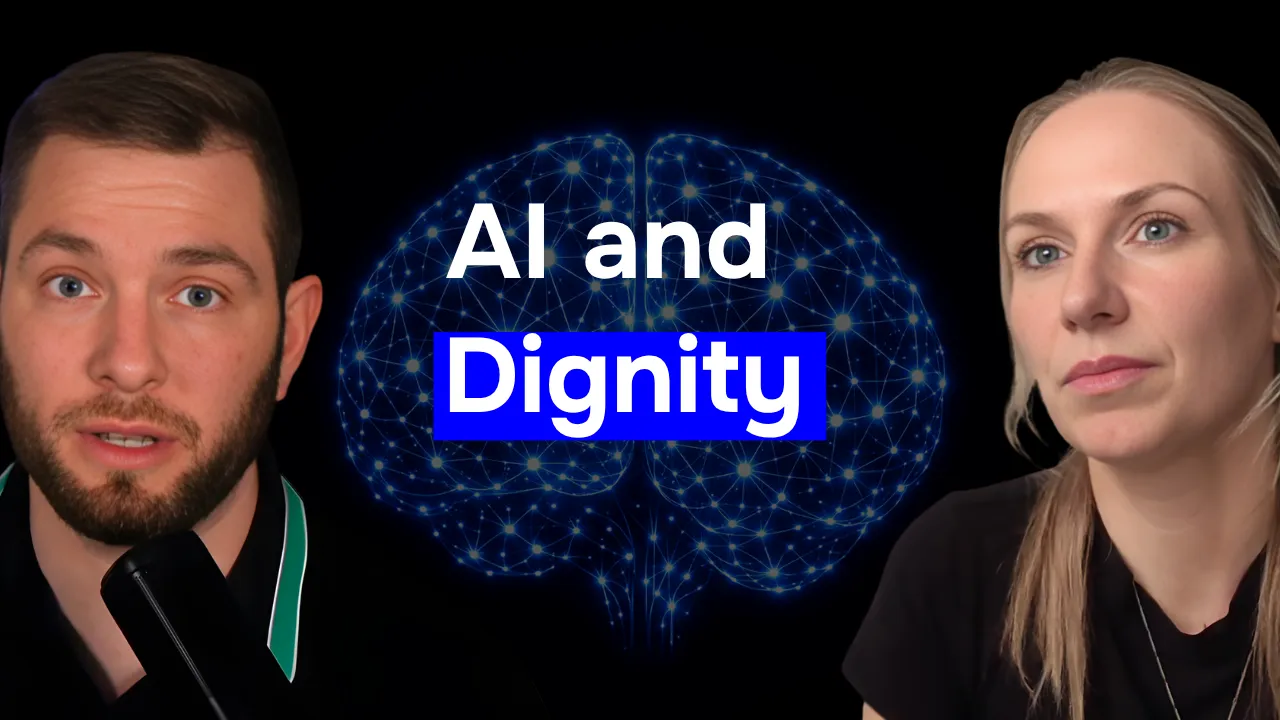
Most people talk about AI and productivity. Meaghan Platt talks about AI and dignity. As a Copilot Sales and Adoption Specialist at ITI and a mom navigating the daily reality of raising a daughter with PCDH19, a condition that causes epilepsy, seizures, cognitive delays, and significant communication challenges, Meaghan sees GenAI through a lens most enterprise conversations never touch.
We go deep on what most AI conversations completely skip: dignity. The moment a child realizes the world was not built for how she communicates. The confidence that erodes every time a tool fails her. And why Copilot, used intentionally, starts to flip that. We also talk about language barriers, neurodivergence, burnout, and what it actually means to lead AI adoption with people at the center.
Key Takeaways
- Why dignity is the missing word in every accessibility and AI conversation
- How GenAI removes friction that most of us never even notice but that stops others completely
- What it looks like to build a custom voice model so a child can use speech-to-text in her own pronunciation
- Why AI adoption fails when leaders treat it like a software rollout instead of a people strategy
- How a trilingual team with no shared language built real collaboration using Microsoft Copilot
- When AI shifts from adapting people to technology, to technology adapting to people
- What parents and teachers can do right now to prepare kids for an AI-native world
Whether you lead AI adoption at an enterprise level or you are a parent, educator, or anyone who navigates the world a little differently, this episode will change how you think about what inclusion actually means in the age of AI.
Resources
Hello, Meaghan, and thank you for joining me on the AI Frontier Playbook. Meaghan, you're a Copilot sales and adoption specialist at ITI. You live and breathe GenAI every day, but you also bring something personal to this conversation because you're a mom to Adeline, your daughter who lives with a condition called PCDH19, right?
Meaghan Platt
Exactly.
Samuel
Today we're going to explore how GenAI goes way beyond productivity and can be a real force for accessibility and inclusion. And I want to start by first thanking you for being open about your story and for sharing how AI has been helping Adeline, because I know this can inspire and help other parents and families going through similar journeys. So first, can you tell us a bit about yourself, about Adeline, what PCDH19 is, and the challenges she faces, especially around communication?
Meaghan Platt
Yeah, and just as a disclaimer, I'll try to do this without my eyes watering a little bit. When I talk about her, I get all very passionate. So yeah, I have been in the Microsoft 365 space since about 2015 and always on the adoption and change management side of things. So, of course, when Copilot hit, it was something that shifted my career and it was something really cool and amazing, but I didn't fall in love with GenAI because of what it was or anything like that. I really saw it through the lens of my daughter. So Adeline lives with PCDH19, which is a disorder that causes epilepsy and seizures. It also causes cognitive delays, communication delays, a whole bunch of things, a very wide spectrum of different conditions and things like that. And then, on top of all of that, she takes very heavy medication, which is life-saving, but causes also a lot more brain fog, fatigue, and things like that. So when GenAI came out, and working with Copilot in particular, it really started to shift my perspective of productivity and how can we enable people that have extra challenges like Adeline to use Copilot, or how is this going to change our life, and how is this going to bring out the most potential that she has, because her communication is there. It's just hidden behind a whole bunch of different struggles. And so, yeah, that's really where my love for GenAI is evolving from, definitely.
Samuel
And where do you see GenAI actually making a difference for her?
Meaghan Platt
One thing in particular that crosses my mind right off the top of my head is that, so like, for example, her cousins will be over and they're all really into music, and like they're playing, and they'll run up to Alexa, for example, and say like, 'Alexa, play my favorite song,' and Alexa will go and listen to them and play their favorite song, and everybody's laughing and dancing and all of that stuff. And then Adeline, knowing that she's asking Alexa to do the same thing with a sentence that makes sense, because of her pronunciation and maybe the wording of how she's asking Alexa to do something, it won't do it for her. I could see the frustration come over her face and like not understanding, why didn't that work for me? Even though she thinks she clearly asked it to do the same thing her cousin just asked it to do. And so it is this whole other thing that's going to start accumulating for her, like, I'm not good enough, I don't have the skills, and those are the things that are going to happen to her over time every time Alexa fails for her. So something, a struggle that simple that we overlook, like it doesn't sound silly, it's just playing a song, but it's an AI tool that is something that we can build for her. So we've started recording her voice and how she speaks to eventually build her a model that she can use as well. Like, this model will understand her pronunciation and her tone and so that she could benefit from asking it to play a song or explain a homework assignment or look for something fun to do. I think what's really cool about GenAI, about Copilot, is that it's shifting away from us needing to adapt to technology, and it's actually technology adapting to us.
Samuel
And this is so true. And this is what brings me to GenAI as well: all those use cases that can make technology actually more available to everyone. I mean, just thinking about using it in schools in less-developed countries, or using it for use cases like with Adeline, this is incredibly powerful. That's what I like about this technology. I don't know if I asked, but how old is she?
Meaghan Platt
Yeah, she's eight years old. And she's starting to realize that I can ask this question, but they're not understanding me. So what we're seeing more and more with her right now is that she's getting quiet. She's starting to not ask the questions, and she's shy. She's shy that she's going to say something wrong, or she's not going to be clear, or someone won't understand her. So she's losing a lot of confidence, even though in her little mind, she knows what she's trying to ask, and she has the potential to do that, and she's smart. It's just, it's not coming out properly. That's really where, and the schools really help and they try to adapt, but there's one teacher in a class of 20 students. It's very hard to adapt to every single different learning style. And so that's another really big thing with GenAI and things like that, is that you can ask it to explain something to you over and over and over again, and it's not going to get tired of explaining it to you. It's going to change. It's going to say, okay, well, maybe I'll explain it this way or explain it that way, and it's just going to keep doing it for you. So it's just going to help those students and even adults who need a little extra help, or learn differently, or are shy, or need to build confidence, and enables them to do that.
Samuel
And you mentioned you were training a model on her voice. How is it going so far?
Meaghan Platt
Well, it's just because we need her to talk a lot, like we really need to train it. So right now we're in the recording phase. So like I said, she's very discouraged to talk, even at home. So we're getting little bits and pieces at a time. But we're really trying to record that for her so that we can have that tool built. So like I said before, she can ask it questions on her own too. Something that comes with the PCDH19 also is she's got a weak muscle tone. So writing is very hard for her. And that's fine because usually you can use speech-to-text. So speech-to-text will type for her or something like that. But in her case, she can't use speech-to-text because of her communication, because of her pronunciation and things like that. So where she can't write and she can't use speech-to-text, this is really where this AI model that recognizes her voice and recognizes her tone and her pronunciation is going to help her write an essay one day, because she'll be able to do speech-to-text to it as well.
Samuel
Have you seen an improvement with the latest models?
Meaghan Platt
Yeah, yeah, definitely. It's improving every day. It's actually really cool even for me to be learning it. It's evolving so quickly. It's picking up on more things and more learning styles and explaining things like that. So yeah, definitely notice that.
Samuel
I'll be curious. Can you walk us through some of those everyday moments, like whether it's communication, learning, or just getting through the day, where you think GenAI might help, actually AI in general might help? Does she react to those empowering moments when using GenAI?
Meaghan Platt
Yeah, just in order to organize her thoughts, or so she's just this little human with these really big emotions that she can't express. So we're just using different tools and games and GenAI things to help her express these things. And so if she's very frustrated doing something, she'll use a tool, like she'll use something to show us what she's trying to communicate with us. So in terms of communication, it's really helping her there. For her, it's really, really focused around communicating because of her lack of communication, or ability to communicate, not her lack of communication. From something like that to asking questions, if I ask her, like, I don't know what you mean, she'll be able to go here and then ask the questions through.
Samuel
I'm very curious how she's reacting. Do you feel she feels empowered?
Meaghan Platt
Yeah, she's absolutely empowered now, more so every day that we work with it, more and more. She's just learning that there's more that she can rely on to help her be more and do more and be more independent and things like that. So using the tools and GenAI and Copilot and things like that, she's able to really express herself, be a little bit more independent, doesn't need to ask me for help with homework as much as she used to need to anymore because it's all in front of her. It's things that are available to her to use to be that little human that she can be.
Samuel
But this is really heartwarming. I mean, specifically for a mother, like 10 years ago, I think we wouldn't have thought of solutions like this, right?
Meaghan Platt
No, I really think about it, and it's just there's so much potential. Even when we're talking about burnout at work, or people who struggle with fatigue, or for me, for example, in Quebec, my French is not perfect, and I am very capable of talking about Copilot and teaching about Copilot, and sometimes the translation of things are a little bit hard. And back in the day, the translation was terrible. Like, it was so cut and like, it was awful. And so Copilot has actually enabled me to be better in that as well. And it's in a way that I'm not scared to ask it questions, or I can ask it over and over again, and it helps me with the translation, things like that. So it doesn't necessarily, it's not just for Adeline or kids like Adeline, it's for every type of work. You have some brilliant people who are working, but they're overwhelmed, they're exhausted, they're on the edge of burnout, and they're trying to work through these projects. Well, you can get an agent to put these projects into different pieces of the project and break it down easier for someone who's going through projects like that.
Samuel
Yeah, what I like is that mostly we were talking about GenAI for productivity, but you're talking more about it like for removing friction. Real life, real use cases. You mentioned like burnout, maybe communication, even for adults, you were mentioning speaking another language. And actually, that's the same for me. I kind of agree, English being my second language. If it wasn't for GenAI, I wouldn't be as active on LinkedIn or social media in general. So how do you see GenAI helping people with communication, cognitive, or physical barriers?
Meaghan Platt
I like to think about the friction. So productivity is amazing. What GenAI can do for the everyday workforce is really cool too. We speed up how we can summarize information, how we can find things, to write emails and things like that. And all of that is really useful in our everyday life. But there's also a lot of the friction that we just don't think about. Friction is kind of like what makes these tasks harder. Maybe you just don't understand, there's too much information to process really quickly. Well, I can break it down and have Copilot help me break down this information. So it's not necessarily that I'm not able to do it. It's just that there's steps that I need to take, and Copilot can help me with those steps. So it's removing the friction from this task. Or you're not understanding something properly, you can put it into Copilot and literally have a conversation back and forth to figure out what is needed for this. And so it's the things that we do every day that have just a little bit of extra fuzz or friction around it that makes it harder or makes it longer for us to do. And I think that is one of the biggest things with these GenAI tools. It takes away that friction.
Samuel
You look at things or tools like Microsoft Copilot. How does it actually change things for people with different abilities in general? I mean, information, expressing themselves, just being part of the conversation. Like I think for Adeline, or at work, or at school, what's the most powerful benefit you're seeing from those tools?
Meaghan Platt
What I'm seeing is like the independence, the ability to do and be 100% yourself because you have, these people have, or whoever we're speaking about, whether it be Adeline, me, or whatever, we have the capabilities and the opportunities, the possibilities to do all of these things, but that's where the fuzz is and the friction is. And so Copilot really will remove that. So whether it's, like I may have a sentence in my mind that I'm really trying to articulate, but it's not coming out properly. So just by popping that into Copilot, it'll reform that sentence for me to make it better. Copilot is just able to help summarize things, break things down, stuff like that.
Samuel
You just mentioned dignity. I think not having to constantly ask someone else for help is part of the big benefits of GenAI. So how do you see GenAI will give independence back to people who've always had to rely on others to advocate or even communicate for them?
Meaghan Platt
Yeah, I think dignity is completely overlooked when we're talking about accessibility and things like that. There's someone who's constantly needing to ask questions or clarify things, and maybe they understand, but they just want to make sure. You feel a loss of dignity in a way, almost like other people are responsible for how you're processing your information. And then eventually that builds up, and it's going to eventually shut you down a little bit or make you quiet. Or in Adeline's case, she just doesn't want to be embarrassed by asking questions over and over again. So Copilot kind of gives you a safe space to go and ask those questions again. So it's not only building confidence, it's removing any negativity behind asking questions over and over again. So it's something that, it's like muscle memory. If you're scared to do something, even though you're confident, even though you're capable of doing it, you're just not going to do it because you're scared. You don't want to be that person who's asking those questions over and over again. So it really does help with confidence.
Samuel
It reminds me of when I was at the university, and there's always people that are worried. Actually, I was scared of raising my hand because I didn't want to be judged. Now you can ask questions to Copilot.
Meaghan Platt
Yeah, exactly. And even at that, you can pop into Copilot to double-check your work. It's not necessarily that you're asking the question, but you know the answer. So if there's something like, Copilot, I was thinking about this idea, can you tell me what you think about it? So you're also getting like an opinion just to validate you, like just to say, yeah, that's a really good idea. Raise that hand and ask the question. So it's not just for finding answers, it's also for just validating your knowledge and to, I don't know, it's really to build confidence. I believe that Copilot and GenAI is going to be playing on the behavioral side of things so much more than the technical side of things. It's really going to help people who have the ability to ask these questions and bring these new things to the table and ideas. It's really going to empower a lot of people who may be too shy or scared or not confident enough to ask these questions. It's empowering.
Samuel
Have you seen Adeline using Copilot to learn? Or, I know she is a bit young, but...
Meaghan Platt
Yeah, yeah, we do it together. So right now we do it together because she can't communicate too well with it. But she'll ask me the question and we'll do it together. So one thing that I'm really working hard on with her is that, like, I don't care if she can write her name today. Like, it's not something that's on my, she can spell it, but like to physically write it. It's not something that is my top priority because of where technology and everything is going anyways. She's going to be able to rely on her computer or her laptop and these tools that are available to her. So we do it a lot. She'll get home from school and we'll open up Copilot, and we'll ask her questions, and we'll have it build pictures or images of things that she was working on in school today. And so I implement that into her every day so that I'm preparing her, giving her the knowledge, the tools to enable her to use that eventually. And I think that's another learning curve with Copilot and for parents like myself is that we should be enabling our children to learn how to use this as well and not be afraid of it because it's not going to be taking away jobs. It's not going to be, it's actually going to be the opposite. It's going to find the true potential in people who are able to do these things and elevate them to do that. So learning how to use it is probably one of the best skills you can be investing in right now.
Samuel
I agree. I do the same with my kids. I have two kids. My son is 11 years old and my daughter is nine, and she has ADHD and dyslexia, and I teach them. I teach her, actually both of them, but to use it helped tremendously. And in her case, because of her ADHD, she can use a laptop at school. And this is just a tool like any other for me. And Copilot is one of it. So we really need to maybe integrate it at school earlier.
Meaghan Platt
Yeah.
Samuel
Where do you see AI will level out for people who just navigate the world globally? You talked about specific conditions, you've mentioned it, burnout, neurodivergence, language barrier, like if you don't speak the language. Do you have use cases you can share with us for those people?
Meaghan Platt
I think it, and I feel like we've kind of talked about this, but it's just that, again, it comes back down to everybody learns differently. So you don't necessarily need to have a neurodivergent mind or a condition or something like that. It's just that everybody's going to learn differently. Some are going to learn by rereading, some are going to learn by writing, and some are going to learn by pictures or flashy things. And so I think that these are where I'm seeing it every day. So even in my workshops that I do with our clients, with the clients, I'm in a workshop with 20 people and I can integrate different ways to teach them because of Copilot. So I have flashy things that are helping people learn one way, different types of videos or documents. And you can provide them with all of these things so they can take back and use the tools in order to learn differently. We're seeing this every day, how Copilot is helping different people use it in different ways.
Samuel
And can you share some examples from your work where you've seen someone using Copilot to be more confident?
Meaghan Platt
Yeah, for sure. There's, again, a big one is the translation. Well, we live in Montreal. So it's the French and the English here. It's the Franglais. So you're having a team that I worked with, a team from one of our clients that had three different languages on the team. And they only spoke those three different languages. So one was Spanish, one's only speaking Spanish, one's only speaking French, one's only speaking English. And this team is just so strong and having these conversations and these ideas and communicating together. And it's because of AI, it's because of Copilot. It's helping them all translate this thing, and they're building a relationship and they're learning how to work together. And so this is just one of the examples, is that we're bringing together more people who may not have ever been in a room together because of language barrier or distance or something like that. And these three people are now communicating so well into the team. And it's because of the usage of Copilot, for example.
Samuel
And there's always that fear that AI is going to replace people. How do you flip that conversation to more AI amplifying what people can do instead of taking something away?
Meaghan Platt
Yeah. Yeah, I think it's just by showing and doing and using. And so the more you're going to use the tool, the more you're going to realize that this is actually going to amplify you rather than remove you because there's still a lot of human aspect behind the roles that we're doing and things like that, that Copilot can't do, nor any GenAI can do. So once someone gets more familiar with the tool, they'll start to realize that this is not going to take away your job, but it's going to help you step up in your career or move over somewhere else or learn something new. And so I think it really comes down to the adoption of it and talking about it and teaching it. So that's just how I go about it, is that I'm going to hold your hand. I'm going to show you how this is going to work. I'm going to show you how it's going to make your life better. And it's not going to, you're not going to be replaced because of it. For sure, there's going to be different parts of different roles that might be adapted or automated because of agents or things like that, but it's not removing people's jobs. It's just going to take away those little things that really cause you a lot of time. It's going to automate that to enable you to spend more time on the things that really matter.
Samuel
When you think about adoption every day, what's the mindset shift that you think organizations need to make to stop treating AI as just another tool and start really seeing it as something that actually drives inclusion?
Meaghan Platt
Yeah, I think the mindset is that we need to stop thinking. I mean, we can think about productivity in the sense of how can we save money, time, and dollars, and all of those things. But I think it's also how am I going to help my employees work the best? How can I help them, enable them, and make them be the best that they can be in the role? Because then you're going to save your money, time, and dollars too. So it's to shift away the mindset of how is this tool going to fix everything, make things better. It's not about what we're fixing in your roles in your organization. It's how we're enabling people to use the tool to better their work or get things better. Yeah.
Samuel
And how do you think a leader can identify if there's actually, for sure there's needs in every organization, but how do you identify it and make sure that those people are covered?
Meaghan Platt
Yeah, so the leaders just need to think of their people. If you think of it from a people's perspective, it's a type of technology. It enables everybody individually differently. So it's not as easy to say we're going to implement this tool because it's going to work for everybody. It's not going to work for everybody, and it's going to work differently for everybody. So it's to take the time and the energy to put into the adoption and learning and teaching and all of those things. So it's not about quick fixes. It's going to take time. We're going to grow with it. We're going to learn with it, and you'll see how it best fits your organization.
Samuel
And last question, looking ahead, what gives you the most hope about how GenAI could change education, work, and everyday life for people facing different realities?
Meaghan Platt
Yeah, I think that the way it's going is just nothing but possibilities. I think that, and I think I mentioned this earlier before, but we're so used to learning technology and learning how to use formulas. And it's very rigid in the sense that we're adapting to this technology because it is what it is and we have to use it. There's a user guide to use it. Whereas GenAI, Copilot, is going to be adapting to us. So I think that everybody, a teacher in a classroom is going to have a topic and she's going to talk about this, and then the students can go and then maybe there's going to be a tool for the schools where they can go and they can learn more about this topic but in their own styles. It's going to adapt to them. So if someone can't necessarily type, it can talk to them. If they can't write, they can type or whatever the case may be. But I think that it's going to really enable more people. It's going to enable a lot more people. It's going to empower more people. And it's really going to adapt to humans. So this technology is really going to adapt to humans. And for Adeline, just growing up in a world where the technology isn't highlighted, like we're not changing for this technology. It's really revealing her strengths, so it's changing for her. It gives me hope that she's going to be able to be the best that she can be.
Samuel
And what kind of advancement are you hoping for Adeline in AI in general? Any breakthrough you wish for or anything you've heard of that might come soon enough that you'd like to start experimenting?
Meaghan Platt
Yeah. I mean, I really want to get this model done for her, to have her own little Alexa. I think even down to the agents, I think agents are really going to change a lot as well. I think by automating different processes and breaking things down, and it kind of like, I just think about her doing a homework assignment where we can upload this into an agent and the agent can take it and break it down step by step. And even for your daughter, for example, like ADHD has your mind racing, right? So if schools can implement these types of agents that, you have your full workload and then it just breaks it down step by step automatically, once one section is complete, the next one rolls out and the next one rolls out. And I just think that there's so much possibility and we're teaching them young, and they're growing from that. Their confidence is coming from that and it's just going to move on with them in life. And so they're going to be the first generation with access to this, and yeah, I just hope it enables her to be the best that she can be.
Samuel
This is a very positive outlook at the future. Thank you so much for joining me and for sharing your personal story, sharing Adeline's story. I hope you'll get this model completed for her soon enough so she can start experimenting and expressing herself and have access to those tools in the best setup for her. So thank you so much for joining me again. It was a pleasure.
Meaghan Platt
And, no, thank you too.
Samuel
Thanks.
Stay in the Loop
Never miss an episode.
Get new episodes and AI insights delivered to your inbox.