Episode 13
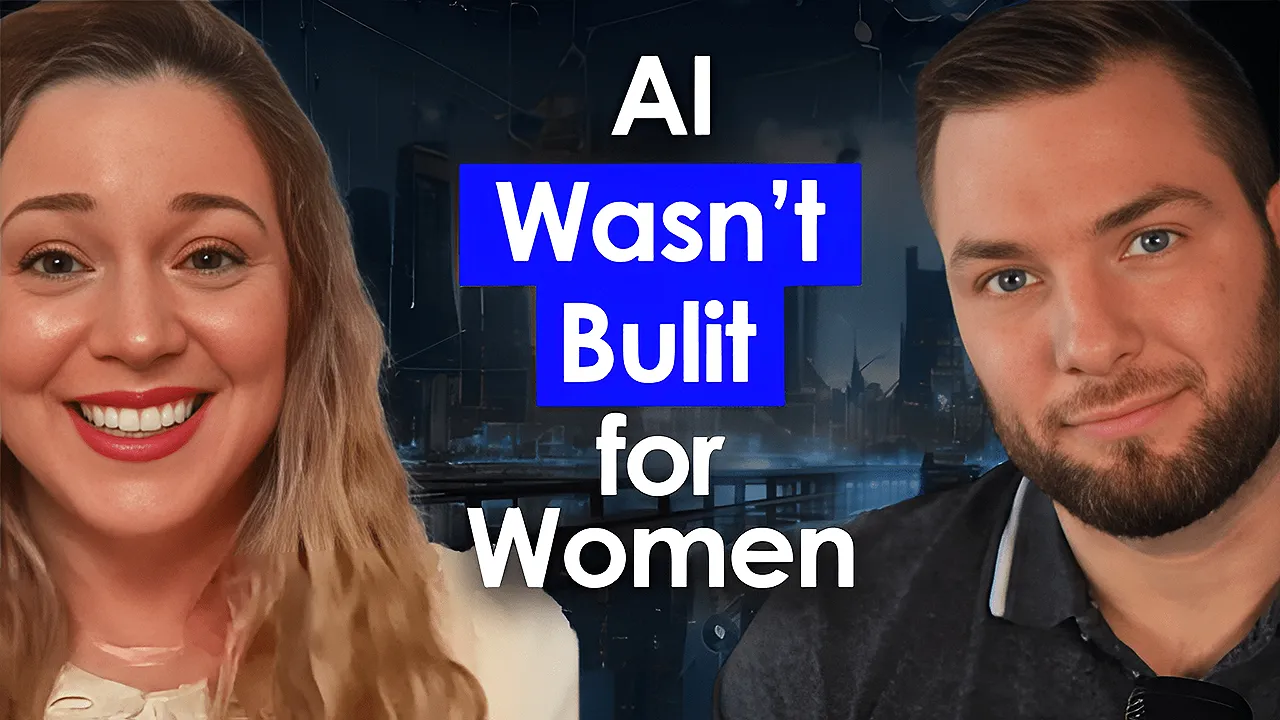
How AI Is Failing Women (And How to Fix It Now)

Miri Rodriguez · CEO & Founder, Empressa.ai
Share:
Show Notes
Unlock the future of Inclusive AI: What does it truly take to build systems that are responsible and equitable from the ground up?
In this essential episode on Gender Bias in AI and Responsible AI, we sit down with Miri Rodriguez, former star storyteller at Microsoft and the groundbreaking CEO/Founder of Empressa.ai.
After 13 years crafting narratives within Big Tech, a personal health journey — including battling cancer — pushed Miri to pioneer a solution for one of technology’s biggest challenges: the AI gender gap.
Key Takeaways
- Why the legacy of male-designed technology (like the car airbag) proves that gender-neutral is often just male-default
- How Empressa.ai is rewriting this reality by implementing a royalty model that fairly compensates women for contributing their insights and lived experience
- Actionable design principles for building inclusive AI agents and foundational models
- Why the true barrier for women in AI adoption is often confidence and the need for safe learning spaces — not capability
- How to insert women’s knowledge intentionally into AI systems to reduce bias
Resources
Responsible AIGender BiasInclusivityEmpressa.aiWomen in AI
Samuel
Hello, Miri. Thank you so much for joining us on the show today.
Miri Rodriguez
Hi, Samuel. It's a pleasure to be here. Thank you so much for inviting me. I'm excited to have this conversation.
Samuel
Super exciting to have you today. Miri, you've spent the last 13 years?actually, you've left Microsoft?but you spent 13 years at Microsoft as a storyteller. And not so long ago, you decided to make the move to leave Microsoft and build Empressa.ai. Can you share what part of your journey made you realize this was the moment to create your own platform and leave Microsoft?
Miri Rodriguez
That's right. You know, that's a great question. First question that came off the bat. Thank you for such an insightful question. I knew at one point I would leave Microsoft. I didn't know when. In fact, I had been working on Empressa for about a year and a half before I left. And what was very interesting in my journey at Microsoft that I want to call out here for those people who may not know my story: yes, I spent 13 years, six of those as a storyteller. I did storytelling in engineering, in sales, in HR, in operations. So a great space of different types of storytelling for enablement of the digital age and the era of AI, which is exciting. I also went through a medical journey, a personal medical journey that is very, very specific to women. I went through breast cancer, and I had it in both breasts. And I also was diagnosed with the BRCA gene mutation. BRCA stands for breast cancer. And so that is a genetic mutation, and my journey was about a two-and-a-half-year journey that involved five surgeries in total, including the breast removal and breast reconstruction and a total hysterectomy. Each time I was having a surgery during this time, I was at Microsoft, and I was in and out, taking leave. Every time that I was recovering, I had almost a download, is what I can call it, of insights, of things that when you enter this life where you're thinking about what's next, if life ends, what happens, what is your legacy? I had looked back at all the 20 years in tech that I had compiled and the work that women had done, including myself, and where does that go? Where would that go if I was no longer here? And then I thought, we have to scale this. We have to bring a legacy, something that is tangible, no longer one-on-one. I've had many conversations with women. I've helped them in different ways, personal branding and workshopping. How can we scale this? And it dawned on me this was going to be in AI. And then I was scared. I was like, no, Microsoft can take my IP. Like, my gosh, I don't know if I can leave Microsoft and do this outside of Microsoft. How do I disclose? So having all these conversations, it actually was so wonderful that Microsoft, once I disclosed, invited me actually to join the Microsoft for Startups program. So we became a partner. They actually gave us a hundred thousand Azure credits to build our AI on Azure. So we did. So we're on the Azure stack. And it was just one of those things that you know that it's the moment to do something beyond yourself. So how did I know? I didn't. I just followed intuition and the alignment of things that happened. And you realize, okay, this is beyond me. This is beyond my own wildest dreams. This is something for the world and for the women of the world. So then we took the leap, and we launched just a couple weeks back, and it's been an incredible journey, and I have not looked back once, not once.
Samuel
Do you think you'll have the same inspiration if it hadn't been from cancer? I mean, I will assume it's...
Miri Rodriguez
Don't know. You know, it's a great question. I think?and I've talked to many women, by the way, once I went out with my story about breast cancer, a lot of women have reached out to me personally and they've said it is life-changing. It's something that kind of pauses you and makes you think beyond yourself. What is that legacy? What is that thing we're working for? And I love Microsoft, and I love that Microsoft has been mission-driven, and I've always aligned to the Microsoft mission to empower every person and organization on the planet to achieve more. I think Empressa?well, I know Empressa?is a baby girl extension of Microsoft and all the things that I learned and putting that into motion specifically for women, because it is important for us and there's a lot of work to be done in that space. So I can't say that I would be here had I not gone through something like that. It would definitely make me pause and reflect and really get courageous about, if I'm given a second chance in life, what will I do with that chance? Well, here I am, I'm doing this.
Samuel
And this is such a great... You've said that it's built for women. And you already mentioned that AI is trained on historical data, and it's not built for women. And, you know, I can understand how biased an LLM can be based on the fact that it's trained on the crux of the World Wide Web, which is biased by nature. So from your experience, what are the most harmful gaps...
Miri Rodriguez
That's right.
Samuel
...that you found in AI systems today, specifically to women?
Miri Rodriguez
Yeah, you know, we're actually going to publish a report this week from Empressa, from the data that we've been collecting for a year and a half and then now through the launch, which we have great insights based on conversations, based on a lot of quantitative data as well, on a lot of surveys and gaps that we've seen with women coming in. One thing that I think was surprising in a way to me, but it shouldn't have been, is that women are far more advanced in using AI tools than we believe or need to believe. And that is not because the surveys are wrong. That's because women tend to, historically, downplay their abilities a whole lot. So if you ask them a question, and if you say in a survey, how comfortable are you with an AI tool, they may say they are moderately comfortable when they are actually a super user. And so that actually skews the data. And it's a very interesting thing to think about how women approach it personally, because that also impacts the results, the data that we're seeing. So it starts with us. I would say that the most harmful thing is ourselves and our view of how we can come into AI. We can be our own barrier in a way. And I've studied the why, and the why is compelling. It's not wrong. We fear that AI is going to be a bad actor against us. We fear that it's going to expand on bad actors' abilities and capabilities toward us. We have had to contend with technology historically that doesn't consider us, doesn't consider us biologically, or mentally, or how we enter the world emotionally or any other way. So we are approaching it with a lot of caution, and that is stifling our opportunity to adopt faster. And so we don't trust the systems. We know they are biased. I had just actually responded to a message on LinkedIn about a woman who said, how could it be, you know, the Canva founder and CEO is a woman, yet when I go to Canva and ask for some elements, the data is all men and men-driven? And I was like, because it doesn't matter who is at the top; it really is the data that is informing these machines. So when you have 80% of authorship of the internet being men, when you have 90% of GitHub engineers are men, and when you have only 12% of women in the AI workforce, it doesn't matter how much we want it to be safe, it won't be for us.
Samuel
Yeah.
Miri Rodriguez
We know that intuitively. So the harm is really in the established systems that we have to carefully undo one by one and the layers, and it's really up to us. We can't sit here and blame systems. We can't sit here and get angry about it. We have to do something about it. We have to show up. And I love that at Empressa we're making the call, and women are showing up, and they're showing up with courage, you know, and they're showing up and saying, okay, what do I do? How do I get my fingerprints on this line of code, and how do I enable data that is not skewed anymore? I would say that's the main factor. The second one, I would say, is for the next generation, how they're approaching AI. So we're thinking about our younger Gen Alpha, not even Gen Z, because they're pretty much entering the workforce now. They're in their early 20s. Gen Alpha's coming in. They will be what we call AI-native. So we had digital natives; they will be AI-native. So how are they approaching it today? How are the kids today, ages five and seven?how will they be having a relationship with AI as girls, that they know empowers them versus harms them, that they know it can bring parity versus not? So it's education. It's how can we enable them now so that they are not afraid of it, and they can code it, and they can be part of it.
Samuel
So you mentioned that women are perceiving LLMs as bad actors more than men. Why is that? So why do women not trust AI as much as men?
Miri Rodriguez
Yeah. Yeah, and that's a good question. I always give the example of the car as a technology, right? The car was built over 100 years ago, a century ago, and it was certainly built by a man, and it was built for men. And so when I think about the car today, 51% of drivers in the U.S. are women. So I'm talking about statistics, not worldwide, but in the United States, we have 51% of drivers that are actually women. So more drivers are women than men. I get in the car in the States, I like to drive an SUV?that's a sports utility vehicle, it's a large vehicle. I'm small-framed, so when I get into the car, I have to push my seat all the way almost to the front, so I can take hold of the wheel, the steering wheel, so I can drive it. And the airbag deployment system, the machine, the technology that's been built for the car to save my life, actually still in 2025 is measured against the standard of a man who is 5'11'' to six foot, 175 pounds, which is telling you the machine is encoded that if I hit the car, if I get into a car accident, the airbag will not deploy in time. I'm so close to the steering wheel that I'll probably hit my head first before it actually deploys the way that it's meant to. That is a hundred years after a machine was built for men, while 51% of those drivers are women. And still I run a risk of my life because the machine was not built with me in mind. And so that is the history that women have with technology. We've consistently had to ask technology to catch up, or we have to catch up with technology. When you think about medical technology and training of machines and training of systems and data to, for example, give us medication, it wasn't until 1983?1983, that's my sister's birthday?that medical breakthroughs included now female biology. So the medicines we were taking were for male biology. So all the research that had been done was for male biology. We know this in our history and we understand that technology doesn't necessarily think of us when it's being created. And so we come and we approach it with a lot of caution. So that's where it comes from.
Samuel
I told you I have a daughter, I have a wife in tech. Can you just give me one concrete example of today, my daughter, let's say my daughter using Copilot or ChatGPT or another LLM, what kind of harmful behavior she might experience from LLMs?
Miri Rodriguez
Yes. Yeah. Yeah. So let's say that she's using Copilot for school. She's using it for research for school, and let's say it's a research paper about animals in the zoo, and she wants to talk about animals in the zoo. And she's sourcing information, researching, and she starts to do her search: hey, Copilot, can you help me find more information about animals in the zoo? The machine, being basically trained to source and make decisions on the most reliable data, right? So it's thinking, okay, what is good sourcing? And it's in the back end thinking, and it's sourcing thousands, billions and trillions of data points to bring about an answer in three seconds that might be the most reliable answer for her. Ninety percent of that content, 80 to 90% of that content, is male-created, male-authored. If she's talking about animal incarceration, for example, in the zoo and how they're depressed, a man may not have talked about it. A woman may have talked about it, but she's missing that other half of information that probably didn't get published. A lot of work that the women do in each of the fields does not get published. And so when we bring to the table information, that information is only one-sided and mostly male-authored, 80 to 90%. So the information coming in does not consider other pieces that could be critical to what she is thinking about. And a lot of that has to do with what we call the female quotient in terms of empathy and communication and other things that we think about when we have an experience at work, that it's just different from men. It's not good or bad; it's just how we approach it differently. I've seen Microsoft evolve from a company that, you know, I was there before Satya Nadella joined as CEO. And before we were empathy-led, right, before he came in, I was there in the Ballmer days. And you could say the culture of Microsoft essentially changed. It became a lot more emotionally connected, emotionally intelligent. Women bring a lot of that to the table. We naturally do that. So if we are missing half of that information, we're missing a lot of information that could be provided for data, for reports, for anything that we're trying to think about, critically thinking about something. We're missing half of it.
Samuel
Yeah, we tend to forget that men and women don't necessarily process the information the same way. We don't, you know, but...
Miri Rodriguez
And it's good. It's good that we don't. We bring to the table a lot of different wonderful capabilities. But when you blend them, you have an opportunity to see a whole picture of something. It could be the same experience, but it looks differently. For example, women are more communal, right? When you think about women communities, women enterprises, they always think beyond themselves. If a woman would have built a car, she probably would have thought about children and safety and elderly people joining it.
Samuel
Yeah.
Miri Rodriguez
Disabled people?that's just the way that we think. It's not wrong, it's just different. And so it expands the knowledge and it expands the way that we come together as a human race and enables each other better. If we take just one aspect, it's not bad. It just might miss something that is bigger for us and that can be more empathy-driven for the human race.
Samuel
To help fill that gap, you built Empressa.ai, and I'd like you to explain in more detail, but you're basically using women's experience rather than the traditional data set that's been pulled from everywhere on the web mostly. What made you realize that this was needed to create an AI system that will really talk and be more tailored to women?
Miri Rodriguez
That's right. Yeah, well, so our idea is really multifaceted for women. The first one is the lack of accessibility to other women's knowledge. And so this is a multi-layered approach. And this is back to how women react in society, how we have been conditioned. So historically?and this is our evolution as women?has not changed a whole lot in the way that we think about survival in the last 10,000 years. So we're still a little bit of the cavewoman response when we are finding ourselves in a place that is not safe. So we respond as cavewomen. And cavewomen do not lock arms with each other. They save their secrets. They don't share everything out because it was a mode of survival. I'm not going to share my secrets because if I do, then this other cavewoman is going to take it from me and probably take the berries that I gathered, so I'm not going to share it. Obviously, we don't have the same harmful immediate dangers, and so this idea of us locking arms and sharing secrets and trading secrets is really important. Women do do that, and it's not that they don't, but they have to trust the environment. So a lot of women, once they trust, they'll give away everything and they'll give it away for free, which is another problem. Women will say, okay, I'll help you. I'll give you everything I've got, and they won't charge you for it. Men will never think about that. Men will say, hey, my money, my essence, that's money. I need to charge you for that. So we approach it in two extreme ways. We either don't share it because we don't feel comfortable, or once we do, we give it away and then we don't monetize it. So Empressa is a solution to that for women who are experts. We invite women who are 10-plus years in any industry to join Empressa and to share their insights in their digital library. It is their own insights. It is proprietary. Unless they give us the permission to use it for sourcing for AI, beyond that, it is always theirs. It is just another channel for them to expand their knowledge. So they create their insights, and this insight informs our AI. And on the other side, we have subscribers. So it's users, younger generation, early-in-career women who are just building their business or who are pivoting their career, and they would never have access to this information. You know, LinkedIn is just overwhelming, network is overwhelming, we don't have the time. So can I just go in and ask a question that is very pointed to my situation? Hey, I just started my business; how do I scale my business with storytelling? Well, me, because I'm a storyteller, and three other storytellers will show up and be like, hey, I'm glad you asked that question. Here's how I did it. Here's how I scaled it. And here's how you can do it as well. So it's not just giving you advice; it's giving you a council of women with their own lived experiences and stories. And then you get to pick what serves you or not. It brings accessibility worldwide. It also helps these women expand their knowledge and actually monetize it. So whenever the AI uses one of the women's insights to answer a query, she gets paid on the back end a royalty. They actually can track how many times the AI used their knowledge and their insights to answer and to help another woman.
Samuel
You mentioned that historically women are sharing less than men. And I can never agree more. That's something I see on LinkedIn. I see far more men posting deep insights and even monetizing their knowledge on LinkedIn. Do you think it might be one of the reasons that the source of knowledge is a bit biased? It's just because historically women haven't shared as much as men as well.
Miri Rodriguez
Yes. Yeah, I mean, yeah, I think the system is multifaceted. I don't think there's one thing that we can point out and say, this is why. I think women have a lot to do with it. Men have a lot to do with it. History has a lot to do with it, and it's all just part of this system that's been built over the years, and now we've got to undo it. Now we've got to, there's a part of us to play, there's a part of men to play, there's a part of systems to play, and all of us, we've got to address it and we've got to say, hey, this is my responsibility, my part in it, and I've got to step in and be courageous and start talking more and start sharing more and not act from that mindset, come in and act differently this time around.
Samuel
Don't want to get technical, but how do you take this knowledge sharing, those stories, those experiences that are shared by experienced women, put it in an AI model that will learn from it and not lose the context or become biased on the other side?
Miri Rodriguez
Yeah. Yeah, so we do have systems in place where we are?I'll give you one example. A lot of the questions we get from women is like, okay, well, what if we have 50 storytellers and one person asks one question? How do we make sure that everybody gets paid? We want to make sure that all 50 storytellers?where is the justice in that? And so our system has been trained to look at the data, understand the insights that they submitted. First thing is the data integrity is important for us. So those insights, we tell our women to make sure this is quality information that they're sharing. This is theirs. Women have downloaded information from their own social media channels, for example, and uploaded it there; they can do whatever they want. It's really their digital library. Women have uploaded their books, their own frameworks. It's really whatever they want. The integrity of the data, the data will look at it and say, okay, how relevant and how reliable is this information in order to answer that query? So it has to be reliable information from the women. And then there's a justice system, a rotation system, where if one query comes in about storytelling, the next one that comes in, the system will rotate and no longer will be just me. It'll be somebody else who's also in that category of storytelling content. So it'll learn, it'll read and say, okay, Miri talks about storytelling, Beth talks about storytelling, Michelle talks about storytelling. So it'll pick and go and make sure that there's that. So we have worked with a hundred women founding members through the build of the AI before we went to launch, and this was part of why we want to make sure. We're saying it's by women for women. We did a lot of testing around what that looks like, what the fairness looks like, how that shows up for women, how safe it is for women. And so to us, it's really been an endeavor of not assuming what we think women want, just because I'm a woman. I can't just assume that. I have to make sure that it shows up the way that women need versus what I want it to show up like. So we've been iterating a lot. And now after launch, we continue to iterate. We're seeing our users, you know, basically it's flexible enough that we're learning what women need versus what we think they want.
Samuel
And I mean, I think today, in today's world of AI, everything is AI nowadays. Bias is a huge topic. We're going in the world of agentic AI, you know, with Copilot Studio, Agentforce. There's more and more agent products that we're seeing every day. So what do you suggest? What have you learned or what...
Miri Rodriguez
Yes. Yes, we are.
Samuel
...design principles would you suggest for any organization that wants to make sure that when they're building their agents, they won't have those kinds of biases in their agents?
Miri Rodriguez
Yeah, so actually, like I said, we were just about to publish a report that's going to tell organizations our findings on that. For organizations to really ensure that as you move toward this AI-first or digital-first world, there's a few things that they can do to integrate women specifically in the first parts of that shift that they're making, that transformation. The first one is enabling women to learn their own way. So one of the things that we learned is that we women learn very differently than men. And for that reason, we also have not been adopting AI faster. Our on-demand content, which is great?LinkedIn, Microsoft, all the great ones?we start it, we pay for it, then we don't finish it, not because we don't want to. We still hold 65% more of the workload at home than men do. So if you have a couple today who's a modern work couple, both go to work full-time, both have children, you know, you come home, the woman in that partnership is doing 65% more work. So we're exhausted. It's just our reality. And so we keep putting our own skill-up or skilling abilities down, down, down. We don't prioritize it. So we learned that cohort-based and live learning is important for women. We actually created training called AI Foundations, and we decided to launch Empressa with an AI Foundations for Women event, which blew us out of the water. It was actually global. We made a call, and we had 250 women respond to be speakers in the first 24 hours. We had 33 cohorts globally, beginning in APAC. That's part of the report that we're sharing. And one of the things that was really important was that when we decided to do this event globally, we could not find a platform that enabled women to play with AI tools in a place where it feels safe. So if they go to ChatGPT open source or any open source, they may feel again, it's biased. It's not going to give me the answer, or it may respond differently than I need it. It may not consider me. If I talk about, you know, hormones and depression, it might just cancel the query because, you know, depression could lead to whatever. And so we actually created Empressa Playground as a response, the overwhelming response to women wanting to learn AI their own way. And it has been, it just became another product that we didn't even know we were having. And now enterprises are reaching out and saying, hey, we want to partner with you to have this program because women are excited to learn. It's not that they don't want to; it's that they have to be able to enter an environment where they know that this is for them. So organizations ought to not just ask women, go learn it with content that probably a man created for everybody. Create spaces and create moments or join programs that are women-led and for women that really enable conversations that are for them. We saw a lot of information from women coming into the space in a space that felt private to them, where they can ask questions and they could learn. So curiosity drives this, and you will be surprised if you're listening to this and you're an enterprise leader. It's not that they don't know. Women know a lot, and they surprised us because they knew more than they thought, that we thought they did or what they said they did. It's just that they're not confident in sharing how much they know or they're not given the space. So create a space that women can share. Create hackathons where you're starting to talk about project-based organizations instead of hierarchical. You're going to have, for example, an opportunity which we're doing in Empressa. We're actually building a frontier firm at Empressa as well. So it would look project-based. Again, hey, we're going to create a sales force, okay? Well, let's bring three women who have had sales experience in the past, and let's bring them into a project. Let's do a bit. They come in. Everybody just starts basically hacking and bringing in different tools, Perplexity, whatever the tool of their choice, and thinking about agents that can help automate some sales processes, such as email automation. And so then we look at it, we look at it, we see which one works best, and we implement. So that is a great way for organizations to just continuously bring women into the hands-on, not just the theoretical or the leadership on top. It's really just everybody's, who has experience in this? Who has experience? Come to the table and begin to hack tools and agent workforce. That is the next way. So I would say skilling for women that is tailored to them, hackathons or opportunities where they can come in and hands-on train and play with AI and bring AI solutions to the table. And then the third one really is around leadership. As you hire these new roles that are going to be AI-first, you have like the chief marketing AI officers, when you add that AI interpretation into it, just think about the solutions that women can bring. As we were saying earlier, Samuel, we bring a different perspective to the table. So look at your organization and say, sure, I can bring in five men with 50 years' experience, I don't know, 25 years, 20 years' experience, whatever you want, into this world, into this table. Or I can bring three men and two women who are going to give perspective that we didn't have before, that it's going to enable our AI tools integration to be...
Samuel
Mm-hmm.
Miri Rodriguez
...to consider bias, to consider possible non-inclusion, to consider non-ethical practices. So women come in already thinking of that, and it's going to enable you to really think about sustainability with AI.
Samuel
So it's giving more space in the decision process of building those AI agents to women and giving a platform for them to expand their knowledge and share and being part of the decision of building those AI agents at the end.
Miri Rodriguez
Yeah, and with the recognition that women will probably say, no, I don't know enough. Women will?and this is also data, by the way?a man, this is all over the internet, a man will apply to a role that they see online and they say, three out of the five, sure, I can do it, and they apply, right? All the time. But women will go, no, I'm four and a half, I'm half away, I'm a half a point, no, I'm not going to apply. So there's a woman that's probably even...
Samuel
I agree.
Miri Rodriguez
...better at the job. She doesn't apply because in her mind, the way that we think, it's like, got to be a five out of five. And so that's how we approach life. So with that consideration, think these women may say, I don't know. I would love the opportunity. I'm just, they sell themselves a little bit shorter. And then you could say, hey, just come in. Just come in with courage. Just come in. Make that invitation and intention to bring them to the table. And they will definitely surprise you. They're surprising us. And I shouldn't be surprised because I'm a woman, but they are blowing me out of the water, and I'm just so excited.
Samuel
Something I really like about your framework is that you're paying royalties to women providing insight to the AI. And I think that it can apply to everyone, not just women. That can become a blueprint for how you compensate people who create the data that is then used by the AI system. So how did you come up with that idea?
Miri Rodriguez
Yeah, so yeah, you called it out well. It can be definitely great for everyone. And I think it might end up being something that can go mainstream in the future just because in this proliferation of AI knowledge and internet content, I think we're going to get a little bit tired of just AI being AI at some point. And we want to make sure that our content is being sourced by a real human at some point. So I think we're going to head there faster than we think. The way I thought about this was my own experience and then as I learned other women's experience. When I started being invited to conversations and talking in different places and being invited to speak at different conferences, I just went. I was so excited. Yes, yes. I said yes to everything, and I showed up and I spoke at events. Years later?I've been doing this for a long time, but like six years in?I remember I was invited to a keynote, and it was a pretty big conference. And I was like, wow, I'm going to be the keynote. This is great. And I realized I wasn't getting paid. And the conference is paid-only, obviously, experiences. So I was like, that's interesting. I wonder if anybody else gets paid when they come. And I found out that some men were getting paid. They were not even the keynote. And I was like, wow, why am I not paid? And it was because I simply didn't ask, you know, and a lot of women don't ask. We just think that the system is going to recognize she's really great, we might just, you know, pay her, and that's not going to happen ever. And so that's one more thing where the system is broken. Women just don't ask, and women just give, give, give, and then we dilute ourselves so much. And so the system of paying women royalties is number one, to break that barrier for women and let them know your content is worthy and it's worth it. And so we want to monetize it. It's not free. Your essence, your knowledge, everything you've worked for should be monetized. And so that teaches them, wow, if Empressa is paying me, I'm more likely not going to just give it away to somebody else. I'm going to be like, no, Empressa pays me for this. I'm going to go monetize. So it's a change in paradigm for women psychologically. And the other one is for the world. The world should know that women's insights should be paid. And so, you know, we're modeling that for everybody to go out. If Empressa is paying, why shouldn't we pay? And so it creates this economy, this new economy for women being honored and rewarded as they should for their insights, which is very valuable. We don't want them to feel ever that AI is taking advantage of them. AI is here to enable them and empower them, not take advantage of them.
Samuel
Agents are becoming more autonomous, right? So at some point, and maybe it will be part of your platform at some point, but agents are able to craft documents, craft emails, not necessarily with the input of a human being, which means, by definition, that they are autonomous. How do you design an inclusive agent? Because we need to use the foundational model out there.
Miri Rodriguez
Yes. We do.
Samuel
I will assume that Empressa.ai is using one of the foundational models, right? Or using some kind of...
Miri Rodriguez
It is. It's a GPT. It's the OpenAI GPT model. Yes. Foundational.
Samuel
So you're either using fine-tuning, using instructions, or providing information to RAG.
Miri Rodriguez
To then, yes, to train it the way that we need it to the output. That is.
Samuel
So let's say I'm a woman creating an agent with Copilot. How do I make sure that it's not biased, considering I can't train the model, or I only have access to the instructions? What would you say are the most common biases toward women that you want to address in the instructions?
Miri Rodriguez
Yeah. Yeah. That I've seen. Yeah. So I think it's not that they're just biases toward women directly. I don't think that's what I've seen. I think it's just the lack of information that includes women. Do you see what I mean? I think it's not directed at women, or it's not directly addressing not women. It's just because of the information that it sources from typically is not authored by women.
Samuel
Right, yeah.
Miri Rodriguez
Or it doesn't include women. It's just going to give you an output that it knows. And so the way that I have trained and that I have asked women to start training it is to include their own content into the AI. I've trained my ChatGPT, for example, my Copilot as well. I've created several agents. I've created a Miri digital voice. I've created a Miri marketing voice. I've created a Miri thinking voice. I've created different kind of aspects of me, and that Miri, it knows who I am. It knows my tone, my voice, what I'm about. I don't have to say every time, Miri Rodriguez, act like Miri Rodriguez or send this email out from Miri Rodriguez. It just knows who I am. It's learned my tone, my voice, and what it's done is, at the small scale, it helps me out because I can automate a lot of tasks, right, which is great. I could not have absolutely launched Empressa in the time that we did without the help of AI. I mean, the timing was impeccable for us to launch a product like this with such a flat organization, so I'm so grateful. Beyond that, I'm doing it in open source on purpose. So I wanted to know there's a Miri Rodriguez out there. I want the world to know that there's a Miri Rodriguez out there that does these kind of things. So if you look me up, or if you ChatGPT or Copilot Miri Rodriguez, she's going to show up. Miri is in the house, right? And so I'm doing that on purpose. Why? Back to the conversations we've been having, the theme is we have to show up. Women have to make themselves present in platforms. They have to have a digital footprint. The more that I'm teaching this AI about me, the more it considers me when it's creating. It's one more line of code, right? It's one more line of code that I'm adding. And so if I'm doing this and billions of women are doing it, guess what? Our AI is becoming more inclusive and more inclusive. And when it's sourcing, it learns from that. It learns the conversations I'm having. And so I also teach it. When it tells me something that I'm like, no, I don't think that's what it is, I respond. I'm like, no, consider this instead. You're right, Miri, you're right. We should probably consider this. So again, it's a conversation we're having. Do not treat the system as a once and for all. It is completely trainable, and we should be training it to make it more inclusive.
Samuel
That's really insightful. A lot of facets of the conversation I haven't thought about. So thank you so much for that. We're almost at the end of our time. However, I have my last two signature questions. So let's start with the first one. If you had one practical tip that would help you be more productive using AI, what would it be? One.
Miri Rodriguez
Okay. One practical tip is to train it in the way that you would train the next generation. Think about the next generation. Don't think about it as a future. Think about it as a building; you're building something for the future. The future's already here. And so we, this generation that has the privilege to start something new, that will be, and it has been, comparable to the Industrial Age in massiveness of the shift that it will create for work, for the workplace, for how the new generation will enter into this workforce. We are building that right now. So think of that. Think about the children and what that will look like. Think about the ethical implications of that. And when you begin that interaction with it, what are you doing? What is your grain of salt that will continue that into an ethical and sustainable system completely? Let's not use it just for us. Let's use it for the next generation. That is my practical advice.
Samuel
Love it. Last, actually, I'm really curious what your answer will be on this. How do you see AI evolve and change our life in the next 10 years? But from your viewpoint, do you think it will be less biased? Do you think it will learn and it will be more inclusive for the next generation?
Miri Rodriguez
You know, I don't know how fast this technology is going to evolve. I believe when we include quantum, which is also a sister technology that is definitely impacting and influencing many different things, I think when these two mesh, at some point it's going to be...
Samuel
Yeah.
Miri Rodriguez
...just an incredible surge of innovation that we may have never seen before, and definitely not in our generation and generations past, the level and the fast innovation that will occur. What I would like to see and what I do dream of in this innovation space is gender parity. We are 123 years away from global gender parity in the workforce for women. I may not see it. I will die before we see our women get paid the same amount of money that men do for the same job. So my hope is that wherever AI is at this point in terms of innovation, that we are leveraging it for good and for women to accelerate that number, to close that gap faster, and that we will, with Empressa's help as well, enable a world where our children won't have to worry about making less because they have the same opportunities as men do in the world.
Samuel
Thank you so much. It was super insightful. Thank you for the work you're doing. Thank you for my daughter, for my wife, all the wonderful and brilliant women around me. It was a very interesting conversation. I wish you all the success in the world with Empressa.ai. Obviously, I'll put the link to the website in the description and the show notes. So thank you so much, Miri.
Miri Rodriguez
Thank you. Thank you so much, Samuel.
Hello, Miri. Thank you so much for joining us on the show today.
Miri Rodriguez
Hi, Samuel. It's a pleasure to be here. Thank you so much for inviting me. I'm excited to have this conversation.
Samuel
Super exciting to have you today. Miri, you've spent the last 13 years?actually, you've left Microsoft?but you spent 13 years at Microsoft as a storyteller. And not so long ago, you decided to make the move to leave Microsoft and build Empressa.ai. Can you share what part of your journey made you realize this was the moment to create your own platform and leave Microsoft?
Miri Rodriguez
That's right. You know, that's a great question. First question that came off the bat. Thank you for such an insightful question. I knew at one point I would leave Microsoft. I didn't know when. In fact, I had been working on Empressa for about a year and a half before I left. And what was very interesting in my journey at Microsoft that I want to call out here for those people who may not know my story: yes, I spent 13 years, six of those as a storyteller. I did storytelling in engineering, in sales, in HR, in operations. So a great space of different types of storytelling for enablement of the digital age and the era of AI, which is exciting. I also went through a medical journey, a personal medical journey that is very, very specific to women. I went through breast cancer, and I had it in both breasts. And I also was diagnosed with the BRCA gene mutation. BRCA stands for breast cancer. And so that is a genetic mutation, and my journey was about a two-and-a-half-year journey that involved five surgeries in total, including the breast removal and breast reconstruction and a total hysterectomy. Each time I was having a surgery during this time, I was at Microsoft, and I was in and out, taking leave. Every time that I was recovering, I had almost a download, is what I can call it, of insights, of things that when you enter this life where you're thinking about what's next, if life ends, what happens, what is your legacy? I had looked back at all the 20 years in tech that I had compiled and the work that women had done, including myself, and where does that go? Where would that go if I was no longer here? And then I thought, we have to scale this. We have to bring a legacy, something that is tangible, no longer one-on-one. I've had many conversations with women. I've helped them in different ways, personal branding and workshopping. How can we scale this? And it dawned on me this was going to be in AI. And then I was scared. I was like, no, Microsoft can take my IP. Like, my gosh, I don't know if I can leave Microsoft and do this outside of Microsoft. How do I disclose? So having all these conversations, it actually was so wonderful that Microsoft, once I disclosed, invited me actually to join the Microsoft for Startups program. So we became a partner. They actually gave us a hundred thousand Azure credits to build our AI on Azure. So we did. So we're on the Azure stack. And it was just one of those things that you know that it's the moment to do something beyond yourself. So how did I know? I didn't. I just followed intuition and the alignment of things that happened. And you realize, okay, this is beyond me. This is beyond my own wildest dreams. This is something for the world and for the women of the world. So then we took the leap, and we launched just a couple weeks back, and it's been an incredible journey, and I have not looked back once, not once.
Samuel
Do you think you'll have the same inspiration if it hadn't been from cancer? I mean, I will assume it's...
Miri Rodriguez
Don't know. You know, it's a great question. I think?and I've talked to many women, by the way, once I went out with my story about breast cancer, a lot of women have reached out to me personally and they've said it is life-changing. It's something that kind of pauses you and makes you think beyond yourself. What is that legacy? What is that thing we're working for? And I love Microsoft, and I love that Microsoft has been mission-driven, and I've always aligned to the Microsoft mission to empower every person and organization on the planet to achieve more. I think Empressa?well, I know Empressa?is a baby girl extension of Microsoft and all the things that I learned and putting that into motion specifically for women, because it is important for us and there's a lot of work to be done in that space. So I can't say that I would be here had I not gone through something like that. It would definitely make me pause and reflect and really get courageous about, if I'm given a second chance in life, what will I do with that chance? Well, here I am, I'm doing this.
Samuel
And this is such a great... You've said that it's built for women. And you already mentioned that AI is trained on historical data, and it's not built for women. And, you know, I can understand how biased an LLM can be based on the fact that it's trained on the crux of the World Wide Web, which is biased by nature. So from your experience, what are the most harmful gaps...
Miri Rodriguez
That's right.
Samuel
...that you found in AI systems today, specifically to women?
Miri Rodriguez
Yeah, you know, we're actually going to publish a report this week from Empressa, from the data that we've been collecting for a year and a half and then now through the launch, which we have great insights based on conversations, based on a lot of quantitative data as well, on a lot of surveys and gaps that we've seen with women coming in. One thing that I think was surprising in a way to me, but it shouldn't have been, is that women are far more advanced in using AI tools than we believe or need to believe. And that is not because the surveys are wrong. That's because women tend to, historically, downplay their abilities a whole lot. So if you ask them a question, and if you say in a survey, how comfortable are you with an AI tool, they may say they are moderately comfortable when they are actually a super user. And so that actually skews the data. And it's a very interesting thing to think about how women approach it personally, because that also impacts the results, the data that we're seeing. So it starts with us. I would say that the most harmful thing is ourselves and our view of how we can come into AI. We can be our own barrier in a way. And I've studied the why, and the why is compelling. It's not wrong. We fear that AI is going to be a bad actor against us. We fear that it's going to expand on bad actors' abilities and capabilities toward us. We have had to contend with technology historically that doesn't consider us, doesn't consider us biologically, or mentally, or how we enter the world emotionally or any other way. So we are approaching it with a lot of caution, and that is stifling our opportunity to adopt faster. And so we don't trust the systems. We know they are biased. I had just actually responded to a message on LinkedIn about a woman who said, how could it be, you know, the Canva founder and CEO is a woman, yet when I go to Canva and ask for some elements, the data is all men and men-driven? And I was like, because it doesn't matter who is at the top; it really is the data that is informing these machines. So when you have 80% of authorship of the internet being men, when you have 90% of GitHub engineers are men, and when you have only 12% of women in the AI workforce, it doesn't matter how much we want it to be safe, it won't be for us.
Samuel
Yeah.
Miri Rodriguez
We know that intuitively. So the harm is really in the established systems that we have to carefully undo one by one and the layers, and it's really up to us. We can't sit here and blame systems. We can't sit here and get angry about it. We have to do something about it. We have to show up. And I love that at Empressa we're making the call, and women are showing up, and they're showing up with courage, you know, and they're showing up and saying, okay, what do I do? How do I get my fingerprints on this line of code, and how do I enable data that is not skewed anymore? I would say that's the main factor. The second one, I would say, is for the next generation, how they're approaching AI. So we're thinking about our younger Gen Alpha, not even Gen Z, because they're pretty much entering the workforce now. They're in their early 20s. Gen Alpha's coming in. They will be what we call AI-native. So we had digital natives; they will be AI-native. So how are they approaching it today? How are the kids today, ages five and seven?how will they be having a relationship with AI as girls, that they know empowers them versus harms them, that they know it can bring parity versus not? So it's education. It's how can we enable them now so that they are not afraid of it, and they can code it, and they can be part of it.
Samuel
So you mentioned that women are perceiving LLMs as bad actors more than men. Why is that? So why do women not trust AI as much as men?
Miri Rodriguez
Yeah. Yeah, and that's a good question. I always give the example of the car as a technology, right? The car was built over 100 years ago, a century ago, and it was certainly built by a man, and it was built for men. And so when I think about the car today, 51% of drivers in the U.S. are women. So I'm talking about statistics, not worldwide, but in the United States, we have 51% of drivers that are actually women. So more drivers are women than men. I get in the car in the States, I like to drive an SUV?that's a sports utility vehicle, it's a large vehicle. I'm small-framed, so when I get into the car, I have to push my seat all the way almost to the front, so I can take hold of the wheel, the steering wheel, so I can drive it. And the airbag deployment system, the machine, the technology that's been built for the car to save my life, actually still in 2025 is measured against the standard of a man who is 5'11'' to six foot, 175 pounds, which is telling you the machine is encoded that if I hit the car, if I get into a car accident, the airbag will not deploy in time. I'm so close to the steering wheel that I'll probably hit my head first before it actually deploys the way that it's meant to. That is a hundred years after a machine was built for men, while 51% of those drivers are women. And still I run a risk of my life because the machine was not built with me in mind. And so that is the history that women have with technology. We've consistently had to ask technology to catch up, or we have to catch up with technology. When you think about medical technology and training of machines and training of systems and data to, for example, give us medication, it wasn't until 1983?1983, that's my sister's birthday?that medical breakthroughs included now female biology. So the medicines we were taking were for male biology. So all the research that had been done was for male biology. We know this in our history and we understand that technology doesn't necessarily think of us when it's being created. And so we come and we approach it with a lot of caution. So that's where it comes from.
Samuel
I told you I have a daughter, I have a wife in tech. Can you just give me one concrete example of today, my daughter, let's say my daughter using Copilot or ChatGPT or another LLM, what kind of harmful behavior she might experience from LLMs?
Miri Rodriguez
Yes. Yeah. Yeah. So let's say that she's using Copilot for school. She's using it for research for school, and let's say it's a research paper about animals in the zoo, and she wants to talk about animals in the zoo. And she's sourcing information, researching, and she starts to do her search: hey, Copilot, can you help me find more information about animals in the zoo? The machine, being basically trained to source and make decisions on the most reliable data, right? So it's thinking, okay, what is good sourcing? And it's in the back end thinking, and it's sourcing thousands, billions and trillions of data points to bring about an answer in three seconds that might be the most reliable answer for her. Ninety percent of that content, 80 to 90% of that content, is male-created, male-authored. If she's talking about animal incarceration, for example, in the zoo and how they're depressed, a man may not have talked about it. A woman may have talked about it, but she's missing that other half of information that probably didn't get published. A lot of work that the women do in each of the fields does not get published. And so when we bring to the table information, that information is only one-sided and mostly male-authored, 80 to 90%. So the information coming in does not consider other pieces that could be critical to what she is thinking about. And a lot of that has to do with what we call the female quotient in terms of empathy and communication and other things that we think about when we have an experience at work, that it's just different from men. It's not good or bad; it's just how we approach it differently. I've seen Microsoft evolve from a company that, you know, I was there before Satya Nadella joined as CEO. And before we were empathy-led, right, before he came in, I was there in the Ballmer days. And you could say the culture of Microsoft essentially changed. It became a lot more emotionally connected, emotionally intelligent. Women bring a lot of that to the table. We naturally do that. So if we are missing half of that information, we're missing a lot of information that could be provided for data, for reports, for anything that we're trying to think about, critically thinking about something. We're missing half of it.
Samuel
Yeah, we tend to forget that men and women don't necessarily process the information the same way. We don't, you know, but...
Miri Rodriguez
And it's good. It's good that we don't. We bring to the table a lot of different wonderful capabilities. But when you blend them, you have an opportunity to see a whole picture of something. It could be the same experience, but it looks differently. For example, women are more communal, right? When you think about women communities, women enterprises, they always think beyond themselves. If a woman would have built a car, she probably would have thought about children and safety and elderly people joining it.
Samuel
Yeah.
Miri Rodriguez
Disabled people?that's just the way that we think. It's not wrong, it's just different. And so it expands the knowledge and it expands the way that we come together as a human race and enables each other better. If we take just one aspect, it's not bad. It just might miss something that is bigger for us and that can be more empathy-driven for the human race.
Samuel
To help fill that gap, you built Empressa.ai, and I'd like you to explain in more detail, but you're basically using women's experience rather than the traditional data set that's been pulled from everywhere on the web mostly. What made you realize that this was needed to create an AI system that will really talk and be more tailored to women?
Miri Rodriguez
That's right. Yeah, well, so our idea is really multifaceted for women. The first one is the lack of accessibility to other women's knowledge. And so this is a multi-layered approach. And this is back to how women react in society, how we have been conditioned. So historically?and this is our evolution as women?has not changed a whole lot in the way that we think about survival in the last 10,000 years. So we're still a little bit of the cavewoman response when we are finding ourselves in a place that is not safe. So we respond as cavewomen. And cavewomen do not lock arms with each other. They save their secrets. They don't share everything out because it was a mode of survival. I'm not going to share my secrets because if I do, then this other cavewoman is going to take it from me and probably take the berries that I gathered, so I'm not going to share it. Obviously, we don't have the same harmful immediate dangers, and so this idea of us locking arms and sharing secrets and trading secrets is really important. Women do do that, and it's not that they don't, but they have to trust the environment. So a lot of women, once they trust, they'll give away everything and they'll give it away for free, which is another problem. Women will say, okay, I'll help you. I'll give you everything I've got, and they won't charge you for it. Men will never think about that. Men will say, hey, my money, my essence, that's money. I need to charge you for that. So we approach it in two extreme ways. We either don't share it because we don't feel comfortable, or once we do, we give it away and then we don't monetize it. So Empressa is a solution to that for women who are experts. We invite women who are 10-plus years in any industry to join Empressa and to share their insights in their digital library. It is their own insights. It is proprietary. Unless they give us the permission to use it for sourcing for AI, beyond that, it is always theirs. It is just another channel for them to expand their knowledge. So they create their insights, and this insight informs our AI. And on the other side, we have subscribers. So it's users, younger generation, early-in-career women who are just building their business or who are pivoting their career, and they would never have access to this information. You know, LinkedIn is just overwhelming, network is overwhelming, we don't have the time. So can I just go in and ask a question that is very pointed to my situation? Hey, I just started my business; how do I scale my business with storytelling? Well, me, because I'm a storyteller, and three other storytellers will show up and be like, hey, I'm glad you asked that question. Here's how I did it. Here's how I scaled it. And here's how you can do it as well. So it's not just giving you advice; it's giving you a council of women with their own lived experiences and stories. And then you get to pick what serves you or not. It brings accessibility worldwide. It also helps these women expand their knowledge and actually monetize it. So whenever the AI uses one of the women's insights to answer a query, she gets paid on the back end a royalty. They actually can track how many times the AI used their knowledge and their insights to answer and to help another woman.
Samuel
You mentioned that historically women are sharing less than men. And I can never agree more. That's something I see on LinkedIn. I see far more men posting deep insights and even monetizing their knowledge on LinkedIn. Do you think it might be one of the reasons that the source of knowledge is a bit biased? It's just because historically women haven't shared as much as men as well.
Miri Rodriguez
Yes. Yeah, I mean, yeah, I think the system is multifaceted. I don't think there's one thing that we can point out and say, this is why. I think women have a lot to do with it. Men have a lot to do with it. History has a lot to do with it, and it's all just part of this system that's been built over the years, and now we've got to undo it. Now we've got to, there's a part of us to play, there's a part of men to play, there's a part of systems to play, and all of us, we've got to address it and we've got to say, hey, this is my responsibility, my part in it, and I've got to step in and be courageous and start talking more and start sharing more and not act from that mindset, come in and act differently this time around.
Samuel
Don't want to get technical, but how do you take this knowledge sharing, those stories, those experiences that are shared by experienced women, put it in an AI model that will learn from it and not lose the context or become biased on the other side?
Miri Rodriguez
Yeah. Yeah, so we do have systems in place where we are?I'll give you one example. A lot of the questions we get from women is like, okay, well, what if we have 50 storytellers and one person asks one question? How do we make sure that everybody gets paid? We want to make sure that all 50 storytellers?where is the justice in that? And so our system has been trained to look at the data, understand the insights that they submitted. First thing is the data integrity is important for us. So those insights, we tell our women to make sure this is quality information that they're sharing. This is theirs. Women have downloaded information from their own social media channels, for example, and uploaded it there; they can do whatever they want. It's really their digital library. Women have uploaded their books, their own frameworks. It's really whatever they want. The integrity of the data, the data will look at it and say, okay, how relevant and how reliable is this information in order to answer that query? So it has to be reliable information from the women. And then there's a justice system, a rotation system, where if one query comes in about storytelling, the next one that comes in, the system will rotate and no longer will be just me. It'll be somebody else who's also in that category of storytelling content. So it'll learn, it'll read and say, okay, Miri talks about storytelling, Beth talks about storytelling, Michelle talks about storytelling. So it'll pick and go and make sure that there's that. So we have worked with a hundred women founding members through the build of the AI before we went to launch, and this was part of why we want to make sure. We're saying it's by women for women. We did a lot of testing around what that looks like, what the fairness looks like, how that shows up for women, how safe it is for women. And so to us, it's really been an endeavor of not assuming what we think women want, just because I'm a woman. I can't just assume that. I have to make sure that it shows up the way that women need versus what I want it to show up like. So we've been iterating a lot. And now after launch, we continue to iterate. We're seeing our users, you know, basically it's flexible enough that we're learning what women need versus what we think they want.
Samuel
And I mean, I think today, in today's world of AI, everything is AI nowadays. Bias is a huge topic. We're going in the world of agentic AI, you know, with Copilot Studio, Agentforce. There's more and more agent products that we're seeing every day. So what do you suggest? What have you learned or what...
Miri Rodriguez
Yes. Yes, we are.
Samuel
...design principles would you suggest for any organization that wants to make sure that when they're building their agents, they won't have those kinds of biases in their agents?
Miri Rodriguez
Yeah, so actually, like I said, we were just about to publish a report that's going to tell organizations our findings on that. For organizations to really ensure that as you move toward this AI-first or digital-first world, there's a few things that they can do to integrate women specifically in the first parts of that shift that they're making, that transformation. The first one is enabling women to learn their own way. So one of the things that we learned is that we women learn very differently than men. And for that reason, we also have not been adopting AI faster. Our on-demand content, which is great?LinkedIn, Microsoft, all the great ones?we start it, we pay for it, then we don't finish it, not because we don't want to. We still hold 65% more of the workload at home than men do. So if you have a couple today who's a modern work couple, both go to work full-time, both have children, you know, you come home, the woman in that partnership is doing 65% more work. So we're exhausted. It's just our reality. And so we keep putting our own skill-up or skilling abilities down, down, down. We don't prioritize it. So we learned that cohort-based and live learning is important for women. We actually created training called AI Foundations, and we decided to launch Empressa with an AI Foundations for Women event, which blew us out of the water. It was actually global. We made a call, and we had 250 women respond to be speakers in the first 24 hours. We had 33 cohorts globally, beginning in APAC. That's part of the report that we're sharing. And one of the things that was really important was that when we decided to do this event globally, we could not find a platform that enabled women to play with AI tools in a place where it feels safe. So if they go to ChatGPT open source or any open source, they may feel again, it's biased. It's not going to give me the answer, or it may respond differently than I need it. It may not consider me. If I talk about, you know, hormones and depression, it might just cancel the query because, you know, depression could lead to whatever. And so we actually created Empressa Playground as a response, the overwhelming response to women wanting to learn AI their own way. And it has been, it just became another product that we didn't even know we were having. And now enterprises are reaching out and saying, hey, we want to partner with you to have this program because women are excited to learn. It's not that they don't want to; it's that they have to be able to enter an environment where they know that this is for them. So organizations ought to not just ask women, go learn it with content that probably a man created for everybody. Create spaces and create moments or join programs that are women-led and for women that really enable conversations that are for them. We saw a lot of information from women coming into the space in a space that felt private to them, where they can ask questions and they could learn. So curiosity drives this, and you will be surprised if you're listening to this and you're an enterprise leader. It's not that they don't know. Women know a lot, and they surprised us because they knew more than they thought, that we thought they did or what they said they did. It's just that they're not confident in sharing how much they know or they're not given the space. So create a space that women can share. Create hackathons where you're starting to talk about project-based organizations instead of hierarchical. You're going to have, for example, an opportunity which we're doing in Empressa. We're actually building a frontier firm at Empressa as well. So it would look project-based. Again, hey, we're going to create a sales force, okay? Well, let's bring three women who have had sales experience in the past, and let's bring them into a project. Let's do a bit. They come in. Everybody just starts basically hacking and bringing in different tools, Perplexity, whatever the tool of their choice, and thinking about agents that can help automate some sales processes, such as email automation. And so then we look at it, we look at it, we see which one works best, and we implement. So that is a great way for organizations to just continuously bring women into the hands-on, not just the theoretical or the leadership on top. It's really just everybody's, who has experience in this? Who has experience? Come to the table and begin to hack tools and agent workforce. That is the next way. So I would say skilling for women that is tailored to them, hackathons or opportunities where they can come in and hands-on train and play with AI and bring AI solutions to the table. And then the third one really is around leadership. As you hire these new roles that are going to be AI-first, you have like the chief marketing AI officers, when you add that AI interpretation into it, just think about the solutions that women can bring. As we were saying earlier, Samuel, we bring a different perspective to the table. So look at your organization and say, sure, I can bring in five men with 50 years' experience, I don't know, 25 years, 20 years' experience, whatever you want, into this world, into this table. Or I can bring three men and two women who are going to give perspective that we didn't have before, that it's going to enable our AI tools integration to be...
Samuel
Mm-hmm.
Miri Rodriguez
...to consider bias, to consider possible non-inclusion, to consider non-ethical practices. So women come in already thinking of that, and it's going to enable you to really think about sustainability with AI.
Samuel
So it's giving more space in the decision process of building those AI agents to women and giving a platform for them to expand their knowledge and share and being part of the decision of building those AI agents at the end.
Miri Rodriguez
Yeah, and with the recognition that women will probably say, no, I don't know enough. Women will?and this is also data, by the way?a man, this is all over the internet, a man will apply to a role that they see online and they say, three out of the five, sure, I can do it, and they apply, right? All the time. But women will go, no, I'm four and a half, I'm half away, I'm a half a point, no, I'm not going to apply. So there's a woman that's probably even...
Samuel
I agree.
Miri Rodriguez
...better at the job. She doesn't apply because in her mind, the way that we think, it's like, got to be a five out of five. And so that's how we approach life. So with that consideration, think these women may say, I don't know. I would love the opportunity. I'm just, they sell themselves a little bit shorter. And then you could say, hey, just come in. Just come in with courage. Just come in. Make that invitation and intention to bring them to the table. And they will definitely surprise you. They're surprising us. And I shouldn't be surprised because I'm a woman, but they are blowing me out of the water, and I'm just so excited.
Samuel
Something I really like about your framework is that you're paying royalties to women providing insight to the AI. And I think that it can apply to everyone, not just women. That can become a blueprint for how you compensate people who create the data that is then used by the AI system. So how did you come up with that idea?
Miri Rodriguez
Yeah, so yeah, you called it out well. It can be definitely great for everyone. And I think it might end up being something that can go mainstream in the future just because in this proliferation of AI knowledge and internet content, I think we're going to get a little bit tired of just AI being AI at some point. And we want to make sure that our content is being sourced by a real human at some point. So I think we're going to head there faster than we think. The way I thought about this was my own experience and then as I learned other women's experience. When I started being invited to conversations and talking in different places and being invited to speak at different conferences, I just went. I was so excited. Yes, yes. I said yes to everything, and I showed up and I spoke at events. Years later?I've been doing this for a long time, but like six years in?I remember I was invited to a keynote, and it was a pretty big conference. And I was like, wow, I'm going to be the keynote. This is great. And I realized I wasn't getting paid. And the conference is paid-only, obviously, experiences. So I was like, that's interesting. I wonder if anybody else gets paid when they come. And I found out that some men were getting paid. They were not even the keynote. And I was like, wow, why am I not paid? And it was because I simply didn't ask, you know, and a lot of women don't ask. We just think that the system is going to recognize she's really great, we might just, you know, pay her, and that's not going to happen ever. And so that's one more thing where the system is broken. Women just don't ask, and women just give, give, give, and then we dilute ourselves so much. And so the system of paying women royalties is number one, to break that barrier for women and let them know your content is worthy and it's worth it. And so we want to monetize it. It's not free. Your essence, your knowledge, everything you've worked for should be monetized. And so that teaches them, wow, if Empressa is paying me, I'm more likely not going to just give it away to somebody else. I'm going to be like, no, Empressa pays me for this. I'm going to go monetize. So it's a change in paradigm for women psychologically. And the other one is for the world. The world should know that women's insights should be paid. And so, you know, we're modeling that for everybody to go out. If Empressa is paying, why shouldn't we pay? And so it creates this economy, this new economy for women being honored and rewarded as they should for their insights, which is very valuable. We don't want them to feel ever that AI is taking advantage of them. AI is here to enable them and empower them, not take advantage of them.
Samuel
Agents are becoming more autonomous, right? So at some point, and maybe it will be part of your platform at some point, but agents are able to craft documents, craft emails, not necessarily with the input of a human being, which means, by definition, that they are autonomous. How do you design an inclusive agent? Because we need to use the foundational model out there.
Miri Rodriguez
Yes. We do.
Samuel
I will assume that Empressa.ai is using one of the foundational models, right? Or using some kind of...
Miri Rodriguez
It is. It's a GPT. It's the OpenAI GPT model. Yes. Foundational.
Samuel
So you're either using fine-tuning, using instructions, or providing information to RAG.
Miri Rodriguez
To then, yes, to train it the way that we need it to the output. That is.
Samuel
So let's say I'm a woman creating an agent with Copilot. How do I make sure that it's not biased, considering I can't train the model, or I only have access to the instructions? What would you say are the most common biases toward women that you want to address in the instructions?
Miri Rodriguez
Yeah. Yeah. That I've seen. Yeah. So I think it's not that they're just biases toward women directly. I don't think that's what I've seen. I think it's just the lack of information that includes women. Do you see what I mean? I think it's not directed at women, or it's not directly addressing not women. It's just because of the information that it sources from typically is not authored by women.
Samuel
Right, yeah.
Miri Rodriguez
Or it doesn't include women. It's just going to give you an output that it knows. And so the way that I have trained and that I have asked women to start training it is to include their own content into the AI. I've trained my ChatGPT, for example, my Copilot as well. I've created several agents. I've created a Miri digital voice. I've created a Miri marketing voice. I've created a Miri thinking voice. I've created different kind of aspects of me, and that Miri, it knows who I am. It knows my tone, my voice, what I'm about. I don't have to say every time, Miri Rodriguez, act like Miri Rodriguez or send this email out from Miri Rodriguez. It just knows who I am. It's learned my tone, my voice, and what it's done is, at the small scale, it helps me out because I can automate a lot of tasks, right, which is great. I could not have absolutely launched Empressa in the time that we did without the help of AI. I mean, the timing was impeccable for us to launch a product like this with such a flat organization, so I'm so grateful. Beyond that, I'm doing it in open source on purpose. So I wanted to know there's a Miri Rodriguez out there. I want the world to know that there's a Miri Rodriguez out there that does these kind of things. So if you look me up, or if you ChatGPT or Copilot Miri Rodriguez, she's going to show up. Miri is in the house, right? And so I'm doing that on purpose. Why? Back to the conversations we've been having, the theme is we have to show up. Women have to make themselves present in platforms. They have to have a digital footprint. The more that I'm teaching this AI about me, the more it considers me when it's creating. It's one more line of code, right? It's one more line of code that I'm adding. And so if I'm doing this and billions of women are doing it, guess what? Our AI is becoming more inclusive and more inclusive. And when it's sourcing, it learns from that. It learns the conversations I'm having. And so I also teach it. When it tells me something that I'm like, no, I don't think that's what it is, I respond. I'm like, no, consider this instead. You're right, Miri, you're right. We should probably consider this. So again, it's a conversation we're having. Do not treat the system as a once and for all. It is completely trainable, and we should be training it to make it more inclusive.
Samuel
That's really insightful. A lot of facets of the conversation I haven't thought about. So thank you so much for that. We're almost at the end of our time. However, I have my last two signature questions. So let's start with the first one. If you had one practical tip that would help you be more productive using AI, what would it be? One.
Miri Rodriguez
Okay. One practical tip is to train it in the way that you would train the next generation. Think about the next generation. Don't think about it as a future. Think about it as a building; you're building something for the future. The future's already here. And so we, this generation that has the privilege to start something new, that will be, and it has been, comparable to the Industrial Age in massiveness of the shift that it will create for work, for the workplace, for how the new generation will enter into this workforce. We are building that right now. So think of that. Think about the children and what that will look like. Think about the ethical implications of that. And when you begin that interaction with it, what are you doing? What is your grain of salt that will continue that into an ethical and sustainable system completely? Let's not use it just for us. Let's use it for the next generation. That is my practical advice.
Samuel
Love it. Last, actually, I'm really curious what your answer will be on this. How do you see AI evolve and change our life in the next 10 years? But from your viewpoint, do you think it will be less biased? Do you think it will learn and it will be more inclusive for the next generation?
Miri Rodriguez
You know, I don't know how fast this technology is going to evolve. I believe when we include quantum, which is also a sister technology that is definitely impacting and influencing many different things, I think when these two mesh, at some point it's going to be...
Samuel
Yeah.
Miri Rodriguez
...just an incredible surge of innovation that we may have never seen before, and definitely not in our generation and generations past, the level and the fast innovation that will occur. What I would like to see and what I do dream of in this innovation space is gender parity. We are 123 years away from global gender parity in the workforce for women. I may not see it. I will die before we see our women get paid the same amount of money that men do for the same job. So my hope is that wherever AI is at this point in terms of innovation, that we are leveraging it for good and for women to accelerate that number, to close that gap faster, and that we will, with Empressa's help as well, enable a world where our children won't have to worry about making less because they have the same opportunities as men do in the world.
Samuel
Thank you so much. It was super insightful. Thank you for the work you're doing. Thank you for my daughter, for my wife, all the wonderful and brilliant women around me. It was a very interesting conversation. I wish you all the success in the world with Empressa.ai. Obviously, I'll put the link to the website in the description and the show notes. So thank you so much, Miri.
Miri Rodriguez
Thank you. Thank you so much, Samuel.
Related Episodes
You might also enjoy
Stay in the Loop
Never miss an episode.
Get new episodes and AI insights delivered to your inbox.